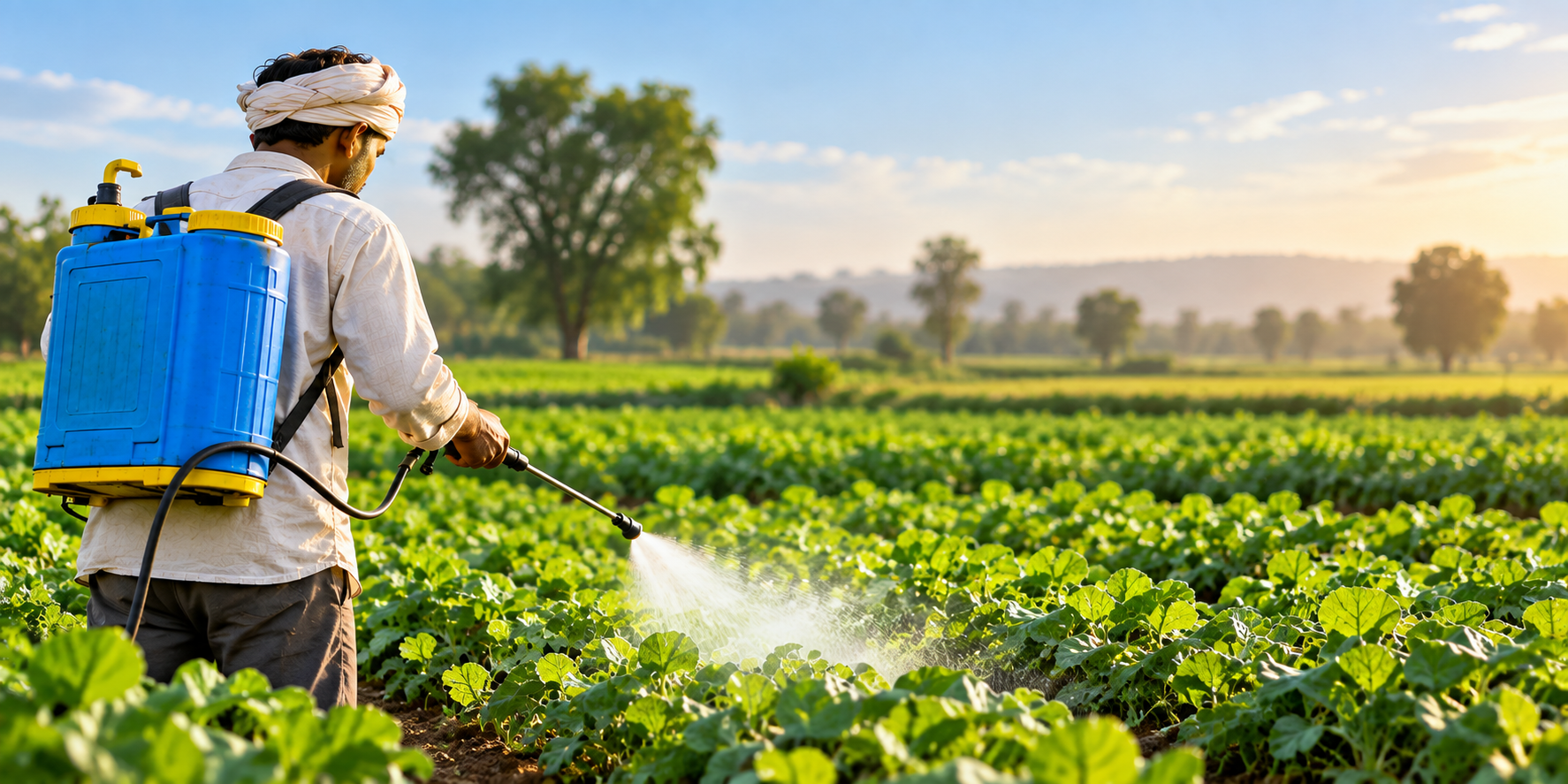
30 Sep Pesticide Spray Dose Calculator – Calculate Pesticide Quantity & Water Requirement
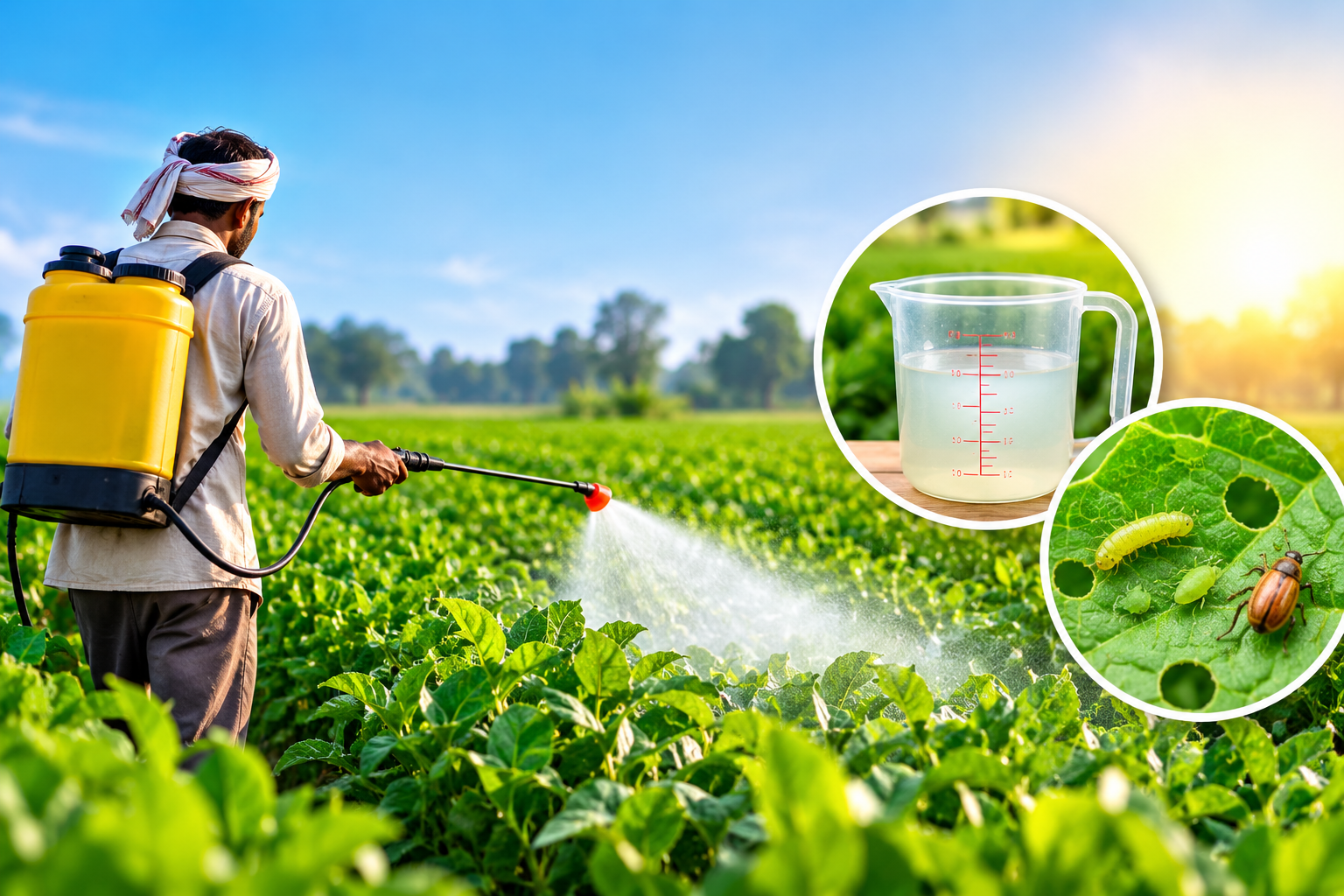
Pesticide Spray Dose Calculator से pesticide quantity, spray water, tank number और per tank dose calculate करें. खेती के लिए आसान pesticide calculator....

Pesticide Spray Dose Calculator से pesticide quantity, spray water, tank number और per tank dose calculate करें. खेती के लिए आसान pesticide calculator....
.pdc-wrap{ max-width:1000px; margin:30px auto; font-family:Arial,Helvetica,sans-serif; color:#263238; line-height:1.7; } .pdc-wrap h1, .pdc-wrap h2, .pdc-wrap h3{ color:#245c2a; line-height:1.3; } .pdc-box{ background:#f6faf5; border:1px solid #d7e8d3; border-radius:12px; padding:25px; margin:25px 0; } .pdc-grid{ display:grid; grid-template-columns:repeat(2,1fr); gap:18px; } .pdc-field label{ display:block; font-weight:600; margin-bottom:6px; } .pdc-field input, .pdc-field select{ width:100%; padding:12px; border:1px solid #cbd5cb; border-radius:7px; font-size:16px; box-sizing:border-box; } .pdc-btn{ ...
1. Introduction Nano-bioformulations are innovative delivery systems that bring together the principles of nanotechnology with biological components to enhance the effectiveness of drugs, biomolecules, and agrochemicals. At the nanoscale (1–100 nm), molecules behave differently compared to their bulk forms, showing enhanced stability, solubility, bioavailability, and targeted delivery. These unique properties make nano-bioformulations a powerful tool in modern science, especially in medicine, agriculture, and biotechnology. The idea of working at the nanoscale was first envisioned by physicist Richard Feynman in 1959, who suggested that manipulating matter at the atomic level could open new scientific possibilities. 2. Types of Nano Bioformulations 2.1 Nanoparticles (NPs): Tiny solid particles (1–100 nm) made of polymers, lipids, or metals that...
Farmers benefit from the use of organic agents in crops किसान की आय दोगुना करने के लक्ष्य को प्राप्त करने हेतु किसान भाईयों को अपनी फसलों पर होने वाले रासायनों एवं कीट नाशकों पर अत्यधिक खर्च को कम कर के लाभ प्राप्त किया जा सकता है। उत्तर प्रदेश में फसलों को कीटों, रोगों एवं खरपतवारों आदि से प्रति वर्ष 7 से 25 प्रतिशत की क्षति होती है। प्रदेश में 33 प्रतिशत क्षति खरपतवारों द्वारा, 26 प्रतिशत रोगों द्वारा, 20 प्रतिशत कीटों द्वारा, 7 प्रतिशत भण्डारण के कीटों द्वारा, 6 प्रतिशत चूहों द्वारा तथा 8 प्रतिशत अन्य कारकों से होती है। इस क्षति को रोकने के लिए कृषि रक्षा रसायनों का प्रयोग किया जा...
एग्रो-इकोसिस्टम विश्लेषण पर आधारित पादप स्वास्थ्य प्रबंधन Agricultural crops are widely distributed in different agro-ecological regions and thus in different regions the pest management practices differ on various crops. Decision making in pest management requires an analysis of the agro eco system. During the late 90s, FAO started advocating Agro-Ecosystem Analysis (AESA) based IPM (Gurr et al., 2004). Agro Ecosystem Analysis (AESA) is an approach, which can be employed by extension functionaries and farmers to analyze the field situations and monitor the population of pests, defenders, soil conditions, plant health and the influence of climatic factors to make informed decisions for growing a healthy crop. In AESA, farmers observe the crop, analyze...