drip irrigation Tag

सिंगतालुर लिफ्ट सिंचाई ड्रिप योजना मक्का किसानों को कम लागत के साथ अधिक उपज प्राप्त करने में सक्षम बनाती है In India, maize is predominantly a Kharif crop, with almost 85 percent under cultivation, whereas rabi maize corresponds to 15% of the area. Despite having the largest area under maize cultivation, the yield per hectare is still lower than the world average. Our country's average maize productivity per hectare is around 20-25 quintals indicating higher land usage with low farmer income. In India, the cereal crop is primarily cultivated in Karnataka, Madhya Pradesh, Kerala, Bihar, Tamil Nadu, Telangana, Maharashtra and Andhra Pradesh. The state of Karnataka is one of the largest producers of maize in the country. Karnataka grows maize in the approximately 1.3 million hectares of land, which accounts for 13.1 % of the total land utilized for agriculture. It produces 4.4 million tonnes which is around 16.5 % of India's total supply of maize. The policymakers in Karnataka are persistently working towards creating a conducive agricultural ecosystem to achieve farmers' prosperity through emphasizing and embracing scientific methods and innovations. Case in example, the Singatalur Lift Irrigation Project endeavors to bring the entire farming community together through Community Drip Irrigation Project – to establish systematic and sustainable irrigation practices. The ongoing phase 1 of...

ड्रिप सिंचाई: बासमती चावल की खेती की लागत को प्रभावी ढंग से कम करती है।  Scented (Basmati) rice, a unique product of the Indo-Gangetic Plain, is known for its aromatic quality and high economic value. It generates about three times higher prices than coarse rice. Approximately 20% of the land used to cultivate rice grows scented rice in India, and northwest states account for more than 90% of its total production. India contributes around 65% of the total global supply of scented rice. The sustainability of the Basmati rice production in India has become a significant concern due to alarming water table depletion, growing food demand, stagnating, or declining productivity growth, and diminishing economic returns. Traditionally, rice is a water-intensive crop and requires water for three primary purposes – preparing land (puddling), continual seepage, percolation, and growing the produce. The farmer growing Basmati rice has to keep the area spread continually flooded, which results in substantial unproductive water losses (up to 80%) for reasons other than rice cultivation. The crop demands high water investments, labor, pre-crop preparation, and fertilizers. Despite these investments, farmers don't get the expected returns because water inefficiency resulting lower crop yield, and reduced crop quality affects their profits. Globally, India is one of the top basmati and non-basmati rice exporters. According...

Solar Energy Based Irrigation System: A Modern Technique कृषि कायों में लगातार यांत्रिक उपकरणो के उपयोग से खेती मे उर्जा की खपत बढती जा रही है फलस्वरूप कृृषि लागत भी वढ रही है। खेती में विभिन्न प्रकार के कृषि कार्यों के लिए विद्युत उर्जा का उपयोग होता है।  उर्जा की बढती कीमत में भी खेती को लाभदायक बनाने के लिए सस्ती वैकल्पिक उर्जा श्रोत की आवश्यकता है जिसे आजकल सौर ऊर्जा के द्वारा पूरा किया जा रहा है  सौर यंत्र एक ऐसा यंत्र है जो सूर्य की तेज किरणों को अवशोषित करके विद्युत ऊर्जा में परिवर्तित करती है जिससे विभिन्न प्रकार के कृषि यंत्र चलाए जाते हैं। इससे न केवल विद्युत व विद्युत बिल की बचत होती है बल्कि यह किसानों के लिए भी बहुत सुरक्षित मानी जाती है साथ ही साथ पर्यावरण प्रदूषण को भी कम करती है। आधुनिक समय में कृषि में इस तरह  के नवीनीकरण ऊर्जा का प्रयोग बहुतायत में किया जाता है किसान अपने प्रक्षेत्र पर ही इस प्रकार के पैनल को लगाते हैं तथा सूर्य के तेज प्रकाश को सौर ऊर्जा मैं परिवर्तित कर कृषि कार्य में प्रयोग करते हैं। इस तरह विद्युत की बचत करने से किसानों की अपनी कुल आय में अतिरिक्त आय का इजाफा हो जाता है क्योंकि विद्युत में आने वाले बिल की बचत होती...

Modern irrigation management in the garden सिचाई की विभिन्न विधियों में टपक या बूंद-बूंद सिंचाई, माइक्रोस्प्रिंकलर, माइक्रोजैट आदि कुछ आधुनिक सिंचाई विधियाँ हैं, परन्तु फलदार बगीचों में टपक सिंचाई अंत्यत लाभकारी सिद्ध हुई है | टपक या बूंद-बूंद सिंचाई एक ऐसी सिंचाई विधि है जिसमें पानी थोड़ी-थोड़ी मात्रा में, कम अंतराल पर, प्लास्टिक की नालियों द्वारा सीधा पौधों की जड़ों तक पहुँचाया जाता है | परम्परागत सतही सिंचाई द्वारा जल का उचित उपयोग नहीं हो पाता, क्योंकि अधिकतर पानी, जोकि पौधों को मिलना चाहिए, जमीन में रिस कर या वाष्पीकरण द्वारा व्यर्थ चला जाता है | अतः उपलब्ध जल का सही रिसाव कम हो कम हो और अधिक से अधिक पानी पौधे को उपलब्ध हो पाए | सिंचाई विधियों के अंतर्गत जल उपयोग क्षमता के आंकड़े सारणी में दर्शाये गए हैं | विभिन्न सिंचाई विधियों में अतर्गत जल उपयोग क्षमता (%) सिंचाई क्षमता विधियाँ   परम्परागत सतही सिंचाई स्प्रिंकलर टपक सिंचाई, स्रोत से पौधे तक जल पहुँच क्षमता 40-50 (नहर सिंचाई द्वारा) 100 100 पौधे में जल देने की क्षमता 60-70 70-80 90 औसतन क्षमता 30-35 50-60 80-90 कम दवाब और नियंत्रण के साथ सीधे फसलों की जड़ में उनकी आवश्यतानुसार पानी देना ही टपक सिंचाई है| टपक सिंचाई के माध्यम से पौधों को उर्वरक आपूर्ति करने की प्रक्रिया फर्टिगेशन कहलाती है, जो कि पोषक तत्वों की लिचिग व वाष्पीकरण नुकसान पर अंकुश लगाकर सही समय पर उपयुक्त फसल पोषण प्रदान करती...

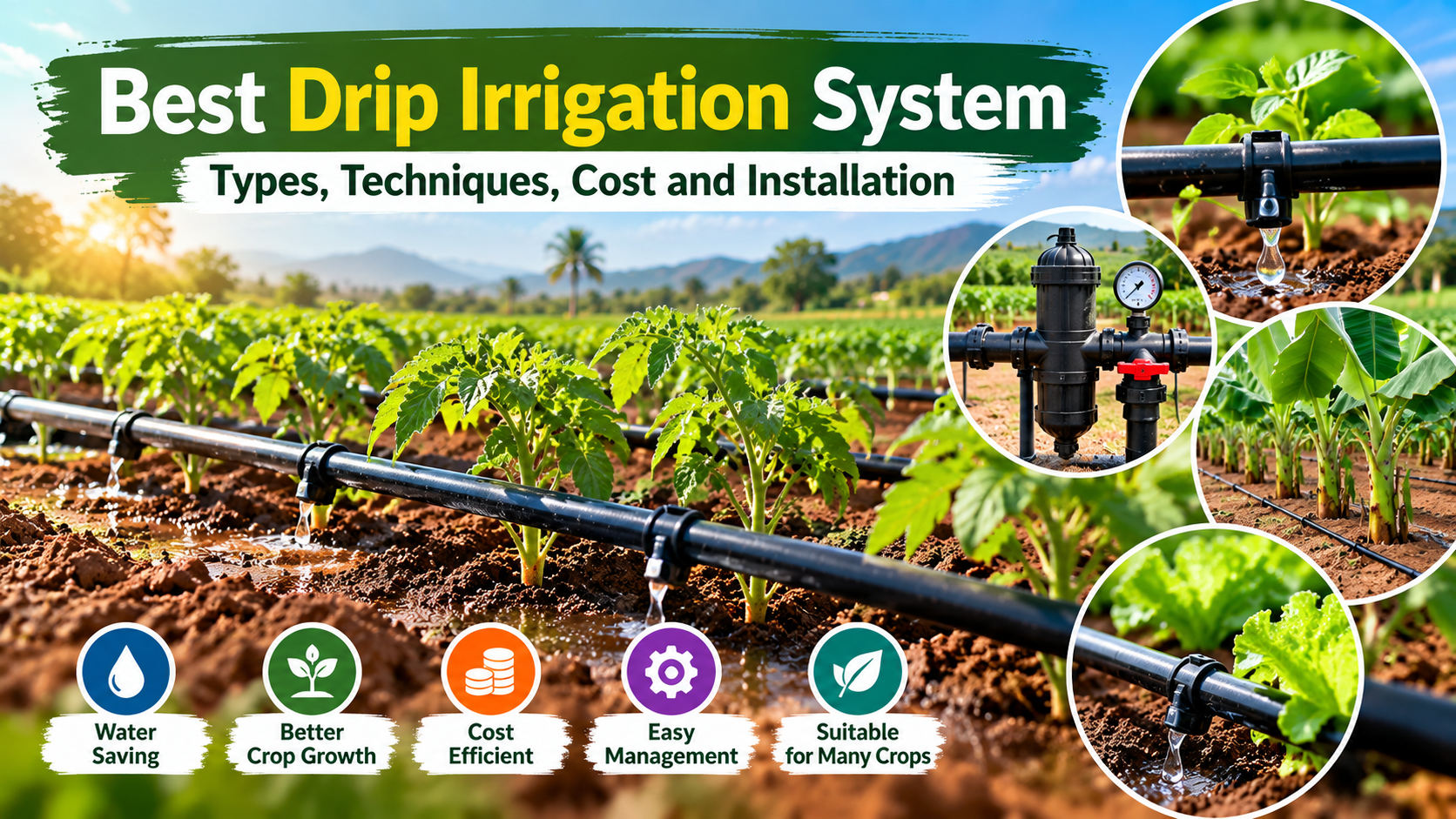
जल संरक्षण के लिए प्रौद्योगिकी को अपनाना - ड्रिप सिंचाई प्रणाली पर एक केस स्टडी Irrigation plays an important role in harvesting the desirable level of yield and supplementing the use efficiency of other inputs. Globally, irrigation water is becoming highly scarce due to over exploitation of water bodies for meeting the demand of increasing population. India, despite having the largest area under irrigation in the world, it suffers from severe shortage of water. The coverage of irrigation is about 47 percent of the gross cropped area.  The main reason for low coverage under irrigation is the low water use efficiency of existing conventional method of irrigations like flooding, which is widely practiced in India. Considering the limited water availability in future for irrigation and other uses, different management strategies have to be evaluated for efficient use of available water. In Indian agriculture, drip irrigation system is considered as one of the efficient management strategies for water conservation. Drip irrigation system saves water and fertilizer by supplying water and nutrients near the roots of plants, either at the soil surface (by surface drip irrigation system) or directly in the root zone (by sub-surface drip irrigation system) through a network of pipes, valves, laterals and drippers. An attempt was made to study the adoption level of drip...

Use of plastic culture in agriculture जीवन के हर क्षेत्र में प्लास्टिक का उपयोग तेजी से बढ़ रहा है। हमारी कृषि भी प्लास्टिक से अछूती नहीं रह पाई है। वर्तमान मे कृषि मे अच्छी पैदावार लेने के लिए प्लास्टिक सामग्रियो का उपयोग तेजी से बड रहा है और दुनिया भर में खाद्य उत्पादन के लिए उपयोग किया जा रहा है। कृषि मे प्लास्टिक सामग्रियों का परिचय 1940 के दशक में प्रशिक्षक ई.एम.एम. एम्र्ट द्वारा विकसित किया गया था जो एक बागवानी के वैज्ञानिक है जिनको प्लास्टिक ग्रीनहाउस के पिता माना जाता है। एम्र्ट ने कृषि मे प्लास्टिक कल्चर द्वारा होने वाले लाभ के बारे में बताया। कृषि मे पहली बार प्लास्टिक का इस्तेमाल एम्मर्ट द्वारा ग्रीन हाउस बनाने के लिए किया था और उस समय के अधिक विशिष्ट ग्लास ग्रीनहाउसों को प्रतिस्थापित किया गया था। कृषि मे प्लास्टिक कल्चर को बढ़ावा देने के लये 1981 में केमिकल और पेट्रो रासायनिक विभाग द्वारा एक समिति गठित की गई थी और फिर इसे कृषि मंत्रालय (एमओए) से जोड़ा गया था। भारत में 1981 के बाद से प्लास्टिक का उपयोग खेती में होने लगा, जो मुख्य रूप से प्लास्टिक की खेती पर केंद्रित थी। इस प्रकार कृषि में प्लास्टिक का उपयोग किया जाने लगा  प्लास्टिक कल्चर खेती पांच प्राथमिक अवधारणाओं पर आधारित है प्लास्टिक हस्तक्षेप के माध्यम से...

ड्रिप सिंचाई प्रणाली के लिए एसिड ट्रीटमेंट Drip irrigation systems are prone to clogging or blockagedue to improper maintenance, There are Several factors that are responsible for the clogging of drip irrigation system, They include Presence of Microorganisms in the system(Bacterial slime, Algal growth). Presence of Large Particles and the suspended particles (Clay and silt) in the water source, which enter and Block the Drip system. Presence of Certain dissolved salts (Carbonates and Bicarbonates, Calcium and Magnesium, iron) where they precipitate and form deposits within the lateral pipes but some times they also lead to the blockage of the emitters. Filtration of the water through the Primary (Sand Filter (open water source) and Screen Filter (Borewell)) and Secondary Filters (Disc Filter (Costly) and Screen Filter (Cheaper)) do not remove the microorganisms and dissolved salts, The microorganisms interact with the sand particles and they lead to the clogging of the drip irrigation system, To rectify the problem of clogging, Acid or chlorine (chemicals) is injected along with the irrigation water, Hence this process is called as chemigation or Chemical treatment. Acid treatment is used for Rectifying the problem caused by the Dissolved or precipitated salts, whereas Chlorine treatment is used for rectifying the problems caused by the microbial growth In the drip system, These Chemicals can be injected by...