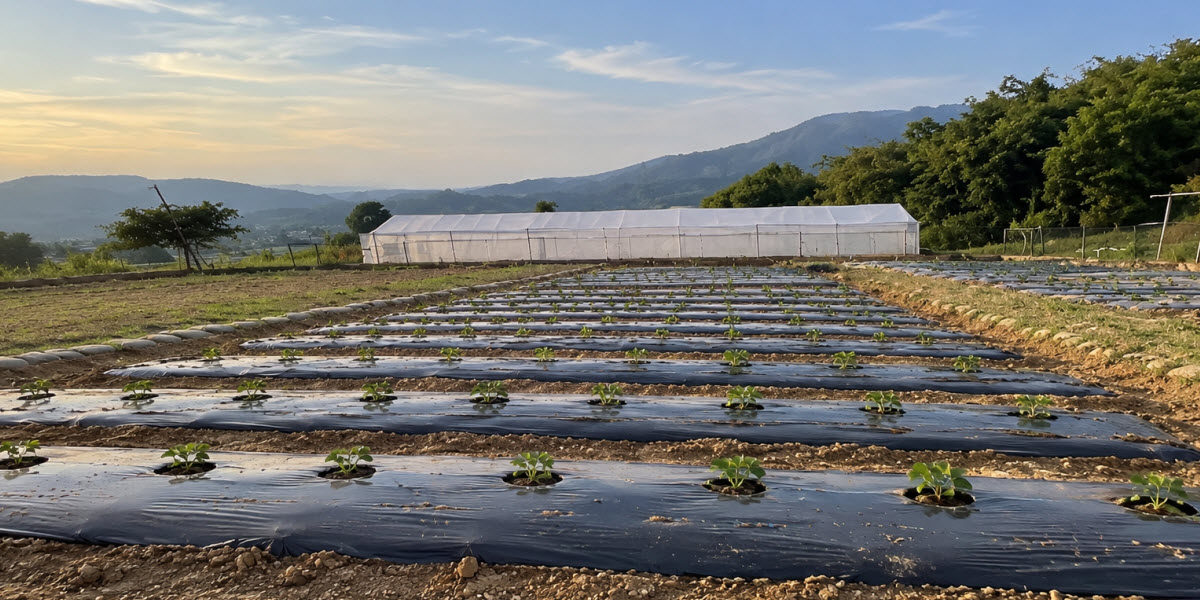
07 Oct स्ट्रॉबेरी की सफल खेती में मल्चिंग की भूमिका
स्ट्रॉबेरी की खेती में मल्चिंग की भूमिका, मिट्टी की नमी संरक्षण, खरपतवार नियंत्रण, तापमान संतुलन और फलों की गुणवत्ता सुधार में इसके लाभों की जानकारी।...

स्ट्रॉबेरी की खेती में मल्चिंग की भूमिका, मिट्टी की नमी संरक्षण, खरपतवार नियंत्रण, तापमान संतुलन और फलों की गुणवत्ता सुधार में इसके लाभों की जानकारी।...
बागवानी फसलों में कीटनाशकों के दुष्प्रभाव को कम करना - एक समाधान उद्यानिक फसलों में कीटनाशी रसायनों के अधिक प्रयोग से कई तरह की आर्थिक, पर्यावरणीय एवं स्वास्थ संबंधी समस्यायें सामने आ रही हैं। इन फसलों में फसल सुंरक्षा के लिए रसायनिक कीटनाशियों पर आवश्यकता से आधिक निर्भरता के कारण खेती के लागत खर्च बढ़ते चले जा रहे है जिससे किसानों का आर्थिक मुनाफा कम हो रहा है। कीटनाशकों के अनियमित एवं अनियंत्रित प्रयोग के कारण कई तरह के पर्यावरणीय समस्यायें उत्पन्न हो रही है यथा हानिकारक कीटाे के कीटनाशकोे के प्रति प्रतिरोधक क्षमता का विकसित होना, हानिकारक कीटों के प्राकृतिक शत्रुओं एवं परभक्षी जीव जन्तुओं की संख्या में कमी होना एवं पर्यावरण प्रदुषित होना शामिल है। स्वास्थ संबंधी समस्यायें मूलरूप से इसके व्यवहार की सावधानियाें एवं प्रयोग के जनकारी के आभाव के कारण हो रही है जिससे प्रयोग करने वाले किसानों को शारीरिक खतरों का सामना करना पड़ता रहता है। अनुसंशित मात्रा से अधिक प्रयोग करने के कारण इसके अवशेष सिंचाई के जल के साथ नालों के माध्यम से जल स्त्रोतों यथा तालाब, नदी, नहर और अंततः समुद्र में बहकर जातेे है जिससे इन जल स्त्रोतों के प्रदुषित होने का खतरा तो होता ही है साथ ही जलीय जीव जंतु भी आहत हो रहे है, जिससे हमारा संपूर्ण पारिस्थितकी तंत्र भी अव्यवस्थित...
बागवानी में जैव प्रौद्योगिकी की भूमिका इन विट्रो कल्चर तकनीकों में लगभग 60 साल पहले फल की फसलों के लिए कई अनुप्रयोग हुए हैं। जिनमें गुठलीदार फलों के लिए भ्रूण बचाव तकनीक शामिल हैं। जो बाद में इस विधि को व्यावसायिक रूप से स्वीकार्य, जल्दी पकने वाले आड़ू की खेती के उत्पादन के लिए सफलतापूर्वक लागू किया गया है। इन विधियों को अन्य फसलों के लिए भी अनुकूलित किया गया है उदाहरण प्रजनन कार्यक्रमों में प्रारंभिक पकने और बीज रहित अंगूर दोनों का उत्पादन करने के लिए। ऐतिहासिक रूप से फलों की फसलों के लिए इन विट्रो विधि के तरीकों का दूसरा अनुप्रयोग स्ट्रॉबेरी से वायरस पैदा करने वाली बीमारी को खत्म करना था। मेरिस्टेम टिप विधि तब से कई फलों की फसलों के लिए वायरस.अनुक्रमण कार्यक्रमों का एक अभिन्न हिस्सा बन गई है। आमतौर पर थर्मोथेरेपी के साथ। कुछ मामलों में इन विट्रो मे मेरिस्टमेटिक टिप को सूक्ष्म रूप से विकसित करना आवश्यक है। जैसा कि साइट्रस द्वारा किया जाता है । पिछले 25 वर्षों के भीतर फलों की फसलों का सूक्ष्म प्रसार इन विट्रो प्रौद्योगिकी का एक महत्वपूर्ण अनुप्रयोग बन गया है। स्ट्राबेरी पहली फलों की फसल थी जिसके लिए विधि विकसित की गई थी। अब कई फलों की फसलों को व्यावसायिक रूप से सूक्ष्म रूप से प्रचारित किया जा रहा है।...
बागवानी में पॉलीएब्रीयोनी या बहुभ्रूणता और इसकाा महत्व में Polyembryony is the occurrence of more than one embryo in a seed which consequently results in the emergence of multiple seedlings. The additional embryos result from the differentiation and development of various maternal and zygotic tissues associated with the ovule of seed. Earlier, polyembryony is said to have an abnormal feature but now it is considered as a desirable character in citrus, mango, jamun, rose apple, almond, etc. to obtain true to type planting material. In the usual process of plant reproduction, egg cell (female) of ovule fertilizes with the male gamete which in turn culminates in embryo (zygotic). On the other hand, in some of the crops, somatic cells of ovule (usually nucellus) start producing embryo without fertilization results in the occurrence of more than one embryo in the seed (polyembryony). The formation of embryo without sexual process is called apomixis (Apo=away from+ mixis = act of mixing) and seed is called apomictic seed, whereas the condition is called polyembryony. In most of the cases, sexual embryo and nucellar embryo developes simultaneously which is known as facultative polyembryony. Polyembryony was first reported by Leeuwenhoek in citrus as early as 1719 and the different cases of polyembryony in plants were studied by Braun in 1859. In 1878 Strasburger demonstrated...
फल फसलों की सघन बाग और मेडो बागवानी प्रणाली High density planting technique is a modern method of fruit cultivation involving planting of fruit trees densely, allowing small or dwarf trees with modified canopy for better light interception and distribution and ease of mechanized field operation. HDP and meadow orcharding gives higher yield as well as returns/unit area due to increasing the no. of trees/unit area. It is possible by regular pruning and use of bio regulators for maintaining the size and shape of the tree. It is well known that the diversity in soil and climatic conditions in India permits growing of a large variety of tropical, sub-tropical and temperate fruits in different regions, due to which India is regarded as a horticultural paradise. In recent year, the concept of fruit production is undergoing a change where emphasis is being given to higher production per unit area. High density planting or meadow orchard system is the fastest way of reducing the gestation period and increasing the productivity of the orchards. The choice of the system of planting in the orchard depends on topography, crop, variety, plant density, production technology to be followed. Concept of HDP in fruit crops Accommodation of the maximum possible number of the plants per unit area to get the maximum possible...