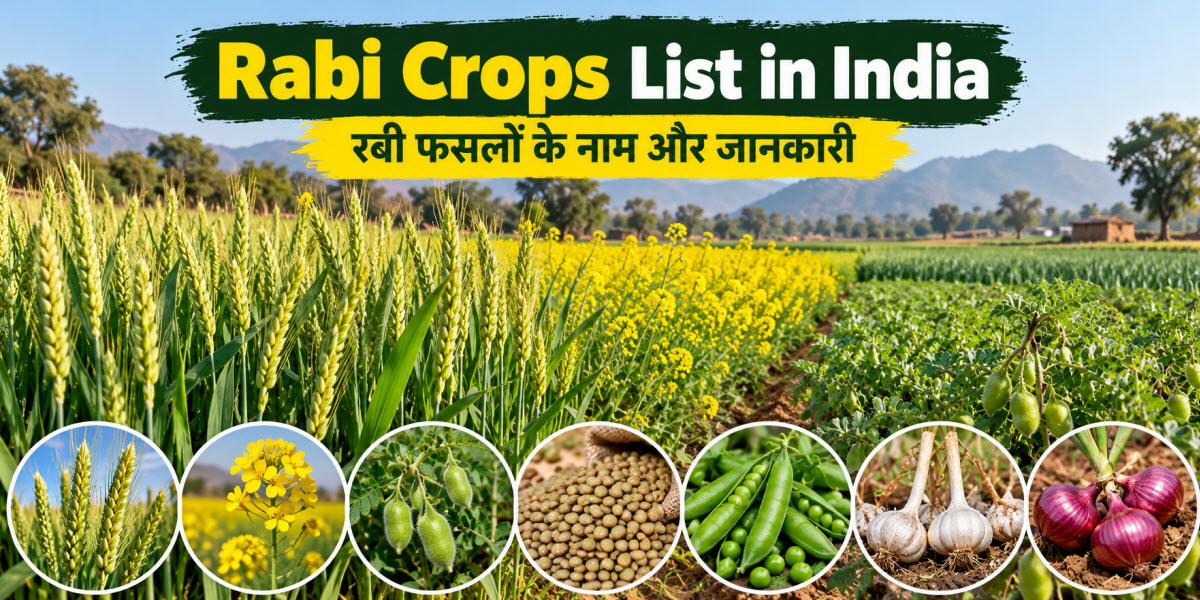
08 Oct Rabi Crops List in India: रबी फसलों के नाम और पूरी जानकारी
Rabi Crops List in India: गेहूं, चना, सरसों, जौ, मसूर, मटर और अन्य रबी फसलों के नाम, प्रकार, बुवाई का समय और खेती की जरूरी जानकारी।...

Rabi Crops List in India: गेहूं, चना, सरसों, जौ, मसूर, मटर और अन्य रबी फसलों के नाम, प्रकार, बुवाई का समय और खेती की जरूरी जानकारी।...
Symptoms, disease spread and disease management of loose smut disease in wheat गेहूँ (ट्रिटिकम प्रजाति) न केवल भारतीय परिदृश्य में अपितु वैश्विक स्तर पर एक महत्वपूर्ण खाद्यान्न फसल है जोकि विभिन्न प्रकार की जलवायु, भौगोलिक क्षेत्र एवं फसल परिस्थितियों के बीच उगाई जाती है। यह करोडों लोगो का मुख्य खाद्य है। दुनिया में समस्त कृषित भूमि के लगभग छठे भाग पर गेहूँ की खेती की जाती है। गेहूँ विश्व के सभी प्रायद्वीपों में उगाया जाता है। गेहूँ विश्व की निरंतर बढ़ रही जनसंख्या के लिए लगभग २० प्रतिशत आहार कैलोरी की पूर्ति करता है। भारतीय परिदृश्य में गेहूँ खाद्य सुरक्षा सुनिश्चित करने वाली महत्वपूर्ण फसलों में से एक है। दुनिया में भारत गेहूँ का दूसरा सबसे बडा उत्पादक देश है। हमारे देश में वर्ष 2023-24 में लगभग 31 मिलियन हैक्टेयर भूमि से रिकॉर्ड 112.92 मिलियन टन गेहूँ का उत्पादन होने का अनुमान है। उपज में बढत बनाए रखने के लिए जैविक एवं अजैविक प्रतिबलों का प्रबंधन अति आवश्यक है। गेहूँ की उपज को सीमित करने की क्षमता रखने वाले बहुत से रोग इस फसल में लगते हैं जिनमें रतुआ अथवा गेरूई (तना, पत्ती व पीला रतुआ), चूर्णिल आसिता, करनाल बंट, पत्ती झुलसा या स्पॉट ब्लॉच आदि प्रमुख हैं। इन रोगो के साथ-साथ गेहूँ में बीज-जनित रोग खुला कंडवा भी एक मह्त्वपूर्ण रोग है जिसका निदान...
गेहूँ के गुणवत्तायुक्त बीज उत्पादन की उन्नत तकनीकियाँ, बीज प्रसंस्करण और भण्डारण For quality seed production, it is necessary that the seed should be of advanced species, physical purity, genetic purity, germination capacity should be determined and conformed to the variety. The seed should be healthy, free from seed borne diseases, uniform in color, shape and size. गेहूँ एक महत्वपूर्ण खाद्यान्न फसल है जिसका स्थान भारत मे चावल के बाद आता है। तथा 2021 के दौरान 31.61 मिलियन हेक्टेयर क्षेत्र में 109.52 मिलियन टन उत्पादन हुआ यह रबी मौसम की फसल है। गेहूँ की खेती भारत के विभिन्न राज्यों जैसे हरियाणा, पंजाब, हिमाचल प्रदेश उत्तराखण्ड, राजस्थान, उत्तर प्रदेश, बिहार, मध्य प्रदेश, महाराष्ट्र, और कर्नाटक आदि में की जाती है। गुणवत्ता युक्त बीज की उपलब्धता किसी भी फसल / किस्म की उपज क्षमता बढ़ाने के लिए सबसे महत्वपूर्ण है। अच्छी फसल उत्पादन लेने के लिए अच्छे बीज का होना सबसे महत्वपूर्ण है। जो कि अन्य कृषि आदानों जैसे मृदा, उर्वरक, लेबर एवं सिंचाई की क्षमता अच्छे बीज की गुणवता पर निर्भर करता है। खेत मे समान रूप से वृद्धि एवं पैदावार लेने के लिए किसानों द्वारा उन्नत प्रजातियों के बीजों को उपयोग मे लाना अति आवश्यक है। भारतवर्ष में बीज की कुल पाँच अलग अलग श्रेणीया हैं जिनमे नाभकीय, प्रजनक, आधारीय, प्रमाणित और लेबल बीज...
गेहूँ सुधार के लिए डबल्ड हैप्लोइडी तकनीक: एक परिचय Doubled haploidy technique is used to generate pure inbred lines for basic research and production of commercial cultivars. These lines are pure and genetically homozygous individuals are produced when spontaneous or induced chromosome duplication of haploid cells occurs. Double haploids are one of the biggest achievements in plant breeding because of production of completely homozygous plant within a year (Hooghvorst and Nogues., 2021). The production of doubled haploid lines can accelerate the breeding of new wheat varieties by several years through one step creation of 100% homozygous plants. This technology plays an important role in studying the genetic control of traits in wheat, marker assisted selection, genomics and genetic engineering (Eliby et al., 2022). Double haploid breeding is useful tool in wheat improvement by providing instant homozygosity, which leads to instant fixation of desirable characters of recombinants as well as reduction in number of generations required to achieve success. Barclay (1975), initiated chromosome elimination technique in wheat, who recovered the wheat haploids in crosses between the wheat variety Chinese spring and Hordeum bulbosum. The technique was genotype-specific due to the presence of dominant crossability inhibitor genes Kr1 and Kr2 genes thereby affecting the practical value of the technique. Therefore, wheat x maize system of doubled haploid...
मध्य भारत में उन्नत गेहूं की खेती के तरीके Wheat is one of the most important cereal crops in India which is being cultivated in an area of 30.54 mha with a production of 106.41 mt in 2021-22. Wheat is being cultivated in 5 different zones in India viz., Northern Hilly Zone (NHZ), North Western Plains Zone (NWPZ, North Eastern Plains Zone (NEPZ), Central Zone (CZ), and Peninsular Zone (PZ). The Central Zone consists of Madhya Pradesh, Gujarat, Chhattisgarh, Kota, and Udaipur divisions of Rajasthan and the Jhansi division of Uttar Pradesh. Among Central Zone states, Madhya Pradesh is the major producer of wheat with a production of 22.4 mt and an area of 6.5 mha. Both species of wheat viz., durum and bread wheat are being cultivated in Madhya Pradesh. Bread wheat is used for making chapattis, bread, and biscuits. Durum wheat is used in making daliya, pasta, and semolina. Wheat production and productivity in Central India are affected by many biotic (stem and leaf rusts, termites, lepidopteran pests, etc.) and abiotic factors (drought, heat, etc.). Wheat production can be improved by adopting new high-yielding, disease-resistant wheat varieties, and improved production practices. Varieties are to be chosen based on the time of sowing and irrigation water availability (Table 1). Table 1: Wheat varieties recommended for...
Wheat bran consumption is beneficial भारत में उगाई जाने वाली फसलों में गेहूँ एक प्रमुख अनाज की फसल है। गेहूँ के दाने से प्राप्त उच्च कैलोरी के कारण दुनिया की एक तिहाई से भी अधिक आबादी द्वारा उपभोग की जाने वाली प्रमुख खाद्य फसल है। गेहूँ एक पौष्टिक अनाज होने के साथ-साथ प्रोटीन, खनिज, विटामिन बी एवं आहार रेशा का भी एक समृद्ध स्रोत है। भारत में इसकी खेती लगभग 31 मिलियन हैक्टर क्षे़त्रफल पर की जाती है, जिससे गेहूँ का उत्पादन लगभग 110 मिलियन टन होता है (2021)। गेहूँ के बीज के तीन अलग-अलग भाग होते हैं जिन्हे चोकर, एंडोस्पर्म एवं जर्म के नाम से जाना जाता है। आटे के उत्पादन के लिए गेहूँ पिसाई प्रक्रिया के दौरान इन तीनों भागों को अलग-अलग किया जाता है। गेहूँ के दाने का 83 प्रतिशत मध्य भाग एंडोस्पर्म से बना होता है जिसमें मुख्य रूप से कार्बोहाइड्रेट होता है। बीज का सबसे महत्वपूर्ण आंतरिक भाग जर्म होता है, जो दाने के कुल वजन का लगभग 2.5-3.8 प्रतिशत होता है। गेहूँ के दाने की बाहरी परत चोकर की बनी होती है, जो दाने के निर्माण में 14 प्रतिशत का योगदान देती है। गेहूँ के बीज की संरचना को चित्र 1 में दर्शाया गया है। चित्र 1 : गेहूँ के बीज की संरचना गेहूँ की चोकर गेहूँ आधारित रोटी, बिस्कुट,...
गेहूँ में उभरती कीट समस्या एवं उनका प्रबंधन Wheat is the second most important staple food crop in India providing nutrition to millions of population. India harvested a record wheat production of 109.5 million tonnes with productivity of 34.24 q/ha in 2020-21. Even though hundreds of pests were reported on wheat crop worldwide, it was considered pest free crop in India till late sixties. But due to changes in climatic conditions, production conditions, cropping patterns and use of new agro techniques resulted in several outbreaks of sporadic pests in wheat in India. Impact assessment of different pests on wheat crop performance is significant in making proper management decision. Termites, aphids, shootfly, armyworm, American pod borer, Gujhia weevil, brown mite, pink stem borer, thrips and rodents are now considered as the major pests of wheat in India. Besides this stored grain pests like khapra beetle, lesser grain borer, rice weevil etc also cause significant losses in wheat. 1. Termites About 16 species of termite have been found to damage wheat crop in India, of these two species viz., Odontotermes obesus and Microtermes obesi were major species which caused significant yield losses ranging from 43 to 80 per cent. Termites are widely distributed in the northern India, central India and some pockets of peninsular India. They...
काले गेहूं की खेती बढ़ती जनसंख्या के साथ विश्व में भोजन की कमी और आवश्यकता दोनों तेजी से बढ़ रही है। वहीँ अगर गेहूं की बात करें तो गेहूं (Wheat) एक महत्वपूर्ण फसल है जो विश्व खाद्य आवश्यकता को पूरा करने में महत्वपूर्ण भूमिका निभाता है। गेहूं पूरी दुनिया में उगाया जाता है। वहीं गेंहू की उपज और गुणवत्ता बढ़ाने के लिए सुधार आवश्यक है। पंजाब के मोहाली में नेशनल एग्री-फूड बायोटेक्नोलॉजी इंस्टीट्यूट (NABI) की वैज्ञानिक डॉ. मोनिका गर्ग ने गेहूं की तीन नई किस्में विकसित की हैं- काली, नीली और बैंगनी। अपने खास गुणों के चलते इसकी मांग काफी अधिक रहती है। वहीं दूसरी ओर इसकी सप्लाई लिमिटेड होने के चलते इसकी कीमत काफी अधिक मिलती है। डायबिटीज के रोगियों के लिए काला गेहूं बहुत ही फायदेमंद होता है। यह गेहूं कैंसर से बचाने में भी मदद करता है। भारत में काले गेहूं की खेती हमारे देश में काले गेहूं की खेती उन सभी राज्यों में की जा सकती है, जहां सामान्य गेहूं पैदा किया जाता है। हरियाणा, पंजाब, मध्य प्रदेश (MP), छत्तीसगढ़ और उत्तर प्रदेश (UP) सहित भारत के सभी गेहूं उत्पादक राज्यों की जलवायु और मिट्टी, इसकी उपज के लिए उपयुक्त है। हाल फिलहाल की बात करें तो उत्तर प्रदेश के साथ-साथ पंजाब और हरियाणा के कुछ हिस्सों में इसकी खेती बड़े...