
Agriculture Knowledge for Everyone

खरगोश पालन Tag

Rabbit farming methods and benefits खरगोश पालन में ग्रामीण गरीबों की सामाजिक-आर्थिक स्थिति में सुधार और कम लागत वाले पशु प्रोटीन के संदर्भ में खाद्य सुरक्षा प्रदान करने की व्यापक क्षमता है। देश की कुल खरगोश की आबादी लगभग 406000 है। 28 राज्यों और 7 केंद्र शासित प्रदेशों में से 27 राज्यों और 5 केंद्र शासित प्रदेशों में खरगोशों की आबादी है। खरगोश अत्यधिक विपुल है। एक मादा खरगोश, अपनी संतानों के माध्यम से प्रति वर्ष 80 किलोग्राम तक मांस का उत्पादन कर सकती है। भारत में मांस का उत्पादन 5000 और 19000 टन / वर्ष के बीच होने की सूचना है। अंगोरा ऊन उत्पादन प्रति वर्ष 25 से 30 टन है, जो अनुमानित वैश्विक उत्पादन का 1% है। खरगोश पालन का सामान्य प्रबंधन खरगोश पालन किसानों एवं बेरोजगार युवाओं के लिए एक कम लागत, कम समय में बड़े मुनाफे का धंधा है । इसमें पोल्ट्री व्यवसाय से काफी कम खर्च और जोखिम है। एक खरगोश दिनभर में लगभग एक मुट्ठी फीड, एक मुट्ठी चारा और दो-तीन कटोरी पानी पीता है। चार महीने में खरगोश का वजन दो किलो से भी ज्यादा हो जाता है और फिर साढ़े तीन सौ से पांच सौ रुपए तक में बिक जाता है। खरगोश पालन के लिए सरकार पचीस-तीस प्रतिशत सब्सिडी भी देती है। पशु पालन सम्बन्धी किसी भी व्यवसाय में...
मछली के साथ खरगोश पालन ग्रामीण क्षेत्रों में उद्यमियों के लिए एक अभिनव विचार The growth of trade industries in the 21st century is commendable. In this situation, "rabbit farming" and "rabbit cum fish farming" is a good and low cost business for the common man.  Rabbit cum fish farming gives you more profits in less cost. Integrated Fish Farming: Any animal husbandry can be integrated with fisheries so that more production can be achieved at less cost.  Generally, poultry, duck and pig farming are quite popular along with fisheries.  But the manure produced from rabbit-cum-fishery and other animal husbandry etc. can be directly used in fish farming, so that there is no need to provide manure and supplementary food from outside in the pond.  Fish and paddy can be cultivated in fish-cum-agriculture, fruits, vegetables and flowers can also be cultivated in the land around the pond.  Its rabbit can be used in composting so that there is no need to provide compost from outside and supplementary food to rabbit. Integrated rabbit-fish farming is based on the principle that fertilized water develops a marked quantity of phytoplankton and zooplankton – the natural diet of most fish species produced in aquaculture. Fish-cum-rabbit farming: Fish-cum-rabbit farming benefits both.  The rabbit can be reared on the ground and above...

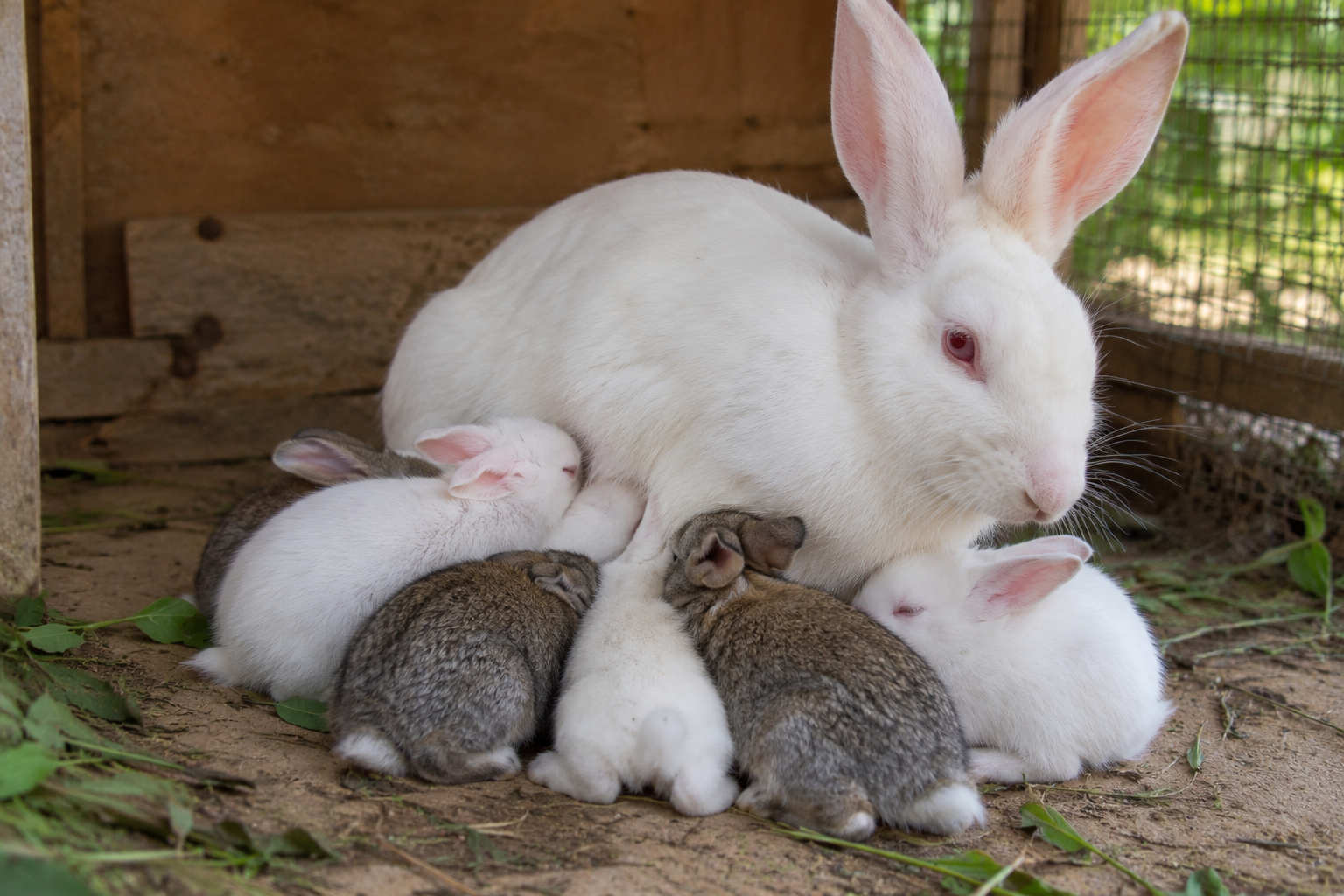
खरगोशों में प्रजनन: शुरुआती खरगोश पालकों के लिए मूल बातें  Rabbitrearing is an enterprise which has limitless scope in a developing country like India where large population is involved in subsistence farming. Being a second most populous country in the world, feeding the population with a nutritious food remains a priority for the governments. Rabbit, a small plant-eating animal, has tremendous potential to convert the inedible plant material to high protein meat. Rabbit is the highly prolific domesticated species gaining popularity in the recent decades. Rabbit meat is consumed in certain parts of world and India traditionally. But majority of the population is yet to taste the rabbit meat. Rabbit rearing is not so popular like that of cattle, sheep, goat, pig and poultry. But the scope is high as they reproduce rapidly and every time they give birth to more number of kits. Rabbits require cheap roughages for their normal productive life. Advantages and scope of Rabbitry The reproduction potential of rabbits is unmatched. With a short gestation period, a rabbit can give birth 6-8 times in a year with an average litter size of 4-6. Theoretically, 80 kits/doe/year. Rabbits are noiseless animals; hence, they can be maintained in urban or suburban localities also without creating nuisance to the neighbors. Rabbits are suitable for...