
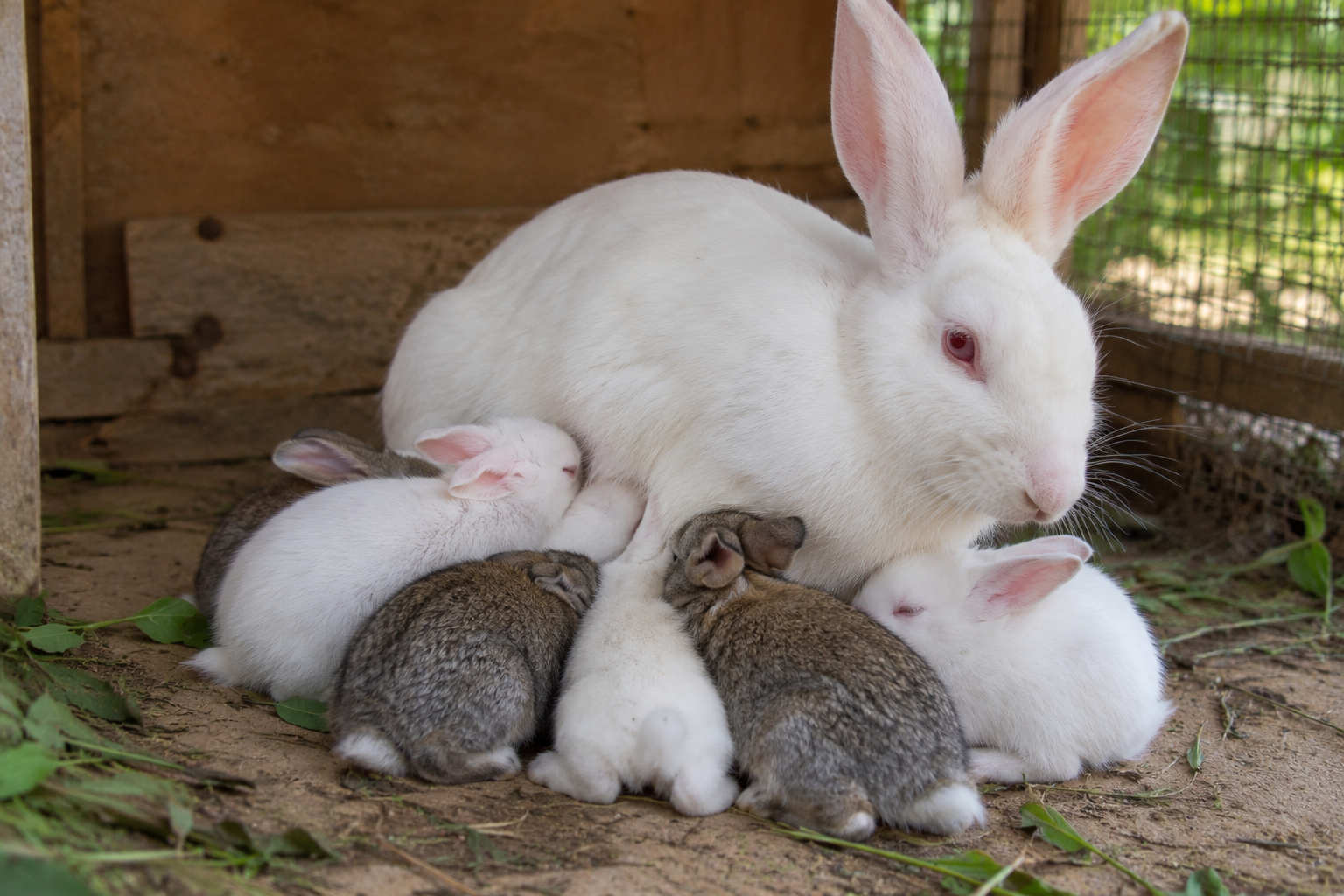
15 Jan Reproduction in Rabbits: Basics for beginners
खरगोशों में प्रजनन: शुरुआती खरगोश पालकों के लिए मूल बातें Rabbitrearing is an enterprise which has limitless scope in a developing country like India where large population is involved in subsistence farming. Being a second most populous country in the world, feeding the population with a nutritious food remains a priority for the governments. Rabbit, a small plant-eating animal, has tremendous potential to convert the inedible plant material to high protein meat. Rabbit is the highly prolific domesticated species gaining popularity in the recent decades. Rabbit meat is consumed in certain parts of world and India traditionally. But majority of the population is yet to taste the rabbit meat. Rabbit rearing is not so popular like that of cattle, sheep, goat, pig and poultry. But the scope is high as they reproduce rapidly and every time they give birth to more number of kits. Rabbits require cheap roughages for their normal productive life. Advantages and scope of Rabbitry The reproduction potential of rabbits is unmatched. With a short gestation period, a rabbit can give birth 6-8 times in a year with an average litter size of 4-6. Theoretically, 80 kits/doe/year. Rabbits are noiseless animals; hence, they can be maintained in urban or suburban localities also without creating nuisance to the neighbors. Rabbits are suitable for...