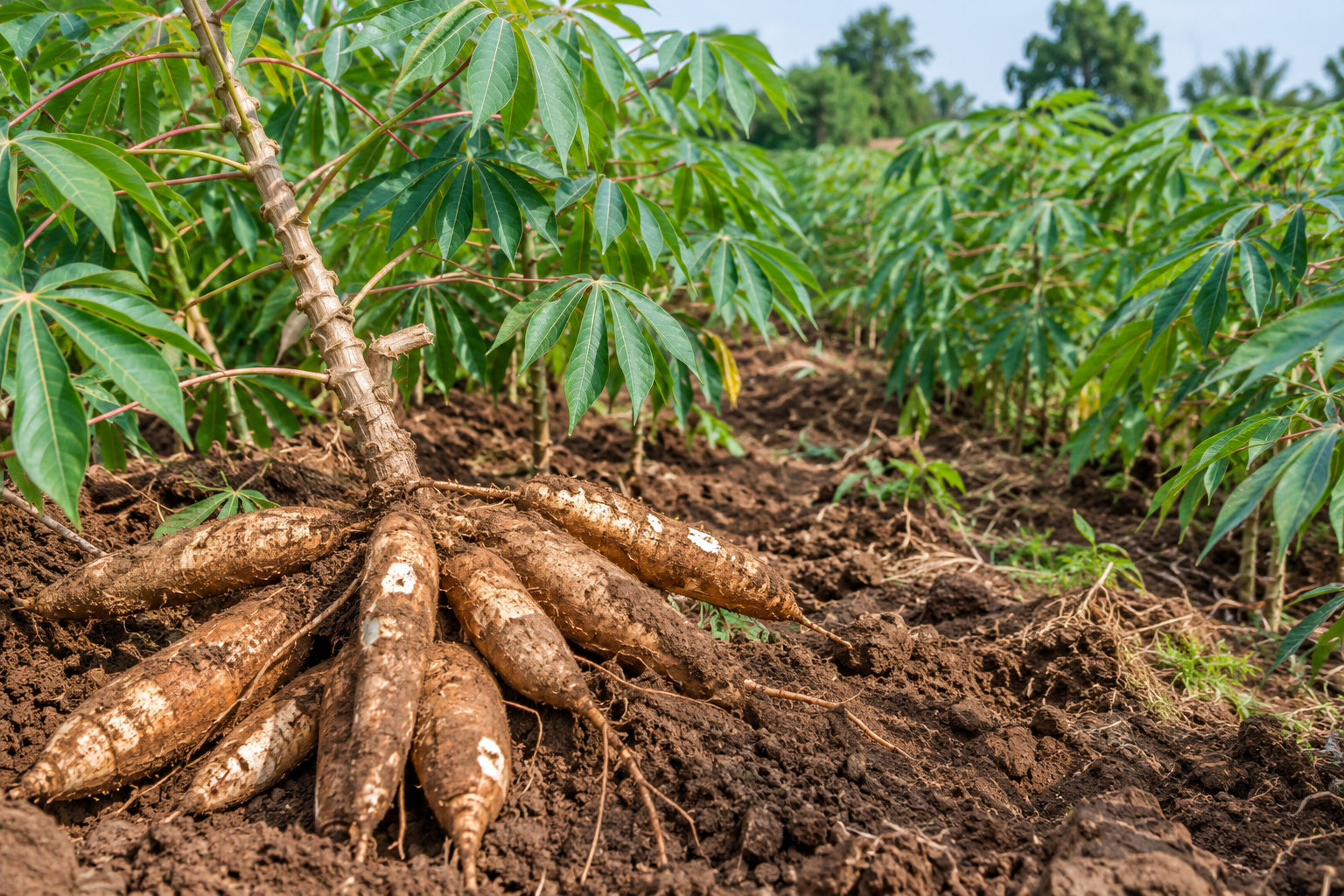
05 Oct टैपिओका (कसावा) की खेती कैसे करें? Tapioca Farming की पूरी जानकारी
टैपिओका (कसावा) की खेती की पूरी जानकारी हिंदी में जानें। मिट्टी, जलवायु, किस्म, रोपाई, खाद, सिंचाई, खरपतवार, रोग-कीट, कटाई और उत्पादन की उपयोगी जानकारी।...

टैपिओका (कसावा) की खेती की पूरी जानकारी हिंदी में जानें। मिट्टी, जलवायु, किस्म, रोपाई, खाद, सिंचाई, खरपतवार, रोग-कीट, कटाई और उत्पादन की उपयोगी जानकारी।...
Water requirements of major crops and their critical states फसलों से अधिक व अच्छी पैदावर लेने के लिये उनकी सिंचाई के लिये विभिन्न क्रांतिक अवस्थाओं पर मृदा में पर्याप्त मात्रा में नमी का होना अति आवश्यक है। फसलो में क्रांतिक अवस्थाए वे अवस्थाएं कहलाती है, जिन पर फसलों में सिंचाई करने या न करने से पैदावार में प्रभाव पडता है अर्थात सिंचाई करने से पैदावार में आशातीत बढोतरी होती है और इन क्रांतिक अवस्थाओं पर फसलो में सिंचाई न करने से पैदावर में कमी आती है। इसके साथ साथ फसलों में उचित समय पर सिंचाई न करने से भी पौधों की उचित वृद्धि नहीं हो पाती जिसका पैदावार पर प्रतिकुल प्रभाव पड्ता है। इस प्रकार फसलों से अधिक पैदावार लेने के लिए यह सुनिश्चित किया जाना आवश्यक है कि फसलों को सही समय पर सिंचाई उपलब्ध हो तथा प्रत्येक सिंचाई में उचित मात्रा में पानी का प्रयोग किया जाना चाहिये। विभिन्न फसलों की सिचाई के लिये क्रांतिक अवस्थाएं गेहूँ – गेहूँ की बौनी जातियो में कुल 5-6 सिंचाई की जरुरत होती है। पहली सिंचाई, क्राउन जड़ें निकलते समय, दुसरी सिंचाई कल्ले निकलते समय, तीसरी सिंचाई गांठ बनते समय, चौथी सिंचाई फूल निकलते समय, पाँचवी सिंचाई दानों में दूध पडने की अवस्था में करनी चाहिए बलुई भूमि में एक और सिंचाई की जरुरत पड सकती...
इंटरनेट ऑफ थिंग्स आधारित स्मार्ट सिंचाई शेड्यूलिंग प्रणाली The scarcity of clean water resources around the globe has generated a need for their optimum utilization.Internet of Things (IoT) solutions, based on the application specific sensors’ data acquisition and intelligentprocessing, are bridging the gaps between the cyber and physical worlds. IoT based smart irrigation managementsystems can help in achieving optimum water-resource utilization in the precision farming. Why should we go for irrigation scheduling smartly? Water scarcity is already affecting a part of the world and the situation is getting worse over time due to the increasing world population and fresh water demands. The current world population is around 7.2 billion and it is expected to be more than 9 billion by 2050. The agriculture sector, particularly irrigation, consumes a major portion of the freshwater. Due to lack of cost-effective intelligent irrigation systems, developing countries are consuming more water in contrast to the developed countries for achieving the same yield. For example, India has approximately 4% of world’s freshwater resources to serve 17% of the world population; however, it takes 2–4 times more water for some of its major agri-produce in comparison to the other countries like China, USA. Therefore, there is a dire need to come up with advanced technologies based on smart strategies and systems...
Combined use of surface and groundwater for good farming भूजल का तातपर्य यह है की जो जल जमीन के निचली सतह में पाया जाता है। जैसा की हम जानते है, भारत दुनिया का सबसे ज्यादा भूजल उपयोग करने वाला देश है और यह ग्रामीण इलाकों में पेयजल का पच्चासी प्रतिशत आपूर्ति करता है। भारत देश में भूजल का सबसे ज्यादा उपयोग सिंचाई के लिए किया जाता है, जो की कृषि के लिए किए गये कुल सिंचाई पानी उपयोग का पच्चासी प्रतिशत है। हमारे इस भारत देश में प्रकृति द्वारा प्राप्त सतह और भूजल प्रयाप्त मात्रा में उपस्थिस्थ है, जो की असमान रूप से पूरे देश में वितरित है। दिन व दिन, हमारे देश में सतह जल का आभाव होता जा रहा है और भूजल का कृषि के लिए उपयोग बढ़ता जा रहा है जो की हम्रारे देश की खेती के लिए बहुत बड़ा संकट बन सकता है। सतह जल का आभाव का तातपर्य यह है की हमारे देश में वर्षा जल की कमी होती जा रही है, जो की हमारे देश की कृषि के लिए सही संकेत नहीं है। जैसा की हमलोग जानते है की हमारे देश की लगभग साठ प्रतिशत कृषियोग भूमि बर्षा पर आधारित है। बर्षा का जल सतह जल और भूजल की उपस्तिथि का सबसे बड़ा वाहक है। आज हमारे देश...
माइक्रो सिंचाई प्रणाली से सिंचाई क्रांति India is predominantly an agricultural country and even with current orientation towards services, still agriculture contributes ¼th of total GDP of the country, 15 percent of total export and 65 % of total population’s livelihood. After independence, India has made remarkable progress in increasing food production and productivity, credit goes to concerted efforts made under various Agri revolutions. For agriculture Land and Water are two most important resources. Of which, water (irrigation) becomes lifeline of agriculture. It is a truth in agriculture “if we fail in irrigation, we will fail in agriculture”. Water is required for agriculture as well as for other sectors (Domestic, Industries, etc) and the demand of water is increasing alarmingly. At present level, agriculture consumes over 80 per cent of total water consumption in India. The country is endowed with many perennial and seasonal rivers. The river system which constitute 71 per cent of water resources is concentrated in 36 % of geographic area. Most of agricultural fields are irrigated by use of underground water for assured irrigation, however, erratic, mansoon based rainfall is source for water for rainfed agriculture. Though water is a renewable resource, the recharge is ultimately limited to rain. Drought like situation in Indian agriculture is more common and...