
Agriculture Knowledge for Everyone

biofertilizers Tag

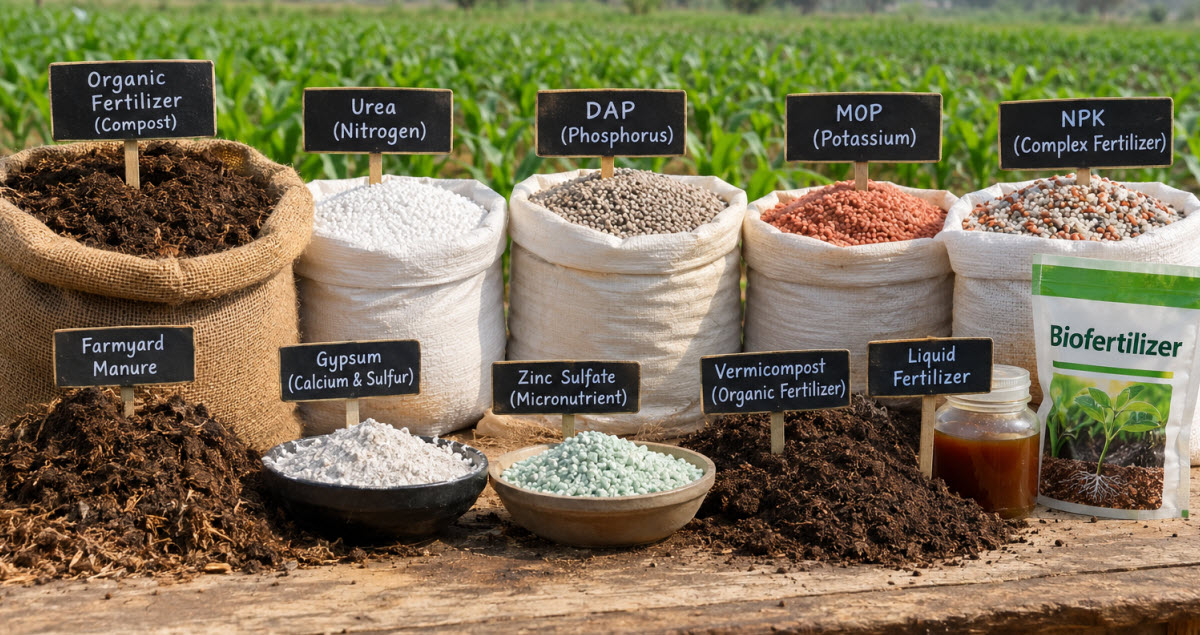
Healthy crops need the right nutrients at the right time. When plants do not get enough nutrients from the soil, their growth may slow down, leaves may turn yellow, and crop production may decrease. Fertilizers help farmers supply these essential nutrients and maintain healthy crop growth. Different fertilizers serve different purposes. Some help plants develop green leaves, while others support root growth, flowering, fruit development, and grain formation. Choosing the right fertilizer depends on the crop, soil condition, weather, and stage of plant growth. In this article, we will explain the different types of fertilizers, their uses, common examples, and how farmers can choose the right fertilizer for their crops. What Are Fertilizers? Fertilizers are materials added to soil or plants to supply nutrients needed for healthy growth. These nutrients help plants produce leaves, develop roots, form flowers, and produce fruits or grains. Plants need several nutrients throughout their growing period. The three main nutrients supplied through fertilizers are: Nitrogen (N): Helps plants develop green leaves and healthy vegetative growth. Phosphorus (P): Supports root development, early plant growth, and seed formation. Potassium (K): Helps regulate water movement, supports plant health, and contributes to crop quality. Plants also need calcium, magnesium, sulfur, iron, zinc, boron, and other nutrients in different amounts. A shortage of any essential nutrient...

Actinomycetes are widely recognized for significant role in promoting soil health and sustainable agriculture through the production of diverse bioactive compounds and plant growth promoting metabolites. This article highlights the ecological significance and agricultural importance of actinomycetes, with particular emphasis on their ability to produce antibiotics, extracellular enzymes, siderophores, and phytohormones. It also discusses their contributions to nutrient solubilization and mobilization, and enhancement of plant stress tolerance, biocontrol of pathogens and improvement of soil quality through bioremediation. Additionaly, the article explores the application of Actinomycetes as biofertilizers and bioinoculants in organic farming, emphasizing their potential to increase crop productivity while reducing dependence on chemical fertilizers and pesticides. Actinomycetes represent a promising and eco-friendly resource for improving soil fertility plant health, and the long-term sustainability of organic agriculture systems 1. Introduction to Actinomycetes Actinomycetes are Gram-positive, filamentous prokaryotic microorganisms belonging to the phylum Actinomycetota (Actinobacteria). Although they are classified as bacteria, they possess distinctive morphological and physiological characteristics that differentiate them from other bacterial groups. They are ubiquitous in terrestrial and aquatic ecosystems and are particularly abundant in soils with neutral to alkaline pH, high temperatures, or limited moisture availability, where they play a crucial role in maintaining soil health and ecological balance. Morphologically, actinomycetes exhibit a fungus-like growth pattern by producing extensively branched...

भूमिका मृदा स्वास्थ्य कृषि उत्पादन की आधारशिला है। स्वस्थ मिट्टी ही लंबे समय तक टिकाऊ उत्पादन, बेहतर गुणवत्ता और कम लागत वाली खेती सुनिश्चित करती है। आज की कृषि व्यवस्था में केवल अधिक उत्पादन के लक्ष्य के कारण नाइट्रोजन (यूरिया) का अत्यधिक उपयोग हो रहा है, जिससे मिट्टी में पोषक असंतुलन, सूक्ष्म पोषक तत्वों की कमी और जैविक सक्रियता में गिरावट देखी जा रही है। भारत सरकार किसानों को सस्ती दरों पर खाद उपलब्ध कराने के लिए भारी उर्वरक सब्सिडी (Fertilizer Subsidy) प्रदान करती है। हालांकि, उर्वरकों के असंतुलित और अत्यधिक उपयोग के कारण यह सब्सिडी अब सरकार के खजाने पर एक बड़ा बोझ बनती जा रही है। संतुलित पोषक प्रबंधन का उद्देश्य केवल उर्वरक देना नहीं, बल्कि मिट्टी, पौधे और सूक्ष्मजीवों के बीच प्राकृतिक संतुलन बनाए रखना है। इसके लिए रासायनिक, जैविक और प्राकृतिक खेती के तरीकों का समन्वय आवश्यक है। संतुलित उर्वरक प्रबंधन अपनाकर किसान न केवल अपनी भूमि को बचा सकते हैं, बल्कि देश की अर्थव्यवस्था को मजबूत करने में भी अपना योगदान दे सकते हैं। 1. मृदा परीक्षण आधारित उर्वरक प्रबंधन मृदा परीक्षण वैज्ञानिक खेती का सबसे महत्वपूर्ण आधार है। विधि खेत से 8-10 स्थानों से 0-15 सेमी गहराई तक मिट्टी नमूना लें सभी नमूनों को मिलाकर 500 ग्राम से 1 किग्रा प्रतिनिधि नमूना बनाएं कृषि विज्ञान केंद्र (KVK) या मृदा परीक्षण...

Environmental friendly agriculture through bio fertilizers खेत की मिट्टी एक जीवंत माध्यम है जिसमें प्रति ग्राम करोड़ों की संख्या में लाभदायक/मित्र जीवाणु पाए जाते हैं। कुछ पौधों जैसे कि  चना, सोयाबीन, मूंगफली आदि फलीदार फसलों की जड़ों पर गुलाबी गांठों के रूप में भी सूक्ष्म जीवाणु निवास करते हैं। यह जीवाणु अपनी जैविक क्रियाओं द्वारा वायुमंडलीय नाइट्रोजन का स्थिरीकरण या मिट्टी में अनुपलब्ध दशा में मौजूद पोषक तत्वों को उपलब्ध दशा में परिवर्तित करते  रहते हैं तथा फसल उत्पादन में महत्वपूर्ण योगदान  प्रदान करते हैं। सघन खेती में रासायनिक उर्वरकों के अंधाधुंध प्रयोग से इन मित्र जीवाणुओं की संख्या में कमी आई है तथा मिट्टी स्वास्थ्य में भारी गिरावट आई है। इसकी उत्पादन क्षमता क्षीण हुई है। अतः आज यह आवश्यक हो गया है कि रासायनिक उर्वरकों व जैव उर्वरकों/ जीवाणु खादों का मिल जुलकर संतुलित प्रयोग किया जाए। जैव उर्वरक क्या हैं प्रायः जड़ों या खेत की मिट्टी में इन मित्र जीवाणुओं की आबादी कम होती है इसलिए प्रयोगशाला में इनको निकाल कर और शुद्ध करके इनकी आबादी को बढ़ा लिया जाता है। इनकी आवश्यक मात्रा को कुछ अन्य पदार्थों जैसे कि चारकोल, पीट, लिग्नाइट आदि के साथ मिलाकर पैकेट में सील कर दिया जाता है। इस तरह तैयार जैविक/जीवाणु खाद को जैव उर्वरक कहा जाता है। जैव उर्वरक का महत्व जैव उर्वरक प्राकृतिक, सस्ती और प्रभावशाली जैविक...

चारा फसलों पर जैव उर्वरक का उपयोग पिछले ५० सालो में कृषि क्षेत्र में फसलों के लिए रासायनिक उर्वरको का अधिक उपयोग किया गया है जिसके प्रभाव से मिटटी की उपजाऊ क्षमता में कमी, पौधों में पोषक तत्वों की ज्यादा मात्रा, पौधों में रोग तथा किटो का आना , फलिय पौधों में नोडूलेसन की कमी, मिटटी के जीवाणुओं में कमी और प्रदुषण हुआ है| जिसके कारण किसानो को बहुत सी मुश्किलों का सामना करना पड़ा है | फसल की उत्पादकता कम हो गई है जिससे कि‍सानों की आमदनी कम हो गयी| ऐसी स्थिति में किसानो ने रासायनिक उर्वरक के बदले जैव उर्वरक का प्रयोग करना शुरू किया जो उनकी आशाओं पर खड़े उतरे है | जैविक उर्वरक के उपयोग के कारण रासायनिक उर्वरको के हानिकारक प्रभाव में कमी आई है तथा पर्यावरण में प्रदुषण भी कम हुआ है| किसान आज जैव उर्वरक का प्रयोग चारे की फसलों में भी करने लगे है जिससे किसानो को अधिक लाभ हुआ है| सण1895 में सबसे पहली जैव उर्वरक “नाइट्रैगिन’ की खोज हुई जिसे नोबे और हेल्टनर नामक वैज्ञानिकों ने खोजा था | इसके बाद एजोटोबैक्टर की खोज और फिर नीली-हरी शैवाल और अन्य तरह के जैव उर्वरक की खोज हुई |भारत में सबसे पहले जैव उर्वरकों पर अध्यन डॉ. डी.एन. जोशी ने किया था |जैव उर्वरकों का...

कृषि क्षेत्र में जैव-आवेगों का योगदान The increase in the world's population, coupled with the limitations in the world's supply of natural resources and widespread degeneration of the environment presents a major challenge to agriculturalists. Chemical fertilizer is used to give the plant nutrient requirements within a short period to get faster results. Newly improved varieties of crops need high proportions of fertilizer. But chemical fertilizer has certain limitations and entails a lot of disadvantages. No doubt, the application of chemical fertilizer provides nutrition in high concentration in the soil and plants. When chemical fertilizer is applied, the entire contents would not be absorbed by the plants and the remaining parts would react in the soil. Part of it would be washed away and would contaminate water and some part of it would evaporate to the atmosphere; thereby the environment is polluted. Intense activity is involved in efforts to create plants that by themselves are able to fix nitrogen from the atmosphere i.e convert nitrogen gas into nitrates that can be used by plant’s metabolic machinery. At present, only certain plants called legumes are naturally able to do so and even legumes require the aid of symbiotic bacteria. Further soil is reservoir of nutrients. But in some cases the nutrient remain in fixed forms which...

अधि‍क फसल वृद्धि के लिए प्लांट ग्रोथ को बढ़ावा देनेे वाले राइज़ोबैक्टेरिया (पीजीपीआर)  का उपयोग  Soil harbors several beneficial microorganisms and some of them colonize in the rhizospheric zone and enhance plant growth. Such bacteria are generally designated as PGPR (Plant Growth-Promoting Rhizobacteria). Plant growth-promoting rhizobacteria (PGPR) was first defined by Kloepper and Schrot  to describe soil bacteria that colonize the roots of plants following inoculation onto seed and that enhance plant growth. Forms of Plant Growth Promoting Rhizobacterial (पौधे का वि‍कास बढाने वाले  राईजोबैट्रीयल के रूप ) Plant growth promoting rhizobacteria can be classified into extracellular plant growth promoting rhizobacteria (ePGPR) and intracellular plant growth promoting rhizobacteria (iPGPR). The ePGPRs may exist in the rhizosphere, on the rhizoplane or in the spaces between the cells of root cortex while iPGPRs locates generally inside the specialized nodular structures of root cells. The bacterial genera such as Agrobacterium, Arthrobacter, Azotobacter, Azospirillum, Bacillus, Burkholderia, Caulobacter, Chromobacterium, Flavobacterium, Micrococcous, Pseudomonas and Serratia belongs to ePGPR. The iPGPR belongs to the family of Rhizobiaceae includes Allorhizobium, Bradyrhizobium, Mesorhizobium and Rhizobium, endophytes and Frankia species both of which can symbiotically fix atmospheric nitrogen with the higher plants. Mechanism Employed by PGPRs in Plant Growth Promotion: (राईजोबैक्‍ट्रीया से पौधे के विकास की क्रि‍यावि‍धि‍) Plant growth promotion by plant growth promoting rhizobacteria is a well-known phenomenon and this growth enhancement is due...

Seed treatment and its benefits for profitable crop production बीजोपचार एक महत्वपूर्ण क्रिया है जो कि बीज व पौधे को मृदा व बीज जनित बिमारियों व कीटों द्वारा होने वाले नुकसान से बचाता हैं।  हालांकि भारत में बहुत से किसान या तो बीजोपचार के बारे जानते ही नहीं या फिर इसको अपनाते नहीं हैं । भारत में किसानों के पास पहुचने वाला 70%  बीज अनुपचारित होता है। इसके पश्चात् बहुत कम ऐसे किसान होते है जो स्वंय बीज को उपचारित करते हैं। परिणामस्वरुप भारत में अधिकतर फसलें अनुपचारित बीज के द्वारा बोई जाती हैं। जबकि विकसित देशों में शत-प्रतिशत उपचारित बीज बोया जाता है। बीज उपचार से न केवल बीज और मृदा जनित बिमारियों से बचाया जा सकता है बल्कि फसल की प्रारंभिक विकास को प्रभावित करने वाले, रस चूसने वाले कीटों से भी बचाया जा सकता है। देश के अधिकतर किसान इस सामान्य प्रक्रिया से अनभिज्ञ है जिनके कारण कम खर्चीले उपाय होने के बावजूद इसका उपयोग नहीं कर पाते  है। बीजोपचार, रोग व कीट प्रबंधन का एक महत्वपूर्ण हिस्सा है। किसानों द्वारा इस महत्वपूर्ण कार्य को अपनाने के लिए पूरे देश में प्रचार-प्रसार की आवश्यकता है जिससे किसान कीटनाशकों का खर्च बचाकर तथा फसल उतपादन बढाकर खेती से अधि‍क लाभ पा सके। बीजोपचार की मुख्य विधियाँ 1.  बीज प्रसाधन (Seed dressing) बीज प्रसाधन , बीजोपचार की...