
Agriculture Knowledge for Everyone

organic manure Tag

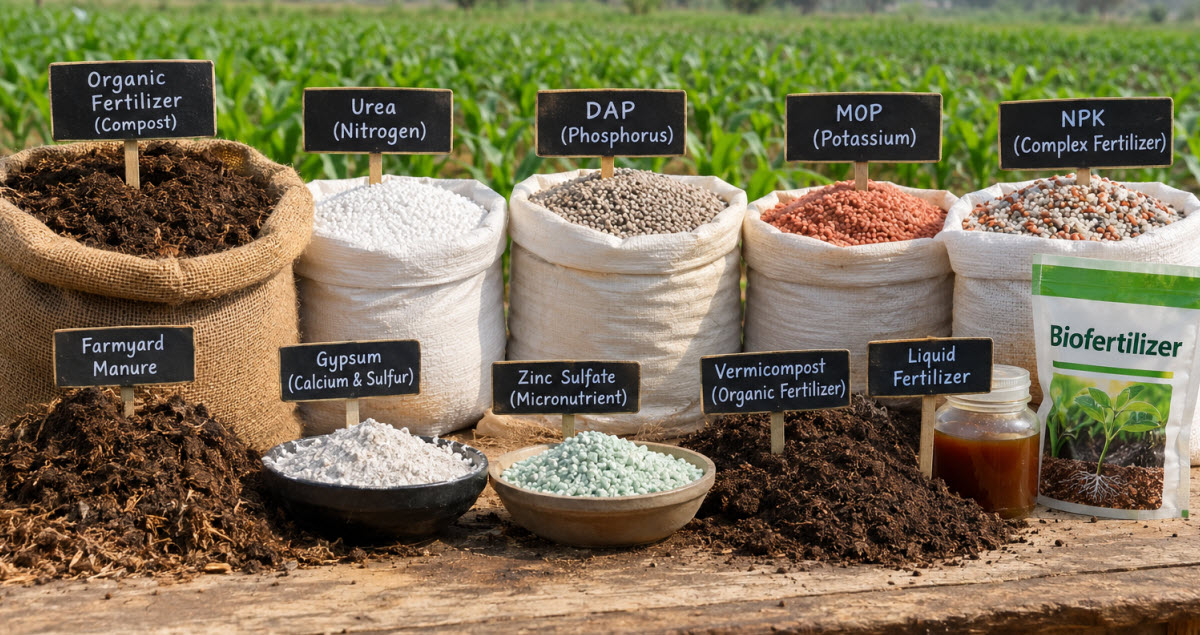
Healthy crops need the right nutrients at the right time. When plants do not get enough nutrients from the soil, their growth may slow down, leaves may turn yellow, and crop production may decrease. Fertilizers help farmers supply these essential nutrients and maintain healthy crop growth. Different fertilizers serve different purposes. Some help plants develop green leaves, while others support root growth, flowering, fruit development, and grain formation. Choosing the right fertilizer depends on the crop, soil condition, weather, and stage of plant growth. In this article, we will explain the different types of fertilizers, their uses, common examples, and how farmers can choose the right fertilizer for their crops. What Are Fertilizers? Fertilizers are materials added to soil or plants to supply nutrients needed for healthy growth. These nutrients help plants produce leaves, develop roots, form flowers, and produce fruits or grains. Plants need several nutrients throughout their growing period. The three main nutrients supplied through fertilizers are: Nitrogen (N): Helps plants develop green leaves and healthy vegetative growth. Phosphorus (P): Supports root development, early plant growth, and seed formation. Potassium (K): Helps regulate water movement, supports plant health, and contributes to crop quality. Plants also need calcium, magnesium, sulfur, iron, zinc, boron, and other nutrients in different amounts. A shortage of any essential nutrient...

भूमिका मृदा स्वास्थ्य कृषि उत्पादन की आधारशिला है। स्वस्थ मिट्टी ही लंबे समय तक टिकाऊ उत्पादन, बेहतर गुणवत्ता और कम लागत वाली खेती सुनिश्चित करती है। आज की कृषि व्यवस्था में केवल अधिक उत्पादन के लक्ष्य के कारण नाइट्रोजन (यूरिया) का अत्यधिक उपयोग हो रहा है, जिससे मिट्टी में पोषक असंतुलन, सूक्ष्म पोषक तत्वों की कमी और जैविक सक्रियता में गिरावट देखी जा रही है। भारत सरकार किसानों को सस्ती दरों पर खाद उपलब्ध कराने के लिए भारी उर्वरक सब्सिडी (Fertilizer Subsidy) प्रदान करती है। हालांकि, उर्वरकों के असंतुलित और अत्यधिक उपयोग के कारण यह सब्सिडी अब सरकार के खजाने पर एक बड़ा बोझ बनती जा रही है। संतुलित पोषक प्रबंधन का उद्देश्य केवल उर्वरक देना नहीं, बल्कि मिट्टी, पौधे और सूक्ष्मजीवों के बीच प्राकृतिक संतुलन बनाए रखना है। इसके लिए रासायनिक, जैविक और प्राकृतिक खेती के तरीकों का समन्वय आवश्यक है। संतुलित उर्वरक प्रबंधन अपनाकर किसान न केवल अपनी भूमि को बचा सकते हैं, बल्कि देश की अर्थव्यवस्था को मजबूत करने में भी अपना योगदान दे सकते हैं। 1. मृदा परीक्षण आधारित उर्वरक प्रबंधन मृदा परीक्षण वैज्ञानिक खेती का सबसे महत्वपूर्ण आधार है। विधि खेत से 8-10 स्थानों से 0-15 सेमी गहराई तक मिट्टी नमूना लें सभी नमूनों को मिलाकर 500 ग्राम से 1 किग्रा प्रतिनिधि नमूना बनाएं कृषि विज्ञान केंद्र (KVK) या मृदा परीक्षण...

वर्मीकम्पोस्ट (केंचुआ खाद) एक उन्नत उत्पादन तकनीक Earthworm manure has also increased the fertility of soil and along with it farmers are producing good and nutritious crops at low cost. When earthworms eat garbage and dung and the excrets after eating, we get the same in the form of manure, which we also call organic manure or earthworm manure or vermi compost. वर्मीकम्पोस्ट (केंचुआ खाद) एक उन्नत उत्पादन तकनीक रासायनिक खाद के बढ़ते प्रयोग से मृदा की उर्वरता बहुत ही कम होती जा रही है एवं इसके साथ-साथ रासायनिक खाद देने से खेतों में पानी की आवश्यकता ज्यादा पड़ती है। इसके अलावा यह किसान के लिए लाभदायक सूक्ष्मजीवों को भी मार देती है तथा पर्यावरण के लिए भी नुकसानदेह होती है। इन्हीं सब कारणों से लोग केंचुआ खाद या जैविक खाद (जिसे वर्मीकंपोस्ट भी कहा जाता है ) का प्रयोग करने लगे हैं केंचुआ खाद से उनकी मिट्टी की उपजाऊ क्षमता भी बढ़ी है तथा उसके साथ-साथ कम लागत में अच्छी एवं पौष्टिक फसल उपजा रहे हैं। कूड़ा कचरा तथा गोबर को जब केंचुए खाते हैं और खाने के बाद जो मल त्याग करते हैं वही हमें खाद के रूप में प्राप्त होती है, जिसे हम जैविक खाद या केंचुआ खाद अथवा वर्मी कंपोस्ट भी कहते हैं। लोगों में बढ़ती जागरूकता के कारण भी ऑर्गेनिक...

Organic manure and its benefits to agriculture जैविक खाद का अभिप्राय उन सभी कार्बनिक पदार्थों से है जो कि सड़ने या गलने पर जीवांश पदार्थ या कार्बनिक पदार्थ पैदा करती है। इसे हम कम्पोस्ट खाद भी कहते हैं। इनमें मुख्यतः वनस्पति सामग्री और पशुओं का विछावन, गोबर एवं मल मूत्र होता है। इसलिए इनमें वे सभी पोषक तत्व उपस्थित रहते हैं जो की पौधों के वृद्धि के लिए आवश्यक होते हैं। जैविक खाद फसल के लिए बहुत ही उत्तम खाद मानी जाती है। जैविक खाद या कम्पोस्ट खाद को मुखयतः तीन भागों में विभाजित किया जा सकता है : फास्को कम्पोस्ट इनरिच्ड कम्पोस्ट एवं वर्मी कम्पोस्ट फास्को कम्पोस्ट इस खाद में फास्फोरस (स्फुर) की मात्रा अन्य कम्पोस्ट खादों की अपेक्षा ज्यादा होता है। फास्को कम्पोस्ट में 3-7% फास्फोरस (स्फुर) होता है जबकि साध कम्पोस्ट में यह अधिकतम 1.0% तक पाया जाता है। फास्को कम्पोस्ट बनाने की विधि यह विधि बिरसा कृषि विश्वविद्यालय के मृदा विज्ञानं एवं कृषि रसायन द्वारा विकसित एवं आनुशंसित है। इस विधि द्वारा फास्को कम्पोस्ट बनाने का तरीका बहुत ही आसान एवं सरल है। सबसे पहले २ मीटर लम्बा, 1 मीटर चौड़ा, 1 मीटर गहरा गड्ढा बनाएं। आवश्यकतानुसार एक या एक से अधिक गड्ढे बना सकते हैं। यह गड्ढा कच्चा या पक्का किसी भी तरह का हो सकता है। सामग्री: खरपतवार, कूड़ा-कच्चा, फसलों के अवशेष, जलकुम्भी, थेथर, पुटूस, करंज...

एकीकृत पोषक तत्व प्रबंधन दृष्टिकोण मिट्टी की उत्पादकता और स्थिरता को प्रभावित करता है। Integrated Nutrient Management approach to the management of plant nutrients for maintaining and enhancing soil, Soil fertility maintenance requires a balanced application of inorganic and organic nutrient sources. Sustainable agricultural productivity might be achieved through a wise use of integrated nutrient management. Integrated use of organic and inorganic source of plant nutrients on growth and yield attributes is very crucial for assurance of food security.   The integrated plant nutrient supply/ management is important approach for maintenance or adjustment of soil fertility and plant nutrient supply to an optimum level for sustainable crop productivity. It includes optimization benefit from all possible sources of plant nutrients in an integrated manner such as maintain or enhance soil productivity through a balanced use of fertilizers combined with organic and biological sources of plant nutrients and also to reduce inorganic (fertilizer) input cost. Organic sources such as FYM, bio compost, vermicompost, nadepcompost, green manures, crop residues and industrial wastes have been used in various cropping systems. Soil as a source of nutrients, must be protected from all kinds of external factors, especially from the addition of fertilizers in excessive rates. Any degradation in the quality of soil can significantly produce many undesirable changes in...

Use of organic manure in fish productivity मछली पालन आय का एक महत्वपूर्ण स्रोत है मछली पालन कई मछुवारे परिवारो के जीवन व्यतीत करने का प्रमुख साधन/ व्यवसाय है  परन्तु मछली पालन से जितना मत्स्य पालकों को लाभ प्राप्त होना चाहिए वो नही हो पाता है क्योकि मछलियों का उत्पादकता दर बहुत कम ही हो पाता है, जिसका प्रमुख कारण मछलियों को पर्याप्त मात्रा में पोषक तत्वों का नहीं मिल पाना है मछलियों में हो रहे पोषक तत्वों के कमी को खाद पदार्थो का उपयोग करके किया जा सकता है यह खाद पदार्थ बहुत से प्रकार के होते है जैसे की गाय के गोबर, सूअर, मुर्गी, पालन से निकल रहे अपशिस्ट पदार्थ इत्यादि। चूंकि‍ इन अपशिस्ट पदार्थों में बहूत सारे आवश्यक पोषक तत्व पाए जाते है जो तालाबों में सूक्ष्मजीवी जीवों के लिए आवश्यक आहार का कार्य करता है जिससे तालाबो में पादप प्लवक (phytoplankton) एवं जंतु प्लवक (zooplankton)की संख्या बढ़ जाती है एवं इन जीवों को मछलियाँ प्रमुख रूप से भोजन के रूप में उपयोग करती है उत्पादकता: उत्पादकता का विचार सर्वप्रथम १७६६ में प्रकृतिवाद के संस्थापक क्वेसने के लेख में सामने आया। उत्पादन दक्षता की औसत माप है।  उत्पादकता को इस प्रकार से व्याखित किया जा सकता है। किसी भी एक स्थाई स्थान एवं स्थाई समय अन्तराल में जीवो के द्वारा अकार्बनिक पदार्थो से...

वर्मीकंपोस्ट - उत्पादन और क्रि‍याऐं। Vermicomposting is a method of preparing enriched compost with the use of earthworms. It is one of the easiest methods to recycle agricultural wastes and to produce quality compost. Earthworms consume biomass and excrete it in digested form called worm casts. Worm casts are popularly called as Black gold. The casts are rich in nutrients, growth promoting substances, beneficial soil micro flora and having properties of inhibiting pathogenic microbes. Vermicompost is stable, fine granular organic manure, which enriches soil quality by improving its physiochemical and biological properties. It is highly useful in raising seedlings and for crop production. Vermicompost is becoming popular as a major component of organic farming system. Vermicomposting materials: Decomposable organic wastes such as animal excreta, kitchen waste, farm residues and forest litter are commonly used as composting materials. In general, animal dung mostly cow dung and dried chopped crop residues are the key raw materials. Mixture of leguminous and non-leguminous crop residues enriches the quality of vermicompost. Types of Earthworms: There are different species of earthworms viz. Eisenia foetida (Red earthworm), Eudrilus eugeniae (night crawler), Perionyx excavatus etc. Red earthworm is preferred because of its high multiplication rate and thereby converts the organic matter into vermicompost within 45-50 days. Since it is a surface feeder it...