
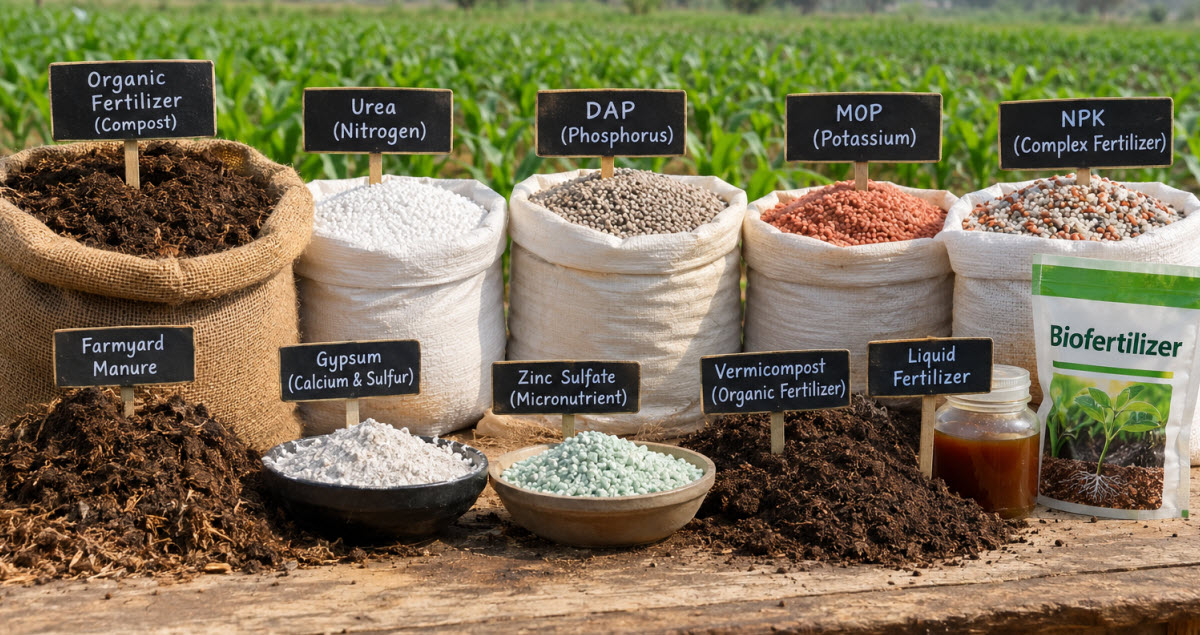
20 Oct Types of Fertilizers and Their Uses: A Complete Guide
Healthy crops need the right nutrients at the right time. When plants do not get enough nutrients from the soil, their growth may slow down, leaves may turn yellow, and crop production may decrease. Fertilizers help farmers supply these essential nutrients and maintain healthy crop growth. Different fertilizers serve different purposes. Some help plants develop green leaves, while others support root growth, flowering, fruit development, and grain formation. Choosing the right fertilizer depends on the crop, soil condition, weather, and stage of plant growth. In this article, we will explain the different types of fertilizers, their uses, common examples, and how farmers can choose the right fertilizer for their crops. What Are Fertilizers? Fertilizers are materials added to soil or plants to supply nutrients needed for healthy growth. These nutrients help plants produce leaves, develop roots, form flowers, and produce fruits or grains. Plants need several nutrients throughout their growing period. The three main nutrients supplied through fertilizers are: Nitrogen (N): Helps plants develop green leaves and healthy vegetative growth. Phosphorus (P): Supports root development, early plant growth, and seed formation. Potassium (K): Helps regulate water movement, supports plant health, and contributes to crop quality. Plants also need calcium, magnesium, sulfur, iron, zinc, boron, and other nutrients in different amounts. A shortage of any essential nutrient...