
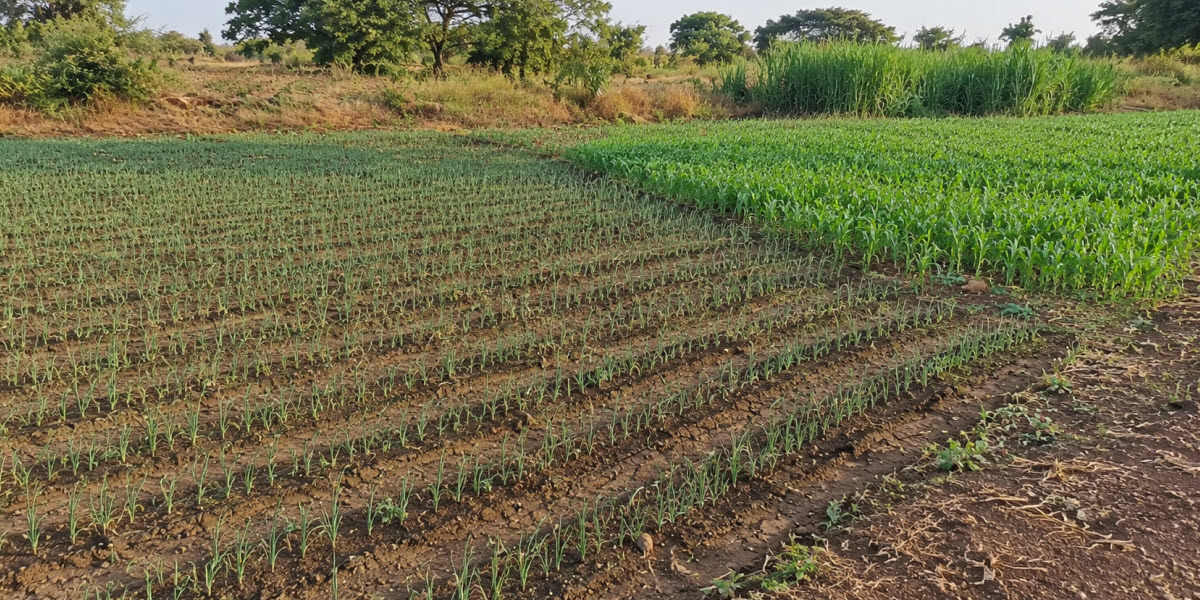
18 Oct Agriculture in India: Types, Farming Methods and Benefits
Agriculture is much more than growing crops. For millions of Indian families, it is a way of life and an important source of income. From rice fields in West Bengal to cotton farms in Maharashtra and apple orchards in Himachal Pradesh, farming looks different in different parts of the country.
The crops farmers grow depend on several things, including rainfall, soil, temperature, irrigation facilities and the local market. Some farmers grow crops mainly for their families, while others produce vegetables, fruits, grains or commercial crops for sale.
Farming practices are also changing. Many farmers now use improved seeds, drip irrigation, farm machinery and better crop-management techniques. However, not every modern method suits every farm. The right choice depends on the farmer’s land, budget, water supply and crop requirements.
In this guide, we explain the main types of agriculture in India, commonly used farming methods, their benefits and the challenges farmers need to consider.
What Is Agriculture?
Agriculture is the process of growing crops and raising animals to produce food, fibre and other useful products. It includes activities such as preparing the land, sowing seeds, watering crops, managing soil fertility, controlling pests and harvesting produce.
In India, agriculture also includes activities such as dairy farming, poultry, fisheries, beekeeping, fruit cultivation and vegetable production. These activities can help farming families earn additional income.
For example, a farmer growing maize may also keep dairy animals. The maize stalks can sometimes be used as fodder, depending on their quality, while animal manure can be composted and used to improve the soil. This is one way different farm activities can support each other.
Why Is Agriculture Important in India?
Agriculture supports India’s food supply and rural economy. Its importance can be seen in everyday life, from the food available in local markets to the raw materials used by factories.
- Food supply: Farmers produce rice, wheat, pulses, vegetables, fruits, oilseeds and many other food products.
- Employment: Farming creates work in cultivation, harvesting, transportation, storage and food processing.
- Income for rural families: Crop production and allied activities provide livelihoods to many rural households.
- Industrial development: Crops such as cotton, sugarcane and oilseeds supply raw materials to different industries.
- Trade: Agricultural products such as rice, tea, coffee and spices contribute to domestic and international trade.
- Livestock production: Crop residues and fodder crops help support dairy and other livestock activities.
Types of Agriculture in India
There is no single farming system that works everywhere in India. A small farmer in a rain-fed village may follow a very different approach from a farmer growing vegetables near a large city.
The following are some common types of agriculture practised in India.
1. Subsistence Farming
In subsistence farming, farmers grow crops mainly to meet their household food requirements. Any surplus may be sold in the local market.
This type of farming is often associated with small landholdings, family labour and crops suited to local conditions. The actual methods used vary from region to region.
Example: A family may grow rice, pulses and vegetables for its own use and sell the extra produce after harvest.
What to consider: Crop selection should match family needs, available water and the size of the land. Growing several suitable crops can help spread production risks.
2. Commercial Farming
Commercial farming focuses on producing crops or livestock products for sale. Farmers generally consider market demand, production costs, expected prices and the resources available to them.
Cotton, sugarcane, soybean, vegetables and fruits are examples of crops that may be grown commercially.
Example: A farmer in Maharashtra may grow grapes for fresh fruit markets or raisins, depending on the variety, local facilities and market opportunities.
What to consider: A crop that sells at a high price may also require more investment, labour, irrigation or specialised storage. Farmers should estimate these costs before choosing a crop.
3. Intensive Farming
Intensive farming aims to obtain more production from a limited area of land. It may involve improved seeds, timely irrigation, balanced fertilisation, careful pest management and repeated cropping where conditions allow.
Rice cultivation in parts of eastern India and intensive vegetable farming near cities are examples of systems that may use intensive practices.
Benefits: Intensive farming can increase production per unit of land and make better use of available farmland.
What to consider: Applying too much fertiliser or using water without proper planning can increase costs and damage natural resources. Soil testing and crop-specific recommendations are important.
4. Extensive Farming
Extensive farming involves cultivating relatively large areas of land with comparatively lower inputs per unit of land. Machinery may be used to manage large fields efficiently.
This approach is more practical in areas where enough agricultural land is available and suitable equipment can be used.
Benefits: Mechanisation can help farmers complete sowing and harvesting operations over large areas in less time.
What to consider: The suitability of this system depends on land availability, machinery costs, soil conditions and the type of crop grown.
5. Plantation Agriculture
Plantation agriculture involves growing commercial crops, often over relatively large areas, with specialised cultivation and management practices.
Tea, coffee and rubber are well-known examples. Tea is widely associated with Assam, coffee with Karnataka, and rubber with Kerala.
Benefits: Plantation crops supply raw materials to processing industries and create employment in cultivation, harvesting and processing.
What to consider: Many plantation crops take time to establish and require suitable climatic conditions. Farmers should assess the long-term investment and market outlook before planting.
6. Mixed Farming
Mixed farming combines crop cultivation with livestock rearing. It is common for farmers who want to use their land and available resources for more than one agricultural activity.
For example, a farmer may grow fodder and cereals while keeping dairy animals. Crop residues may be used as feed when suitable, and animal manure can be composted for field use.
Benefits: Mixed farming can provide income from different sources and reduce dependence on a single crop.
What to consider: Dairy and livestock activities need regular care, suitable feed, clean water, animal health management and a reliable market for milk or other products.
7. Organic Farming
Organic farming focuses on soil health, biodiversity and the use of permitted organic production practices. Depending on the farming system, these may include compost, farmyard manure, crop rotation, green manuring and biological pest management.
Organic farming is not simply a matter of replacing chemical fertilisers with manure. Farmers still need to manage nutrients, pests, diseases and weeds carefully.
Benefits: Well-managed organic practices can help build soil organic matter and support beneficial soil organisms.
What to consider: Nutrient availability, weed management, certification requirements and access to buyers can affect the cost and profitability of organic production.
8. Horticulture
Horticulture includes growing fruits, vegetables, flowers, spices and ornamental plants. It offers opportunities for farmers who can produce quality crops and reach suitable markets.
Examples include mangoes in Maharashtra, apples in Himachal Pradesh, grapes in Maharashtra, and a wide range of vegetables grown across the country.
Benefits: Horticulture can diversify farm income and create opportunities in grading, packaging, processing and direct marketing.
What to consider: Many fruits and vegetables are perishable. Farmers should consider transport, storage, labour requirements and market access before investing in a new crop.
9. Integrated Farming
Integrated farming combines two or more farm activities in a planned way. These may include crops, dairy, poultry, fisheries, compost production or beekeeping.
For example, a suitable farm may combine crop cultivation with dairy farming and fodder production. Another farm with appropriate water resources may explore fish farming alongside crop production.
Benefits: Integrated farming can make use of farm by-products, diversify income and improve resource management.
What to consider: Not every activity is suitable for every location. Water availability, animal care, technical knowledge, investment and local demand must be assessed first.
Traditional and Modern Farming Methods
Traditional farming knowledge remains valuable in many parts of India. Farmers understand local soils, rainfall patterns, seed selection and seasonal changes through years of experience.
Modern farming methods can complement this knowledge by providing better tools and more precise ways to manage crops.
| Aspect | Traditional approach | Modern approach |
|---|---|---|
| Land preparation | May use hand tools or animal-drawn equipment | May use tractors and specialised machinery |
| Irrigation | May rely on rainfall or conventional irrigation | May use drip or sprinkler systems |
| Crop planning | Often draws on local knowledge and experience | May combine local experience with weather data and crop research |
| Pest management | May use established local practices | May combine monitoring, biological controls and approved treatments |
| Farm records | May be maintained through experience or written notes | May use mobile applications and digital records |
The best approach is not necessarily the most expensive one. A farmer should choose methods that solve a real problem on the farm and provide benefits that justify their cost.
Modern Agriculture Techniques Used in India
Drip Irrigation
Drip irrigation supplies water close to the roots through pipes and emitters. It is used for crops such as vegetables, fruit trees and sugarcane where the system is suitable.
It can help reduce water wastage when properly designed, maintained and scheduled. Farmers also need to check filters, pipes and emitters regularly to prevent blockages.
Read our guide to agricultural resource management for related information.
Sprinkler Irrigation
Sprinkler systems distribute water over the field through sprinkler heads. They may be suitable for different field and fodder crops, depending on soil, wind, water quality and crop requirements.
Before installing a system, farmers should compare equipment costs, water availability and operating expenses.
Farm Mechanisation
Tractors, seed drills, power weeders, harvesters and threshers can reduce the time needed for many farm operations. Timely sowing and harvesting are particularly important when weather conditions leave farmers with a short working window.
For small farms, renting machinery or using a local custom hiring service may be more economical than purchasing expensive equipment.
Precision Farming
Precision farming uses information about soil, crop growth, water and weather to improve farm decisions. Depending on the scale of the farm, it may involve soil sensors, GPS equipment, satellite images or digital farm records.
These tools are useful when the information helps farmers make practical decisions, such as where irrigation is needed or when a crop requires attention.
Protected Cultivation
Protected cultivation uses structures such as polyhouses, greenhouses and shade-net houses to manage growing conditions. Farmers may grow crops such as cucumber, capsicum, tomato and flowers under suitable structures.
However, construction costs, ventilation, temperature control, pests and access to reliable markets all affect the success of protected cultivation.
Benefits of Agriculture in India
Agriculture provides benefits beyond the production of food. It supports many activities that are important to rural communities and the wider economy.
Food for Families
Farming supplies essential foods such as cereals, pulses, fruits, vegetables, milk and edible oils. Good storage and transportation are also needed to make these products available throughout the year.
Employment Opportunities
Agriculture creates work during land preparation, sowing, irrigation, weeding and harvesting. Additional employment is generated in dairy farming, processing, packaging, transport and agricultural services.
Income from Different Activities
Farmers can earn from crops, livestock, nursery plants and other suitable enterprises. Diversification may help spread risk, although each activity needs proper planning and cost management.
Support for Industries
Cotton supports the textile industry, sugarcane supplies sugar mills, and oilseeds provide raw materials for edible oil production. Agricultural processing can also turn farm produce into products with added value.
Rural Economic Development
When agricultural businesses and farms earn income, money is spent on local shops, equipment, transport, labour and other services. This creates links between agriculture and the wider rural economy.
Challenges Faced by Indian Farmers
Farmers must make important decisions while dealing with uncertain weather, changing prices and rising production costs. Some of the main challenges are explained below.
- Uncertain rainfall: Delayed monsoons, droughts and heavy rainfall can affect sowing and crop growth.
- Water shortages: Limited irrigation facilities and falling groundwater levels can restrict production.
- Soil problems: Erosion, nutrient deficiencies and declining soil organic matter can affect crop performance.
- Pests and diseases: Crop damage may reduce both yield and the quality of harvested produce.
- High input costs: Seeds, fertilisers, labour, fuel and machinery can increase the cost of cultivation.
- Price changes: Market prices may fall during periods of high supply, affecting farm income.
- Post-harvest losses: Poor storage, handling and transport can damage perishable produce.
- Climate risks: Heatwaves, floods and changing rainfall patterns can affect crops and livestock.
Practical Ways to Improve Farm Management
Farm improvement does not always require a large investment. In many cases, careful planning and better use of existing resources can make a meaningful difference.
- Test the soil: Use soil test results to guide nutrient management rather than applying fertilisers without considering crop needs.
- Select suitable seeds: Choose varieties suited to the local climate, soil, season and expected market requirements.
- Plan irrigation: Match water application to crop needs and check the irrigation system for leaks or blockages.
- Monitor crop health: Inspect plants regularly and identify pests or diseases early. Seek local agricultural advice when the cause is uncertain.
- Keep farm records: Record spending, labour, irrigation, harvest quantities and selling prices to understand the actual cost of production.
- Reduce post-harvest losses: Handle, grade, store and transport produce according to its requirements.
- Compare market options: Check local market prices, transport costs and buyer requirements before deciding where to sell.
- Explore diversification carefully: Consider a new crop or allied activity only after assessing investment, skills, water and market demand.
Government Support for Indian Agriculture
Farmers may be eligible for government schemes related to income support, crop insurance, soil health and agricultural infrastructure. Eligibility and benefits depend on the scheme’s current rules.
- PM-KISAN — official information about the farmer income-support scheme.
- Pradhan Mantri Fasal Bima Yojana — official information about crop insurance.
- Soil Health Card — information related to soil testing and nutrient management.
- Agriculture Infrastructure Fund — information about eligible agricultural infrastructure financing.
Farmers should read the latest official guidelines and confirm eligibility before applying. Scheme availability and application requirements can change.
What Is the Future of Agriculture in India?
The future of Indian farming will depend on how effectively farmers manage water, soil, production costs and changing weather conditions. Better access to agricultural advice, improved storage facilities and reliable markets can also make a difference.
Digital tools may help farmers check weather forecasts, maintain farm records and access market information. Drip irrigation, suitable farm machinery and improved crop varieties may also be useful where they match local needs.
At the same time, technology alone cannot solve every farming problem. Affordable equipment, practical training, access to credit and reliable buyers remain important, especially for farmers with small landholdings.
A useful starting point is to identify the biggest problem on a farm. If water is limited, irrigation management may deserve attention first. If produce is being damaged after harvest, better handling and storage may offer more value than increasing production.
Frequently Asked Questions
What are the main types of agriculture in India?
Common types include subsistence farming, commercial farming, intensive farming, extensive farming, plantation agriculture, mixed farming, organic farming, horticulture and integrated farming.
Which crops are commonly grown in India?
India grows rice, wheat, maize, pulses, cotton, sugarcane, oilseeds, fruits, vegetables, spices, tea, coffee and many other crops. The choice of crop depends on local climate, soil and water availability.
What is the difference between traditional and modern farming?
Traditional farming often relies on local knowledge and established practices. Modern farming may use machinery, improved irrigation, digital tools and scientific crop-management methods. Many farmers combine both approaches.
How can farmers save water?
Farmers can assess irrigation requirements, repair leaks, maintain irrigation equipment, use mulching where suitable and consider drip or sprinkler systems when economically practical.
Is organic farming suitable for every farmer?
Not necessarily. Organic farming depends on soil conditions, nutrient availability, pest management, labour, certification requirements and access to suitable markets. Farmers should assess these factors before making the transition.
How can small farmers improve their income?
Small farmers can review production costs, reduce avoidable losses, improve crop quality, compare selling options and consider suitable allied activities. Machinery rental and collective marketing may also help where local services are available.
Conclusion
Agriculture in India includes many different farming systems, from growing food for household use to producing commercial crops and managing integrated farms. Each system has its own opportunities and challenges.
Farmers can make better decisions by understanding their soil, water supply, crop requirements and local markets. Small improvements in irrigation, nutrient management, crop monitoring and post-harvest handling may be more useful than investing in technology that does not solve a farm’s actual problems.
At KrishiSewa, our aim is to help farmers and agriculture learners understand farming practices through clear, practical information. Explore our related guides on resource management and other agricultural topics to learn more.
