
Agriculture Knowledge for Everyone

rabbit Tag

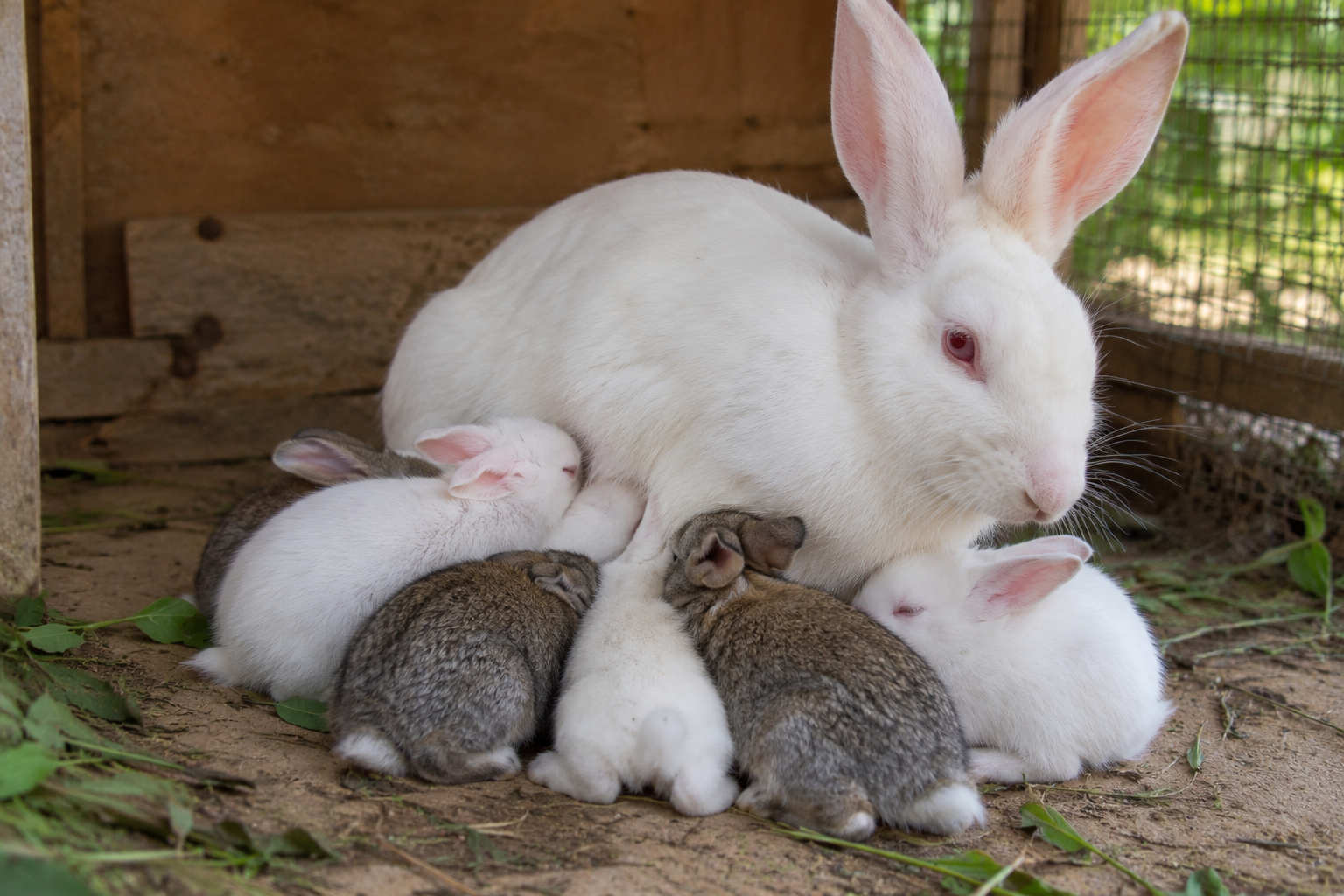
Rabbit farming methods and benefits खरगोश पालन में ग्रामीण गरीबों की सामाजिक-आर्थिक स्थिति में सुधार और कम लागत वाले पशु प्रोटीन के संदर्भ में खाद्य सुरक्षा प्रदान करने की व्यापक क्षमता है। देश की कुल खरगोश की आबादी लगभग 406000 है। 28 राज्यों और 7 केंद्र शासित प्रदेशों में से 27 राज्यों और 5 केंद्र शासित प्रदेशों में खरगोशों की आबादी है। खरगोश अत्यधिक विपुल है। एक मादा खरगोश, अपनी संतानों के माध्यम से प्रति वर्ष 80 किलोग्राम तक मांस का उत्पादन कर सकती है। भारत में मांस का उत्पादन 5000 और 19000 टन / वर्ष के बीच होने की सूचना है। अंगोरा ऊन उत्पादन प्रति वर्ष 25 से 30 टन है, जो अनुमानित वैश्विक उत्पादन का 1% है। खरगोश पालन का सामान्य प्रबंधन खरगोश पालन किसानों एवं बेरोजगार युवाओं के लिए एक कम लागत, कम समय में बड़े मुनाफे का धंधा है । इसमें पोल्ट्री व्यवसाय से काफी कम खर्च और जोखिम है। एक खरगोश दिनभर में लगभग एक मुट्ठी फीड, एक मुट्ठी चारा और दो-तीन कटोरी पानी पीता है। चार महीने में खरगोश का वजन दो किलो से भी ज्यादा हो जाता है और फिर साढ़े तीन सौ से पांच सौ रुपए तक में बिक जाता है। खरगोश पालन के लिए सरकार पचीस-तीस प्रतिशत सब्सिडी भी देती है। पशु पालन सम्बन्धी किसी भी व्यवसाय में...
मछली के साथ खरगोश पालन ग्रामीण क्षेत्रों में उद्यमियों के लिए एक अभिनव विचार The growth of trade industries in the 21st century is commendable. In this situation, "rabbit farming" and "rabbit cum fish farming" is a good and low cost business for the common man.  Rabbit cum fish farming gives you more profits in less cost. Integrated Fish Farming: Any animal husbandry can be integrated with fisheries so that more production can be achieved at less cost.  Generally, poultry, duck and pig farming are quite popular along with fisheries.  But the manure produced from rabbit-cum-fishery and other animal husbandry etc. can be directly used in fish farming, so that there is no need to provide manure and supplementary food from outside in the pond.  Fish and paddy can be cultivated in fish-cum-agriculture, fruits, vegetables and flowers can also be cultivated in the land around the pond.  Its rabbit can be used in composting so that there is no need to provide compost from outside and supplementary food to rabbit. Integrated rabbit-fish farming is based on the principle that fertilized water develops a marked quantity of phytoplankton and zooplankton – the natural diet of most fish species produced in aquaculture. Fish-cum-rabbit farming: Fish-cum-rabbit farming benefits both.  The rabbit can be reared on the ground and above...

खरगोशों में प्रजनन: शुरुआती खरगोश पालकों के लिए मूल बातें  Rabbitrearing is an enterprise which has limitless scope in a developing country like India where large population is involved in subsistence farming. Being a second most populous country in the world, feeding the population with a nutritious food remains a priority for the governments. Rabbit, a small plant-eating animal, has tremendous potential to convert the inedible plant material to high protein meat. Rabbit is the highly prolific domesticated species gaining popularity in the recent decades. Rabbit meat is consumed in certain parts of world and India traditionally. But majority of the population is yet to taste the rabbit meat. Rabbit rearing is not so popular like that of cattle, sheep, goat, pig and poultry. But the scope is high as they reproduce rapidly and every time they give birth to more number of kits. Rabbits require cheap roughages for their normal productive life. Advantages and scope of Rabbitry The reproduction potential of rabbits is unmatched. With a short gestation period, a rabbit can give birth 6-8 times in a year with an average litter size of 4-6. Theoretically, 80 kits/doe/year. Rabbits are noiseless animals; hence, they can be maintained in urban or suburban localities also without creating nuisance to the neighbors. Rabbits are suitable for...

खेती वाले खरगोशों में रोग- एक सिंहावलोकन Rabbits are highly prolific animals which have enormous reproduction potential. They have the capacity to convert 20% of their feed protein to meat protein second to broiler chicken which has 23% conversion. Rabbit rearing is expected to be a viable alternative to broiler poultry industry as virtually there is zero competition between them for feed resources. Like all other domesticated species, rabbits are also susceptible for various ailments. They are afflicted by number of infectious and non-infectious diseases. The success of rabbit industry relies upon reduction in the mortality, increase in the fryer production per maternity cage, reduction in operation / feeding cost. To run a Rabbitry with economic success, every effort should be made to reduce the loss of kits, does and fryers. Diseases are the commonest cause of loss of litter, doe and fryers. The common disease control strategy followed in other farm animals cannot be applied as such in rabbits. In this publication, an attempt is made to give a brief introduction to commonly occurring diseases in farmed rabbits and their management especially for beginners. 1. Snuffles in Rabbits Snuffles is almost similar to common cold in human beings but it is caused by a very common bacteria. Poor ventilation in Rabbitry can predispose to snuffles. Building...

Influence, treatment and management of Ranikhet disease in poultry farming रानीखेत एक अत्यधिक घातक और एक संक्रामक रोग है, यह रोग  कुक्कुट-पालन की सबसे गंभीर विषाणु बीमारियों में से एक है। इस रोग के विषाणु ‘पैरामाइक्सो’ को सबसे पहले वैज्ञानिकों ने वर्ष १६३९-४० में उत्तराखंड (भारत) के 'रानीखेत' शहर में चिन्हित किया था। रानीखेत रोग बहुत से पक्षियों जैसे मुर्गी, टर्की, बत्तख, कोयल, तीतर, कबूतर, कौवे, गिनी, आदि में देखने को मिलता है, लेकिन यह रोग मुर्गियों को प्रमुख रूप से प्रभावित करता है। मुर्गियों में रानीखेत रोग अक्सर किसी भी उम्र तक हो सकता है, परन्तु इस रोग का प्रकोप प्रथम से तीसरे सप्ताह ज्यादा देखने को मिलता है। रानीखेत रोग का सकंमण लगभग दुनिया के सभी देशों में देखनें को मिलता है। भारत में रानीखेत रोग के नमूने राज्यों के सभी भागो में देखने को मिलते है, लेकिन मुख्य रूपसे दक्षिण और पश्चिम भारत जैसे आंध्र प्रदेश, कर्नाटक, तमिलनाडु, महाराष्ट्र आदि में यह रोग कई बार देखने को मिला है। इस रोग को हम न्यूकैसल रोग (Newcastle d।sease) नाम से भीजानते है। इस रोग से मुर्गी पालकों को बहुत ही हानि होती है। रानीखेत रोग का कारक एक नकारात्मक और एकल असहाय आर.एन.ए. विषाणु (RNA V।rus) है और इस रोग का मुख्य कारण Av।an paramyxov।rus type-1(APMV-l) विषाणु है। रानीखेत रोग का...

घर के पिछवाड़े मे बटेर पालन - ग्रामीण किसानों के लिए एक नया उद्यम The quail (Coturnix coturnis japonica), in Hindi called ‘Bater’ is raised for egg and meat production. It is one of the best source of non-vegetarian diet and a good converter of agri-byproducts or cereals to animal protein. The quality of ‘Bater’ meat is very high due to low calorific values, nutrient contents is more, very tender, juicy and delicious meat. The dry matter content in quail meat is high. To boost up the family income particularly for poor farmers who do not have any other source for high investment for diversified farming can easily opt for low cost quail farming. Initial investment is very less in comparison to other livestock farming and suitable for landless and marginal farmers. It is ideal for backyard farming also. Source: www.grit.com Quail is a small bird and weigh about 200 to 250 gm at mature age. Generally males are lighter than female. Identification of male and female can be done at 3 to weeks of age. Males are cinnamon colour at upper portion of breast and lower portion is having light brown in shade. Female colour varies from brown with black markings in throat, face and upper portion of breast but, tan colour in lower portion. In male there...

बत्‍तख फार्मिंग- ग्रामीण लोगों के सामाजिक-आर्थिक विकास के लिए एक प्रभावी उपकरण Duck is a very good income generating occupation for those who are small and marginal farmers. This can be even reared by landless classes and women.  Duck rearing is profitable and simple in management because ducks are  (1) less hazardous bird, (2) have disease resistance, (3) have longer economic egg-production life, (4) duck eggs are heavier and fetch a better price, (5) meat is also a delicacy and is relished by the people, (6) they do not need elaborate housing, and (7) ducks kill snails, slugs and other crop pests. Duck rearing can be done in all Indian states. Marshy river side’s, wetlands, ponds, tanks, barren moors, etc. are good for ducks. Land based duck farming is being recently started on artificial water stores, near big cities on small and large commercial scale. Weaker and unorganised sections of people are mostly involved in duck rearing. Therefore, considering duck rearing as an effective tool for socio-economic development of rural masses. Duck rearing forms important  component of  integrated farming systems, such as duck cum fish farming, where the droppings of duck serve as feed to fish and some fish can be used as duck feed. Duck cum crop farming, where weeds...

पशु पालन के साथ मत्स्य पालन की एकीकृत कृषि पद्धति Integration of livestock in fish culture is an old age system of practice. Ducks, poultry, pig, cattle, buffalo, sheep and goat are common in mixed farming. Nowadays rabbit also incorporated in integrated livestock cum fish culture. Due to progressive shrinking of farm holding to obtain maximum output adoption of mixed farming system with livestock and fish become very popular in wetland and water shed areas of the country. The by-product utilization of one sub-system e.g. excreta of livestock becomes an input to a second sub-system i.e. in fish culture. To avoid environmental problems with animal excreta apart from manure production the animal excreta could be efficiently utilized as feed for fish and the end product is valuable animal protein, which is very much needed in India. States like West Bengal. Orissa, Bihar, Jharkhand, Andhra Pradesh, Assam and North Eastern states the demand for fish and fish products along with meat and animal products are very high. To meet the demand and supply the integration with fish and livestock is very promising and could bring a significant profitability from a unit area particularly for small holding farmers. Most of the small holder farmers cannot afford the concentrate feed requirements of the fishes...