
Agriculture Knowledge for Everyone

soil fertility Tag

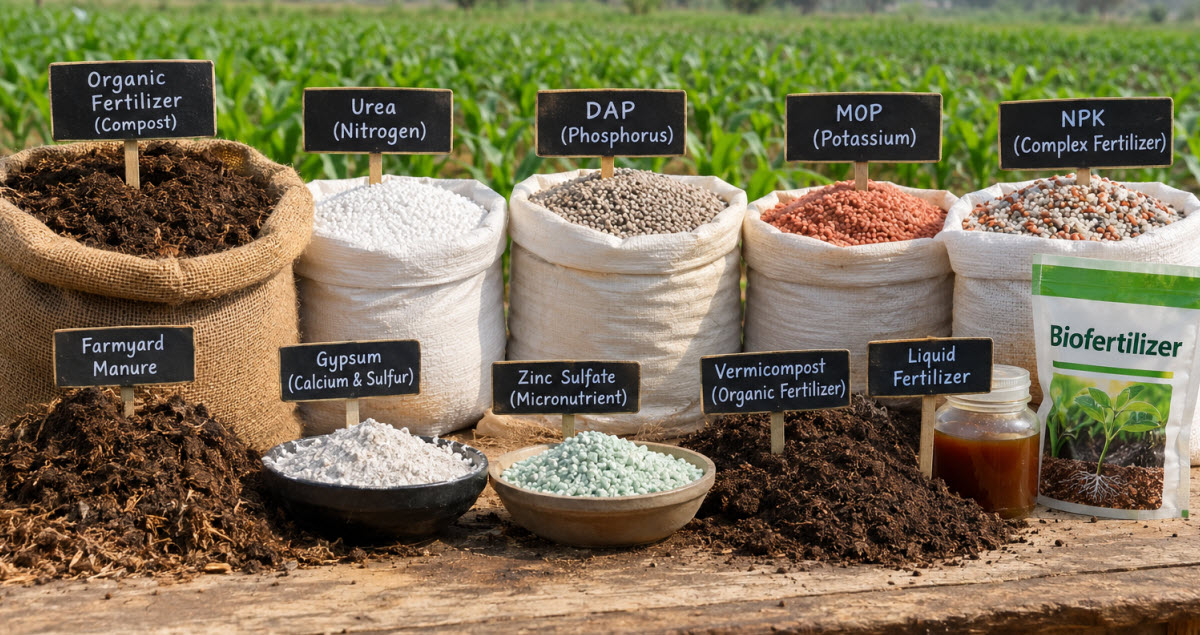
Healthy crops need the right nutrients at the right time. When plants do not get enough nutrients from the soil, their growth may slow down, leaves may turn yellow, and crop production may decrease. Fertilizers help farmers supply these essential nutrients and maintain healthy crop growth. Different fertilizers serve different purposes. Some help plants develop green leaves, while others support root growth, flowering, fruit development, and grain formation. Choosing the right fertilizer depends on the crop, soil condition, weather, and stage of plant growth. In this article, we will explain the different types of fertilizers, their uses, common examples, and how farmers can choose the right fertilizer for their crops. What Are Fertilizers? Fertilizers are materials added to soil or plants to supply nutrients needed for healthy growth. These nutrients help plants produce leaves, develop roots, form flowers, and produce fruits or grains. Plants need several nutrients throughout their growing period. The three main nutrients supplied through fertilizers are: Nitrogen (N): Helps plants develop green leaves and healthy vegetative growth. Phosphorus (P): Supports root development, early plant growth, and seed formation. Potassium (K): Helps regulate water movement, supports plant health, and contributes to crop quality. Plants also need calcium, magnesium, sulfur, iron, zinc, boron, and other nutrients in different amounts. A shortage of any essential nutrient...
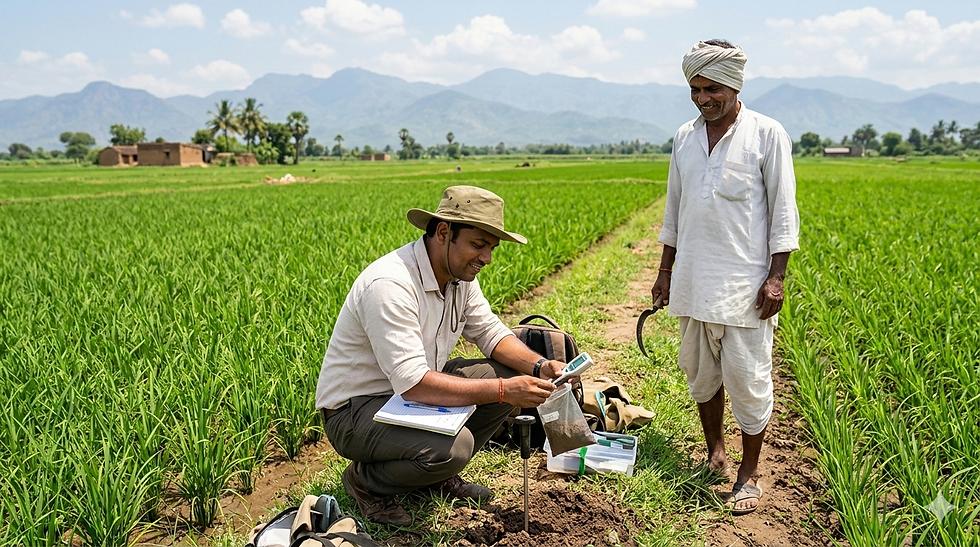
अच्छी फसल के लिए किसान बीज, पानी और खाद पर काफी ध्यान देता है। लेकिन इन सबके साथ एक चीज और उतनी ही जरूरी है—खेत की मिट्टी की स्थिति जानना। मिट्टी में कौन-सा पोषक तत्व कम है, कौन-सा पर्याप्त है और मिट्टी का pH कैसा है, इसकी जानकारी बिना जांच के आसानी से नहीं मिलती।कई बार किसान फसल कमजोर दिखाई देने पर ज्यादा खाद डाल देते हैं। लेकिन हर बार फसल की समस्या खाद की कमी के कारण हो, यह जरूरी नहीं है। समस्या मिट्टी के pH, पानी की निकासी, लवणता या किसी खास पोषक तत्व की कमी के कारण भी हो सकती है।इसीलिए Soil Testing यानी मिट्टी की जांच खेती का एक जरूरी हिस्सा है। मिट्टी की जांच रिपोर्ट के आधार पर किसान अपनी फसल के लिए खाद और पोषक तत्वों का बेहतर तरीके से प्रबंधन कर सकता है। मिट्टी की जांच क्या होती है? मिट्टी की जांच में खेत से मिट्टी का सही नमूना लेकर उसे प्रयोगशाला में जांच के लिए भेजा जाता है। जांच के बाद पता चलता है कि मिट्टी में जरूरी पोषक तत्वों की स्थिति कैसी है और मिट्टी की रासायनिक स्थिति क्या है। Soil Health Card व्यवस्था के तहत मिट्टी की जांच में मुख्य रूप से 12 पैरामीटर देखे जाते हैं। इनमें नाइट्रोजन, फास्फोरस, पोटैशियम, सल्फर, जिंक,...

Actinomycetes are widely recognized for significant role in promoting soil health and sustainable agriculture through the production of diverse bioactive compounds and plant growth promoting metabolites. This article highlights the ecological significance and agricultural importance of actinomycetes, with particular emphasis on their ability to produce antibiotics, extracellular enzymes, siderophores, and phytohormones. It also discusses their contributions to nutrient solubilization and mobilization, and enhancement of plant stress tolerance, biocontrol of pathogens and improvement of soil quality through bioremediation. Additionaly, the article explores the application of Actinomycetes as biofertilizers and bioinoculants in organic farming, emphasizing their potential to increase crop productivity while reducing dependence on chemical fertilizers and pesticides. Actinomycetes represent a promising and eco-friendly resource for improving soil fertility plant health, and the long-term sustainability of organic agriculture systems 1. Introduction to Actinomycetes Actinomycetes are Gram-positive, filamentous prokaryotic microorganisms belonging to the phylum Actinomycetota (Actinobacteria). Although they are classified as bacteria, they possess distinctive morphological and physiological characteristics that differentiate them from other bacterial groups. They are ubiquitous in terrestrial and aquatic ecosystems and are particularly abundant in soils with neutral to alkaline pH, high temperatures, or limited moisture availability, where they play a crucial role in maintaining soil health and ecological balance. Morphologically, actinomycetes exhibit a fungus-like growth pattern by producing extensively branched...

पौधों के विकास में सूक्ष्मजीवों की भूमिका Microorganisms have developed diverse strategies to survive and compete for the resources of their habitat, and one of them is the production of inhibitory substances. Growth-inhibitory microbes are microorganisms that produce compounds or enzymes that inhibit other microorganisms. inhibit the growth or metabolism पौधों के विकास में सूक्ष्मजीवों की भूमिका एक सूक्ष्मजीव एकल-कोशिकिय या बहुकोशिकीय सूक्ष्म जीव हो सकता है जो आम तौर पर केवल एक माइक्रोस्कोप के माध्यम से देखा जा सकता है। सूक्ष्मजीवों में बैक्टीरिया, कवक, आर्किया, प्रोटोजोआ, वायरस इत्यादि शामिल हैं। ये पृथ्वी पर सबसे गहरे महासागरों से लेकर सबसे ऊंचे पहाड़ों तक हर जगह पाए जाते हैं, और विभिन्न पारिस्थितिक प्रक्रियाओं जैसे पोषक चक्रण और कार्बनिक पदार्थों के अपघटन में महत्वपूर्ण भूमिका निभाते हैं। कुछ सूक्ष्मजीव मनुष्यों सहित पौधों और जानवरों में भी रोग पैदा कर सकते हैं और कुछ जीवो को लाभ पहुंचते है। पादपों को प्रभावित करने वाले सूक्ष्मजीव मिटटी, जल अवं हवा में उपस्तिथ होते है यहाँ इस अनुच्छेद में हम मिटटी के उपस्तिथ सूक्ष्मजीवो के अध्ययन पर प्रकाश डालेंगे जो की पादप को अतयधिक प्रभावित करते है।  मृदा सूक्ष्मजीव मृदा सूक्ष्मजीव, छोटे जीवित जीव होते हैं जो मिट्टी में पाए जाते हैं। इनमें बैक्टीरिया, कवक, प्रोटोजोआ और नेमाटोड शामिल हैं। ये सूक्ष्मजीव मिट्टी के स्वास्थ्य और उर्वरता में महत्वपूर्ण भूमिका निभाते हैं,...

Importance and factors affecting of earthworms in soil मृदा मानव जाति की सबसे बड़ी विरासत है और सबसे मूल्यवान प्राकृतिक संसाधन भी है। इंसान ऐतिहासिक रूप से शिकार पर निर्भर थे और जीवनयापन के लिए भोजन का संग्रह  मृदा  से करते थे। हमारे मृदा के साथ संबंध मृदा की जुताई से जुड़े है। जिसके कारण आज मानव सभ्यता का विकास हुआ है और ये मानव और मृदा के संबंध को देख कर हम कह सकते है की मृदा कृषि के लिए एक आधारभूत हिस्सा है । आज-कल देखा जा रहा है की वन कटाई, अधिक चराई, फसल जलाना, अधिक मात्रा में कृषि रसायन एवं कम कार्बनिक खाद का प्रयोग और कृषि योगय भूमि का अन्य कामो में उपयोग करने के कारण कृषि उत्पादन व मृदा के उपजाऊपन में कमी आयी है। परिणामस्वरूप मृदा ऑर्गेनिक कार्बन (SOC),  नत्रजन, फॉस्फोरस जैसे मुख्य पोषक तत्व एवं अन्य सूक्ष्मपोषक तत्वों में भी कमी आयी है अतः इन सब परिस्तिथियों को ध्यान में रखते हुए मृदा की उपजता को बढ़ाने की दिशा में हमारे प्रयास होने चाहिए ताकि हम आने वाले समय एवं आने वाली पीढ़ियों के लिए खाद्य सुरक्षा और संधारणीय फसल उत्पादन कर सकेंगे। हम उपलब्ध मृदा का सही तरीके से उपयोग एवं सरंक्षण तभी कर सकेंगे जब हम  सामाजिक और आर्थिक दृष्टिकोण से मृदा को...

Soil Biodiversity Harness and Management for Sustainable Agricultural मृदा जीव पारिस्थितिकी तंत्र का एक अभिन्न अंग हैं। मिट्टी का बायोटा पौधों और जानवरों / मानव जीवन को बनाए रखने के लिए अत्यावश्यक है। मृदा  मैं रहने वाले सूक्ष्मजीव मिट्टी की प्रक्रियाओं में आवश्यक भूमिका निभाते हैं जैसे कि कार्बन / पोषक तत्व चक्र , पौधों द्वारा पोषक तत्व और मिट्टी कार्बनिक पदार्थ (एसओएम) का गठन। मृदा में कई ऐसे जीवाणु है जो वायुमण्डलीय नाइट्रोजन का यौगिकीकरण करते हैं। इस बात के भी प्रमाण बढ़ रहे हैं कि मिट्टी की जैव विविधतापौधों, जानवरों और मनुषय कीटों और बीमारियों के नियंत्रण में योगदान करते  है। खाद्य उत्पादन काफी हद तक जैव विविधता और पारिस्थितिक तंत्र द्वारा प्रदान की जाने वाली सेवाओं पर निर्भर करता है।  जैविक विविधता और संबंधित पारिस्थितिक तंत्र  की सेवाएं खाद्य सुरक्षा प्राप्त करने के लिए महत्वपूर्ण हैं। जैव विविधता उत्पादन प्रणाली और आजीविका को जलवायु परिवर्तन के कारण होने वाले  हानिकारक प्रभावों और तनावों के लिए अधिक लचीला बनाती है। यह पर्यावरण पर नकारात्मक प्रभावों को सीमित करते हुए खाद्य उत्पादन को बढ़ाने के प्रयासों में एक महत्वपूर्ण संसाधन है। यह कई लोगों की आजीविका में विभिन्न प्रकार के योगदान देता है, अक्सर खाद्य और कृषि उत्पादकों मैं इस्तेमाल होने वाली महंगे वपर्यावरणीय रूप से हानिकारक बाहरी रसायनो की आवश्यकता को कम करता हैं। वैश्विक...

Necessity of soil health card and soil testing कृषि‍ उत्‍पादकता बढाने के लि‍ए मृदा स्‍वास्‍थ्‍य पर ध्‍यान केंदि‍‍‍त करना अत्‍यंत आवश्‍‍‍‍यक है इस बात को ध्‍यान मे रखते हुऐ वर्तमान सरकार ने पूरे देश में मृदा स्वास्थ्य कार्ड योजना शुरू की है। इसमे मृदा का परीक्षण करना तथा उसका ब्‍योरा रखना बहुत महत्‍वपूर्ण कार्य माना गया है। मृदा स्वास्थ्य कार्ड की विशेषताएं सरकार ने इस योजना के तहत पुरे भारत के 14 करोड़ से भी ज्यादा किसानों तक इस स्कीम से जोडने की सोचा है। यह योजना भारत के हर क्षेत्र में उपलब्ध है। इस योजना से जुड़े हुए सभी किसानों को उनका मृदा स्वास्थ्य कार्ड ऑनलाइन और प्रिंट कर के दिया जाता है। मिटटी के परिक्षण के बाद इसमें उनके खेत की मिटटी के विषय में सभी जानकारियाँ दी जाती है। हर किसान को उनके मृदा का स्वास्थ्य कार्ड प्रति 3 वर्ष में दिया जाता है। मृदा स्वास्थ्य कार्ड में क्या-क्या जानकरी लिखा होता है? किसान का नाम, पता, मोबाइल नंबर तथा सैंपल नंबर होता है। मृदा का स्वास्थ्य की यह मिटटी फसल करने के लिए सही है या नहीं। मिटटी की विशेषताएं और सामान्य सिफारिशें। मिटटी में उपलब्ध सभी पोषक तत्व। मिटटी में किन-किन खाद का किन-किन अनाज के फसल में कितना उपयोग करना चाहिए उसकी जानकरी। मृदा स्वास्थ्य कार्ड योजना के फायदे इस स्कीम की मदद से किसानों को अपने खेत...

एकीकृत पोषक तत्व प्रबंधन दृष्टिकोण मिट्टी की उत्पादकता और स्थिरता को प्रभावित करता है। Integrated Nutrient Management approach to the management of plant nutrients for maintaining and enhancing soil, Soil fertility maintenance requires a balanced application of inorganic and organic nutrient sources. Sustainable agricultural productivity might be achieved through a wise use of integrated nutrient management. Integrated use of organic and inorganic source of plant nutrients on growth and yield attributes is very crucial for assurance of food security.   The integrated plant nutrient supply/ management is important approach for maintenance or adjustment of soil fertility and plant nutrient supply to an optimum level for sustainable crop productivity. It includes optimization benefit from all possible sources of plant nutrients in an integrated manner such as maintain or enhance soil productivity through a balanced use of fertilizers combined with organic and biological sources of plant nutrients and also to reduce inorganic (fertilizer) input cost. Organic sources such as FYM, bio compost, vermicompost, nadepcompost, green manures, crop residues and industrial wastes have been used in various cropping systems. Soil as a source of nutrients, must be protected from all kinds of external factors, especially from the addition of fertilizers in excessive rates. Any degradation in the quality of soil can significantly produce many undesirable changes in...