
Agriculture Knowledge for Everyone

vegetable farming Tag

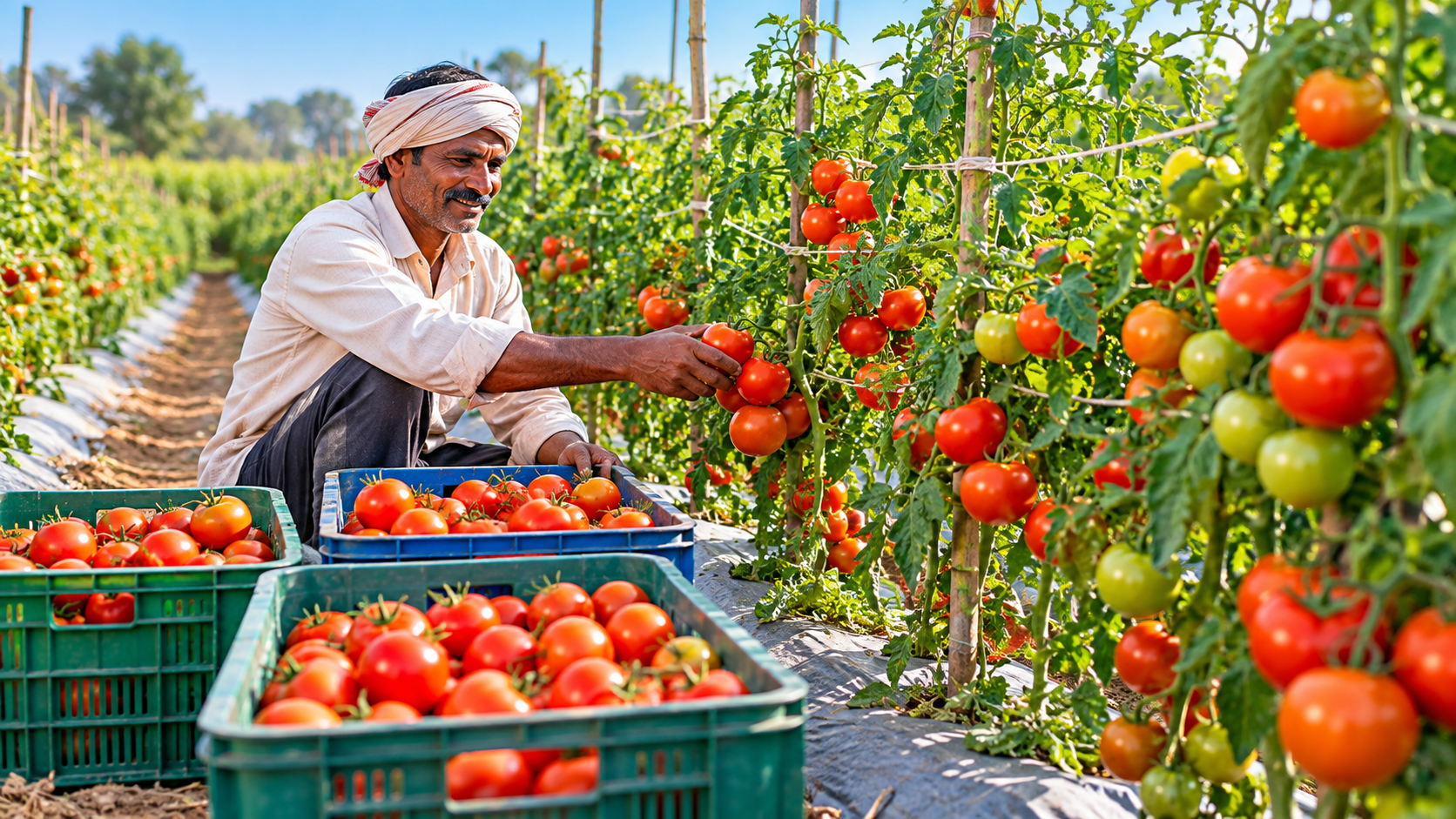
Tomato farming is an important vegetable farming activity in many parts of India. It can give good returns when production is healthy and tomatoes are sold at a suitable market price. At the same time, tomato prices can change quickly, so it is useful to calculate the expected cost and income before planting. The cost of growing tomatoes on one acre is not the same everywhere. Seedlings, fertilizer, labour, irrigation, crop protection, staking, harvesting, transport and land rent can all change the final farming cost. This guide explains the main expenses involved in tomato farming in India and includes a simple Tomato Farming Cost, Income & Profit Calculator. You can enter your own farm expenses, expected production and selling price to get an estimated result. Quick estimate: An open-field tomato crop may cost roughly ₹50,000 to ₹90,000 or more per acre, depending on the location, season, variety, labour, irrigation, input prices, crop management and whether land rent is included. These are planning figures and not fixed rates for every farm. Tomato Farming Cost Per Acre in India There is no single fixed cost for tomato farming across India. A farmer who owns the land and already has irrigation facilities may spend less than a farmer who leases land and hires labour for most farm operations. A...

सब्जियों की वृद्धि और विकास में जलवायु कारकों की भूमिका Environment is defined as surrounding or everything outside the plant which influence the life of plant e.g. temperature, rain, light, humidity and soil etc. There are 3 major classes of environmental factors: Climatic factors like light, temperature, humidity, wind, rain and photoperiod, Topographic factors like Slope of particular place, altitude etc and Soil/Edaphic factors like soil pH, soil structure, texture, organic matter in soil The geographic distribution, plant growth and development are largely influenced by environment. If any environmental factor deviates from optimum requirement, it results in hindrance of plant growth and development by various means. For example, only plants requiring very small amount of water can live in deserts. The environmental stresses directly or indirectly leads to incidence of various plant growth affecting biotic or abiotic stresses. 1. Role of Temperature                        Temperature does not supply energy to plants, but controls rate of chemical reactions. It controls the plant development including morphogenesis and plant quality. Temperature, diurnal temperature-alternating day and night temperature and optimum temperature range have close relationship between yield and quality of vegetables. Effect of temperature on Plant Physiology Temperature is most important factor for plant growth because it has unique regulatory influences. Different metabolic responses, enzymatic activity, membrane permeability, substrate concentration and cumulative reactions are influenced. Water uptake...