
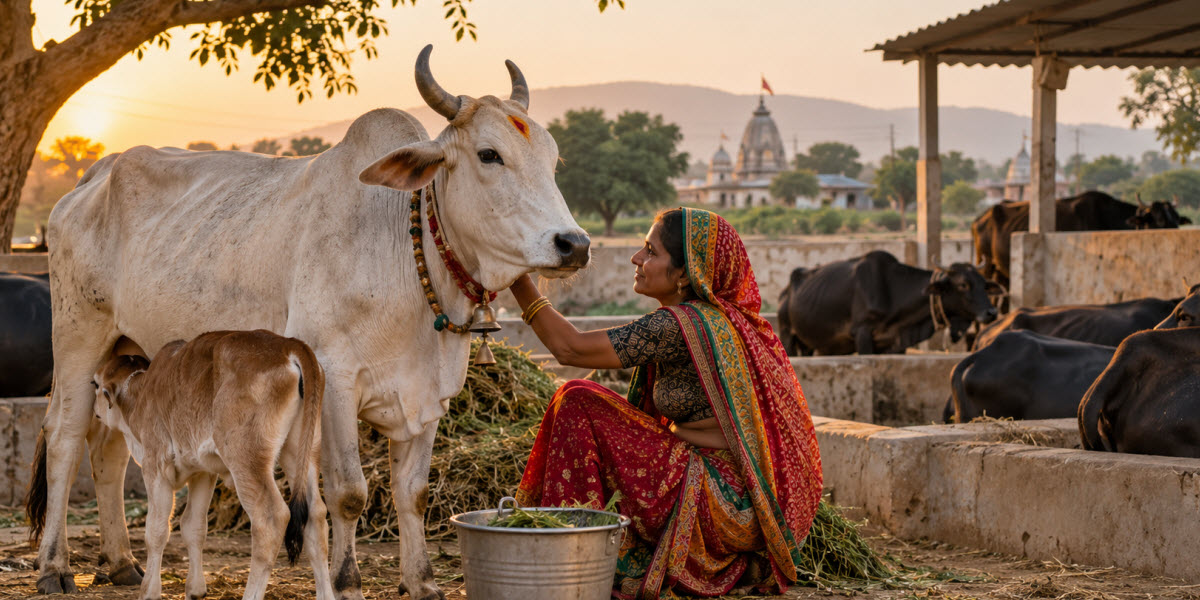
03 Oct Cultural Values and Welfare of Animals in Indian Livestock Systems
भारतीय पशुधन प्रणाली में पशुओं के प्रति सांस्कृतिक मूल्य एवं कल्याण In India, particularly in the Hindu religion, the rights of animals to coexist with humans are recognized; therefore, people are taught to love, nurture, and worship them. The cow is the most sacred of all the animals of Hinduism. It is known as Kamadhenu, or the divine cow, and the giver of all desires. Likewise, the bull is depicted as a vehicle of Lord Shiva, symbolizing respect for male cattle. The cow was revered as a mother goddess in the Mediterranean civilizations. The cow became celebrated in India, first during the Vedic period (1500–900 BCE) as a symbol of wealth. The Rigved refers to the cow as devi or goddess. Animal husbandry is the backbone of Indian agriculture and a source of employment in rural areas for centuries, around which the entire system of rural economy has revolved around it. In India, about 20.5 million people depend upon livestock for their livelihood. Livestock contributed 16 per cent to the income of small farm households, as against an average of 14 per cent for all rural households. Livestock provides livelihood to two-thirds of the rural community. It also employs about 8.8 per cent of the population in India. Dairy is one of the...