
Agriculture Knowledge for Everyone

integrated farming Tag

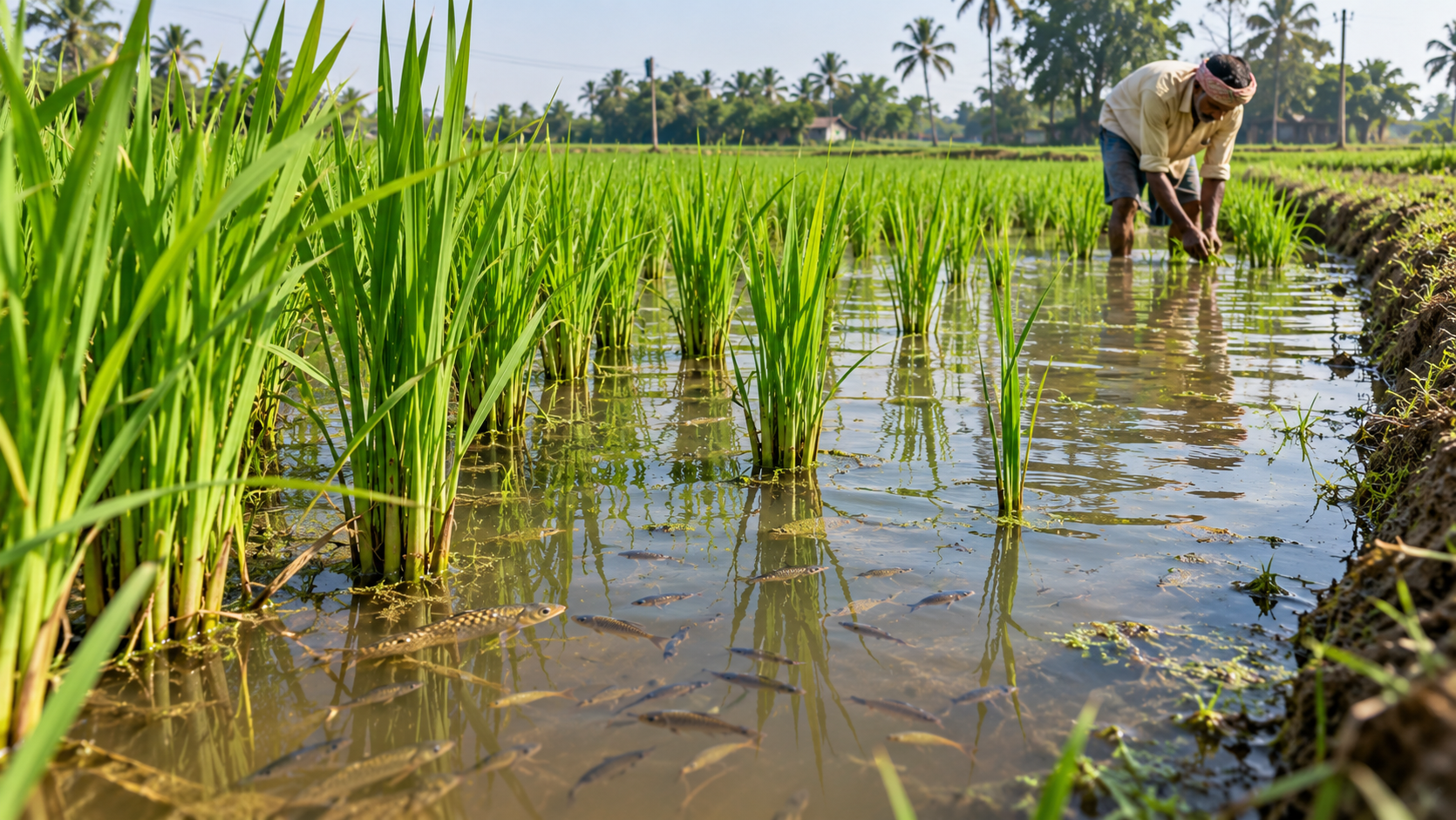
धान के खेत में मछली पालन यानी Rice Fish Farming खेती का ऐसा तरीका है जिसमें किसान धान की फसल के साथ उसी खेत के पानी का इस्तेमाल मछली पालन के लिए भी करता है। सही खेत और सही प्रबंधन हो तो एक ही जमीन से धान के साथ मछली का अतिरिक्त उत्पादन लिया जा सकता है। इसी वजह से पिछले कुछ वर्षों में Rice Fish Farming, Paddy Fish Farming और Integrated Rice-Fish Farming जैसे तरीकों पर किसानों और कृषि संस्थानों का ध्यान बढ़ा है। यह कोई नया विचार भी नहीं है। भारत में paddy-cum-fish culture पर वैज्ञानिक स्तर पर कई दशकों से काम किया जा रहा है। ICAR के दस्तावेजों में paddy-cum-fish culture के package of practices के विकास का उल्लेख 1970 से मिलता है। लेकिन एक बात शुरुआत में साफ समझ लेना जरूरी है। धान के खेत में मछली डालने का मतलब यह नहीं है कि हर किसान की कमाई अपने आप दोगुनी हो जाएगी। फायदा खेत में पानी की उपलब्धता, मछली की प्रजाति, stocking, मछली की survival और growth, चारा, श्रम, धान की खेती की लागत और स्थानीय बाजार भाव पर निर्भर करता है। सीधी बात: Rice-Fish Farming का फायदा यह है कि किसान एक ही खेत और पानी से एक से ज्यादा उत्पादन लेने की कोशिश करता है।...

Importance of Integrated Farming System समन्वित कृषि प्रणाली, न्यूनतम प्रतिस्पर्धा और अधिकतम पूरकता के सिद्धान्त पर आधारित है और इसमें कृषि-अर्थशास्त्रीय प्रबन्धन के परिष्कृत नियमों का उपयोग करते हुए किसानों की आमदनी, पारिवारिक पोषण के स्तर और पारिस्थितिकीय प्रणाली सम्बन्धी सेवाओं का टिकाऊ और पर्यावरण की दृष्टि से अनुकूल विकास करने का लक्ष्य रखा जाता है। समन्वित कृषि प्रणाली कृषि क्षेत्र में रोजगार के अवसर बढ़ाने परिवार के लिये सन्तुलित पौष्टिक आहार जुटाने, पूरे साल आमदनी व रोजगार का इन्तजाम करने तथा मौसम और बाजार सम्बन्धी जोखिम कम करने में भी मदद मिलती है। इससे खेती में काम आने वाली वस्तुओं के लिये किसानों की बाजार पर निर्भरता भी कम होती है। भारत में खाद्य और पौष्टिक आहार सुरक्षा सुनिश्चित करने की कुंजी छोटे किसानों (2 हेक्टेयर से कम) के पास है और ग्रामीण क्षेत्रों में खुशहाली लाने के लिये खेती की टिकाऊ प्रणालियों के साथ उन्हें सही दिशा में विकसित होने का मौका देना भी अत्यन्त आवश्यक है। समन्वित कृषि प्रणाली के अनिवार्य घटक मिट्टी की जीवन्तता को बनाए रखना और प्राकृतिक संसाधनों के कारगर प्रबन्धन से खेत को टिकाऊ आधार प्रदान करना। इसके अन्तर्गत महत्वपूर्ण निम्न प्रकार से हैं:. कृषि आधान में आत्मनिर्भरता : अपने लिये बीजों का अधिक-से-अधिक उत्पादन करना, अपने खेतों के लिये खुद कम्पोस्ट खाद बनाना, वर्मी कम्पोस्ट, वर्मीवॉश,...

Backyard Poultry: a permanent source of livelihood मुर्गीपालन आय का एक महत्वपूर्ण पूरक स्रोत है तथा यह ग्रामीण पशुपालकों में लगभग 89 प्रतिशत द्वारा पाला जाता है। मुर्गीपालन अलग-अलग कृषि-जलवायु वातावरण में व्यापक रूप से संभव है, क्योंकि मुर्गियों ने शारीरिक अनुकूलनशीलता को चिह्नित किया है। इसके लिए छोटे स्थान, कम पूंजी निवेश की आवश्यकता होती है, मुर्गीपालन में भी साल भर त्वरित वापसी और अच्छी तरह से वितरित आवर्त होती हैं, जो इसे ग्रामीण और शहरी क्षेत्रों में पारिश्रमिक बनाता है। भारत में पारंपरिक घर के पीछे मुर्गीपालन उत्पादन का प्रचलन पुराने समय से है, जो कि पशुओं के प्रोटीन का प्राथमिक स्रोत था और ग्रामीण इलाकों में मुर्गी पालन गरीबों के लिए मुर्गी के अंडे और मांस का एकमात्र स्रोत था। विकासशील देशों में गरीबी, भुखमरी और कुपोषण की विकराल समस्याओं से उबरने के लिए घर के पीछे मुर्गीपालन उत्पादन के महत्व को विश्व स्तर पर मान्यता दी गई है। यह भूमिहीन और गरीब किसानों के लिए सहायक आय का सबसे शक्तिशाली स्रोत है। यह कम प्रारंभिक निवेश लेकिन उच्च आर्थिक आय वाला एक उद्यम है और इसे आसानी से महिलाओं, बच्चों और घरों के वृद्ध व्यक्तियों द्वारा प्रबंधित किया जा सकता है। अब, भारत के ग्रामीण क्षेत्रों के लिए प्रोटीन और ऊर्जा की प्रति व्यक्ति आवश्यकता को पूरा करने के लिए मुर्गीपालन,...

भारत में एकीकृत खेती: कार्यक्षेत्र और सीमाएँ Integrated farming system (IFS) involves integration of two or more enterprises with best use of available resources to satisfy maximum needs of the owner which leads to increase in productivity per unit area, efficient recycling of farm wastes, better utilization of resources, generate employment, reduce the risks and ensure sustainability (Biswas and Singh, 2003). Integrated farming system aims at maximizing yield per area per time by virtue of intensification and diversification of crops with integration of allied enterprises. It also ensures nutrient recycling within the system to economize and sustain the system and minimizes the dependence on chemical fertilizers for crop production to earn more profit and employment generation round the year (Kumar et al., 2015). IFS serves several objectives in terms of balance diet, improving the standard of living through maximizing the net return, employment round the year, minimizing the risk while keeping harmony with the environment (Mali et al., 2014). Simultaneous production of fish in ponds, with pigs, duck or chicken rearing in pens, beside or over the ponds constitutes a continuous organic fertilization of the pond by the livestock. This practice increases the efficiency of both livestock farming and fish culture through the profitable utilization of animal and feed wastes (Gill et al., 2005). Many...

शुष्‍क क्षेत्र में उच्च आय, सुरक्षा और उपयुक्‍त संसाधन उपयोग के लिए एकीकृत खेती प्रणाली The Indian hot arid zone occupies over 31.7 m ha area of which 81.0% lies in two states i.e.  Rajasthan and Gujarat. The characteristic features of this region are low and erratic rainfall (100 -420 mm/year), extreme temperatures (-5.7 to 50.0°C), long sunshine duration (6.6-10 hours), low relative humidity (30%-80%) high wind velocity (9-13 kmph) and high evapotranspiration (1500-2000 mm). The soils are poor in nutrients, wind erosion occurs on a mammoth scale and paucity of water is a perennial bottleneck. Dry land farming in farming system mode is the main occupation of the people . The crop yields are meager and unstable and consequently the income from the existing cropping alone is hardly sufficient to sustain the farm family. The local inhabitants have evolved suitable land use and management systems of farming, pastoralism and animal husbandry. However, these local survival systems have now become inadequate to fulfill the needs of ever increasing population. Over the years, economic considerations have overtaken the sustainability issues. This has resulted in over-exploitation of the resources causing rapid and widespread land degradation and decline in productivity. Integrated farming system (IFS) approach has been widely advocated as a means to harmonize use of...

पशु पालन के साथ मत्स्य पालन की एकीकृत कृषि पद्धति Integration of livestock in fish culture is an old age system of practice. Ducks, poultry, pig, cattle, buffalo, sheep and goat are common in mixed farming. Nowadays rabbit also incorporated in integrated livestock cum fish culture. Due to progressive shrinking of farm holding to obtain maximum output adoption of mixed farming system with livestock and fish become very popular in wetland and water shed areas of the country. The by-product utilization of one sub-system e.g. excreta of livestock becomes an input to a second sub-system i.e. in fish culture. To avoid environmental problems with animal excreta apart from manure production the animal excreta could be efficiently utilized as feed for fish and the end product is valuable animal protein, which is very much needed in India. States like West Bengal. Orissa, Bihar, Jharkhand, Andhra Pradesh, Assam and North Eastern states the demand for fish and fish products along with meat and animal products are very high. To meet the demand and supply the integration with fish and livestock is very promising and could bring a significant profitability from a unit area particularly for small holding farmers. Most of the small holder farmers cannot afford the concentrate feed requirements of the fishes...

ब्रॉयलर खरगोश का उत्पादन और प्रबंधन The feed habits of Indian are changing with increased consumption of animal protein, especially meet on account of the improving living standard. Conventional meat produces like sheep, goat, cattle, pig and poultry will not be able to meet this demand.  Considering the heavy demand of meat and meat products farming of broiler rabbit in India has tremendous scope as an alternative source of meat. Advantages with rabbit meat Rabbit meat is almost cholesterol free (50mg/ 100 gm) and contains least fat among the all available meat. Hence, the heart patient also can consume rabbit meat. It is a white lean meat; very tender, juicy and delicious meat.  Calcium and phosphorous content is more i.e. 20 mg/ 100 gm and 350mg/ 100gm of meat, respectively and less sodium content (40mg/ 100 gm meat). High amount of poly unsaturated fatty acid which are of detrimental to heart.   Rabbit meat has less caloric value and highest nicotinic acid (13mg/ kg meat) containing meat, high percentage of easily digestible protein and nutritive value.  Dressing percentage is 60 to 65% and bone- meat ratio is 5: 1.2.   Rabbit meat does not have strong flavour, high palatability, easily digestible and suitable for consumption in both hot and cold climatic condition. There is no taboo or social stigma attached to the...