
Agriculture Knowledge for Everyone

Millets Tag

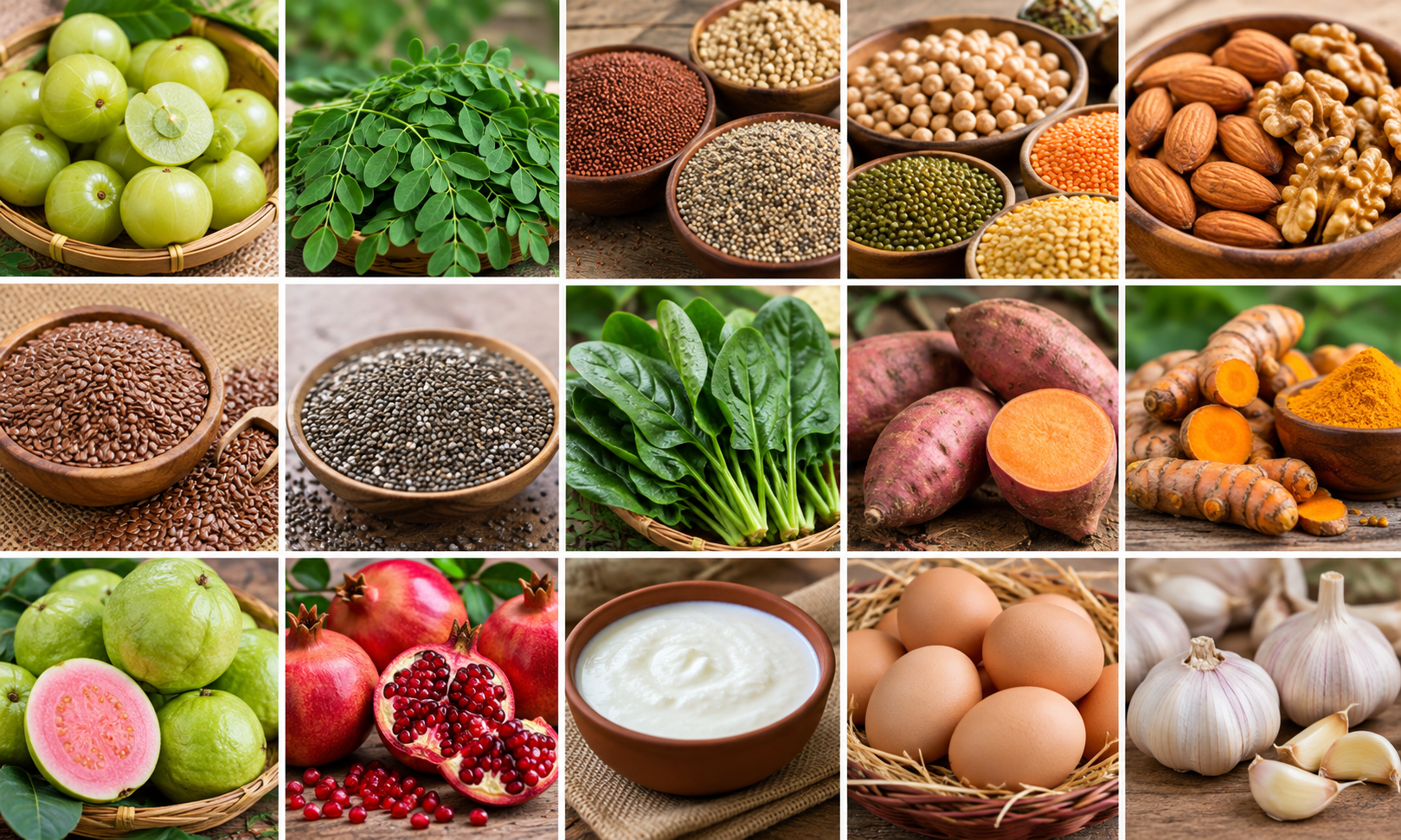
Top 15 Superfoods for a Healthy Diet: Nutritious Foods You Can Eat Every Day अच्छा स्वास्थ्य बनाए रखने के लिए हमेशा महंगे या विदेशी खाद्य पदार्थों की जरूरत नहीं होती। हमारे आसपास और भारतीय रसोई में मिलने वाले कई खाद्य पदार्थ पोषक तत्वों से भरपूर होते हैं। आंवला, सहजन, मोटे अनाज, दालें, मेवे, बीज, हरी सब्जियां और मौसमी फल इसका अच्छा उदाहरण हैं। You do not always need expensive or imported foods to maintain a healthy diet. Many foods that are easily available in Indian kitchens are naturally rich in nutrients. Amla, moringa, millets, pulses, nuts, seeds, green vegetables and seasonal fruits are some good examples. सुपरफूड (Superfood) शब्द आमतौर पर ऐसे खाद्य पदार्थों के लिए इस्तेमाल किया जाता है जिनमें एक या अधिक महत्वपूर्ण पोषक तत्व अच्छी मात्रा में पाए जाते हैं। हालांकि, किसी एक खाद्य पदार्थ को संपूर्ण आहार का विकल्प नहीं माना जा सकता। अलग-अलग प्रकार के पौष्टिक खाद्य पदार्थों को आहार में शामिल करना अधिक महत्वपूर्ण है। The term superfood is commonly used for foods that are particularly rich in one or more nutrients or naturally occurring plant compounds. However, no single food can provide everything the body needs. Eating a varied and balanced diet is more important. 15 प्रमुख सुपरफूड्स की सूची 15 Superfoods You Can Add to Your Diet आंवला...

मोटे अनाज - जी20 शिखर सम्मेलन 2023 के मूक नायक Millets are widely grown around the world as cereal crops or grains for fodder and human food.  These millets are also known as "coarse cereals" or "cereals of the poor". Indian Millets are nutritionally superior to wheat and rice as they are rich in protein, vitamins and minerals. They are also gluten-free and have a low glycemic index, making them ideal for people with celiac disease or diabetes. G20 summit Shines a Spotlight on Millets-The Unsung Heroes of Global Agriculture In a world where agricultural discussions often revolve around mainstream staples like rice, wheat, and corn, millets have remained the unsung heroes of global agriculture. However, the G20 summit in 2023 is set to change this narrative by casting a spotlight on these humble grains. Often overshadowed by their more popular counterparts, millets are finally receiving the recognition they deserve for their significant contributions to food security, sustainability, and nutrition. Millets, a group of small-seeded grains, have been cultivated for thousands of years across various regions of the world. What sets them apart is their ability to thrive in diverse and challenging environments, making them a crucial resource for countries facing climate change-induced agricultural disruptions. Their resilience to drought and low-input farming requirements...

Importance of millets in the context of climate change Coarse grain is called millet in English. Millets are a nutritious food for humans and animals. You can grow millet anywhere. It can be easily grown in dry areas, rainy areas, coastal areas or hilly areas. People around the world should take note of the general benefits of climate-friendly millet production and consumption as this crop is hassle-free to produce and has many health benefits. Importance of millets in the context of climate change मोटे अनाज को अंग्रजी में मिलेट कहते है। मोटे अनाज मानव और जानवरों के लिए एक पौष्टिक आहार है। मिलेट को आप कहीं पर भी उगा सकते है। इसे सूखे क्षेत्र, वर्षा क्षेत्रों, तटीय क्षेत्रों या पहाड़ी क्षेत्रों में आसानी से उगाया जा सकता है। दुनिया भर के लोगों को जलवायु के अनुकूल मोटे अनाज के उत्पादन और खपत के सामान्य फायदों पर घ्यान देना चाहिया क्योंकि इस फसल का उत्पादन बिना किसी परेशानी के होता है और इसके खाने से लोगों को सेहत के मामले में बहुत लाभ होता हैं। संयुक्त राष्ट्र ने 2023 को मोटे अनाज (ज्वार, बाजरा, रागी इत्यादि) का वर्ष घोषित किया है और सभी भागीदारों से कहा हैं कि पोषण और स्वास्थ्य के मामले में मोटे अनाज की खपत से होने वाले फायदों के साथ-साथ...

स्मार्ट फ़ूड और स्मार्ट फ़सल के रूप में बाजरा India celebrated the national year of millets in 2018. The U.N. General Assembly recently adopted a resolution, sponsored by India and supported by more than 70 countries, declaring 2023 as the International Year of Millets. The main objective of declaring this resolution is  to increase public awareness about health benefits of millets and their suitability for cultivation under harsh conditions under changing climatic senerio. Millet is a common term to categorize small-seeded and known for high nutritive value that are often termed nutri-cereals, and includes sorghum (jowar), pearl millet (Bajra), Finger millet (ragi ), small millet (Sama), foxtail millet, proso millet (Variga), barnyard millet, kodo millet and other millets. Nowadays, there are many global issues like the rapid increase in population, global climate change, increasing food prices, water scarcity, environmental contamination, and other socio-economic impacts. These factors could adversely affecting regional agricultural developments and reduced grain production, resulting in high food prices and major food security issues worldwide. Millets are also know as  “poor man food” as it is easily available, highly nutritious, very cheap, especially for those who live in hot and dry areas. As per report of the World Bank, about 815 million people worldwide are facing the problem of hunger and malnutrition....

बदलती जलवायु परिस्थितियों में ऑरफन फसलों की भूमिका Orphan crops are  crops that are not traded internationally and very less attention is provided to them in terms of research, training and extension. These are grown in Asia, Africa and South America. Generally these constitute major part of local diet. In comparison to major food crops like rice, wheat and maize, breeding technology for orphan crops is far away behind. Similar to major crops, orphan crops are also member of different types of food i.e. cereals, legumes, vegetables, root and tuber crops. Orphan crops are also called as neglected, minor, promising, niche, traditional, alternative crops, future smart food and many more. Worldwide, around 12000 crop species are classified as suitable for human consumption, yet 30 crops play important role in feeding the world and to our utter surprise out of that, 60% of world population’s dietary energy is fed by rice, maize and wheat. This is mainly due to strong policy support, target breeding efforts and trade policies in favor of major food crops. Beside these factors changes in traditional food habits have resulted in an overdependence on energy rich and nutrient poor staple crops. Different types of orphan crops are: 1. Millets: Millets ere tolerant to moisture deficit (Kholova et. al,2010) and have great suitability in semi arid...