
Agriculture Knowledge for Everyone

seed production Tag

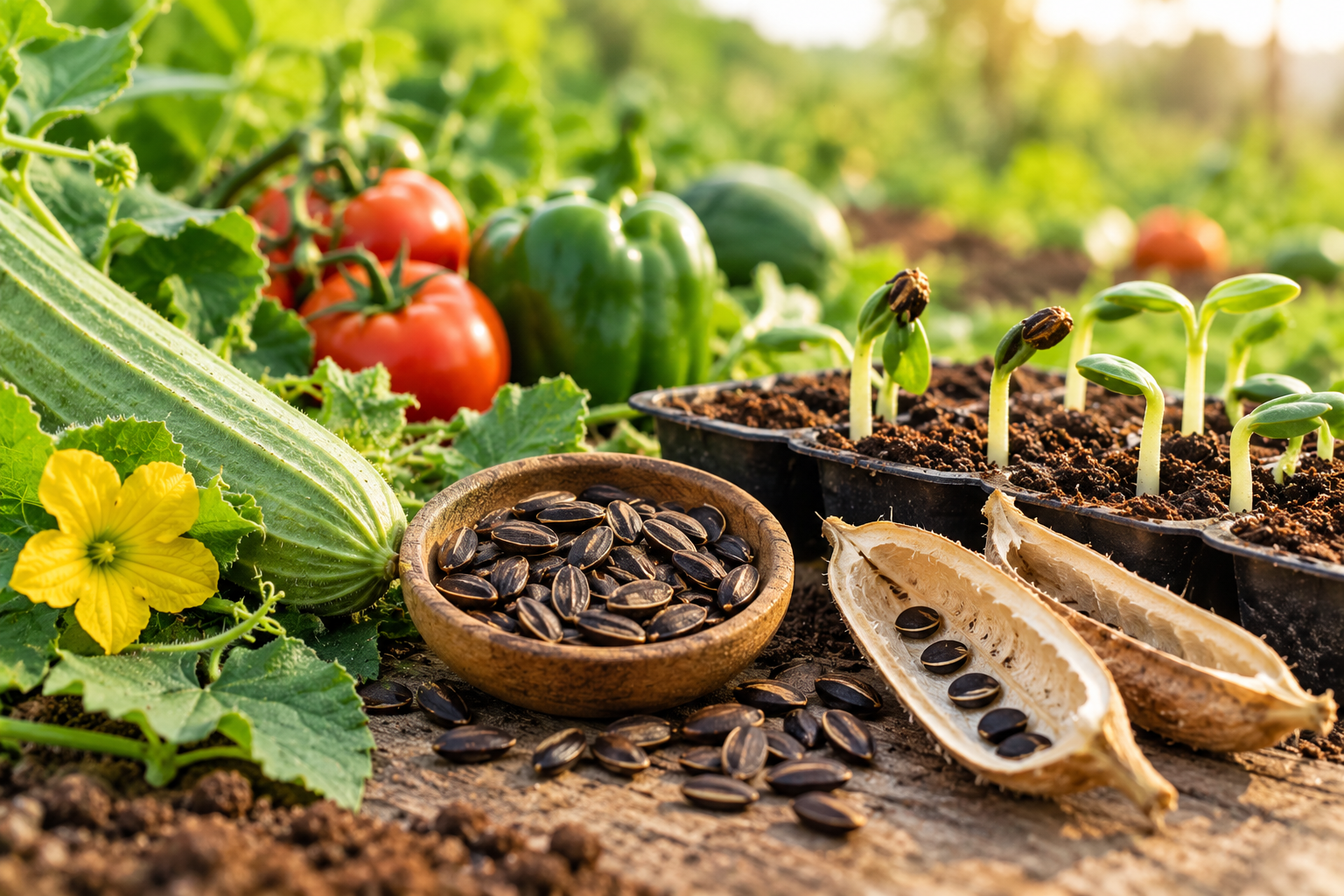
परिचय बीज अंकुरण सफल फसल स्थापना की आधारशिला है। सब्जी फसलों में उच्च गुणवत्ता वाले बीज का महत्व अधिक होता है क्योंकि इनकी खेती गहन एवं व्यावसायिक होती है। तथापि, अनेक सब्जी बीजों में बीज सुप्तावस्था पाई जाती है, जिसमें जीवित बीज अनुकूल परिस्थितियों में भी अंकुरित नहीं होते। यह स्थिति अंकुरण क्षमता, बीज परीक्षण परिणाम तथा कुल उत्पादकता को प्रभावित करती है। बीज सुप्तावस्था की अवधारणा बीज सुप्तावस्था एक शारीरिक अवस्था है जिसमें जीवित बीज पर्याप्त नमी, तापमान, ऑक्सीजन एवं प्रकाश उपलब्ध होने के बावजूद अंकुरित नहीं होता। यह एक प्राकृतिक अनुकूलन प्रक्रिया है जो प्रतिकूल परिस्थितियों में अंकुरण को रोककर प्रजाति के अस्तित्व को सुनिश्चित करती है। किंतु व्यावसायिक सब्जी उत्पादन एवं बीज परीक्षण में यह कई व्यावहारिक समस्याएँ उत्पन्न करती है। [caption id="attachment_14336" align="alignnone" width="300"] चित्र: तोरई के बीजों में बीज सुप्तावस्था[/caption] सब्जी बीजों में सुप्तावस्था के प्रकार (i) बाह्य सुप्तावस्था यह बाहरी कारणों से होती है, मुख्यतः कठोर या अभेद्य बीजावरण के कारण, जो जल अवशोषण एवं गैस विनिमय को रोकता है। उदाहरण: भिंडी, लोबिया, एवं सेम। कठोर बीजावरण के कारण अंकुरण में विलंब एवं असमानता आती है। (ii) आंतरिक सुप्तावस्था यह आंतरिक कारणों जैसे अपरिपक्व भ्रूण या हार्मोनल असंतुलन के कारण होती है। उदाहरण: गाजर, प्याज, अजवाइन। कुछ मामलों में अंकुरण के लिए आफ्टर-राइपनिंग या विशेष तापमान उपचार की आवश्यकता...

कृषि फसलों के बीज उत्पादन क्षेत्र का चयन एवं प्रबंधन Seed is basic input of agriculture because it decides future in term of growth and yield of every crop. Quality seed production of agricultural crops is need of hour to increase agricultural production and to mitigate stresses to be occur in nearby future due to climate change. Use of quality seeds instead of farm-saved seeds increases production of various agricultural crops from 10 to 35% considering other factors constant. Seed production technology is a skill required programme and it also needs heavy investment of capital so to make it successful selection and management of seed production area is very critical because it decides future growth of crops. Seed production area is referred to an area with superior plants after removal of weak and undesirable plants through roughing and nurtured for early and abundant seed production. Criteria of site selection: First of all, seed production of various variety of various crops should be done in favourable agroclimatic zones for quality seed production and selected area should have capacity to produce quality seeds more than one season. Selected area also should have favourable conditions for seed storage as well. Areas with high and unpredictable rainfall and high humidity should be discarded for seed production of crops. Selected...

चने का फाउंडेशन और प्रमाणित बीज उत्पादन करने की तकनीक  Gram or chickpea is leguminous crop and there are two distinct types of chickpea Desi chick pea  Coloured and thick seed coat.  Brown, yellow, green and black.  Small, angular and rough surface.  Flower pink with anthocyanin pigment  Some Desi variety have white flower with no anthocyanin pigment. Kabuli chick pea White or Beige – coloured seed Thin seed coat, smooth seed coat surface. White flower, lack of anthocyanin pigmentation on the Stem. High level of sucrose and lower level of fibre       General plant characteristics of Gram: Plant height generally varies from 30-70 cm. Lateral roots developed nodules with the symbiotic Rhizobium bacteria, capable of fixing atmospheric nitrogen in plant-usable form. Nodules appear/visible after one month /30days after plant emergence. Confined to the top 15cm. of the surface. Climatic Requirement: Cool season food legume and grown as a winter crop in the tropics Flowering is delayed under low temperature and also under short days. Sensitive to high (max. daily temp.> 35 ºC) Sensitive to low (mean of maximum and minimum daily temp. < 15 ºC at reproductive stage. Both extreme leads to flower drop and reduce pod set. Minimum Standards for foundation and certified seed in chick pea:  S. No. Parameter Seed class Foundation Certified 1. 2. 3. 4. 5. 6. 7. 8. 9. Isolation Distance (m) No. of field Inspections Germination (including hard seed) % Pure seed (%) Inert matter (%) Plant affected by seed borne diseases % Off type plants (%) Other crop seeds (number/kg) Other...

गेंहूं का बीज उत्‍पादन The production of wheat crop for seed purpose requires almost similar agronomic operations as are used for grain crop production. However, seed production differs from normal grain production on the issues of isolation requirements, rouging and special attention in carrying operations of harvesting, threshing and storage. Moreover, for seed production one has to follow the specific guidelines issued by the seed certification Agency for ensuring specific field and seed standards which include a) seed multiplication b) Isolation requirements c) Roguing and d) Field inspection. Wheat Seed Multiplication: To maintain the genetic purity of the seed, a generation system of seed production is followed. In wheat seed production, In India usually four to five generations are commonly used namely Breeder - Foundation I - Foundation II - Certified Selection of seed plot: The seed plot should have good soil texture and fertility The plot selected for seed crop must be free from volunteer plants and weed plants. The seed plot shall be well leveled. The seed plot should have proper drainage. Selection of variety: Proper care should be taken in selecting a variety. An improved variety should be selected as per agro climatic conditions of the region. The variety selected should be high yielding. It should possess resistance to diseases prevalent in the area.  Wheat Varieties recommended for chhattisgarh A.Irrigated condition timely sown...

Nursery management of hybrid rice seed production संकर धान बीज उत्पादन की नर्सरी के लिए चिकनी दोमट, 35 पी.एच. वाली मिट्टी उप्युक्त होती है। धान का शुध्द संकर बीज में मिलावट रोकने के लिए पिछले मौसम में उगाये गये धान का क्षेत्र या खेत नहीं होना चाहिए। संकर धान की नर्सरी विधि धान की नर्सरी तैयार करने की कई विधियां होती है। लेकिन संकर बीज उत्पादन के लिए नमी (वैट) या आर्द्र विधि का अपनाना उचित होता है अथवा वहां पानी की समुचित सुविधा होनी चाहिए। नमी क्यारी नर्सरी विधि पारम्परिक विधि के 10 प्रतिशत के मुकाबले एक हैं, क्षेत्रफल के लिए भूमि की कुल आवश्यकता 2.5-3.0 प्रतिशत ही होगी। नमी क्यारी विधि से मजबूत तथा स्वस्थ पौध मिलती है। नमी क्यारी विधि नर्सरी में खरपतवार भी कम उगते है। बीज की मात्रा एक हैक्टेयर संकर धान बीज के लिए 20 किग्रा0 मादा पैतृक तथा 5 किग्रा0 नर पैतृक 80 प्रतिशत अंकुरण वाला बीज उपयुक्त होता है। बोने के समय संकर धान बीज उत्पादन के लिए जून के प्रथम सप्ताह में नर्सरी की बुआई कर देनी चाहिए। बीज का उपचार बीजों को सबसे पहले नमक के पानी में (1:40) भिगो दिया जाता है जो हल्के बीज होते है वो तैरने लगते है। उन्हें अलग निकाल कर फेंक दिया जाता है। बाकि एक हैक्टेयर के लिए बीज को उपचार के...

Hybrid seed production technique of bitter gourd सब्जी फसलों में बेल वाली सब्जियों का सबसे बड़ा परिवार है। बेल वाली सब्जियों में करेले का महत्वपूर्ण स्थान है। करेला केवल सब्जी मात्र के लिए नहीं बल्कि आजकल इसका औषधियों में  भी काफी प्रयोग है। इसलिए इसका संकर बीज उत्पादन करना और भी लाभदायक हो गया है। मध्यम एवं बड़े वर्ग के किसान खासकर युवा एवं महिला किसान सब्जियों का बीज उत्पादन/ संकर बीज उत्पादन एक व्यवसाय के रूप में अपनाकर उद्यमी बन सकते हैं और कृषि आय में वृद्वि कर सकते है जिससे संकर बीजों की स्थानीय उपल्बधित्ता में सुधार, कम मूल्य पर किसानों को संकर बीजों की उपलब्धि है सकती है।   भारतीय कृषि अनुसंधान संस्थान ने सब्जियों की अनेक उन्नत एवं संकर प्रजातियां का विमोचन एवं उनके बीज उत्पादन प्रौद्योगिकी का विकास किया  है।  संकर किस्मः- भारतीय कृषि अनुसंधान संस्थान, नई दिल्ली द्वारा करेले की दो संकर प्रजातियां विकसित हुई हैं, पूसा संकर-1 तथा पूसा संकर-2 (चित्र 1)।  चित्र 1. पूसा संकर 1 एवं पूसा संकर 2 प्रजाति    संकर किस्म पूसा संकर - 1 के पैतृकों के लक्षण: मादा जनक:- पौधे लम्बे, गांठों के बीच की औसत दूरी 10.5 सेमी. पत्तियां मध्यम अण्डाकार, गहरे कटावयुक्त मुलायम हरे रंग की होती है। फूल एकलिंगी पत्तियों के कक्ष में अकेले-अकेले होते हैं। नर फूल के डंठल लम्बे-पतले तथा मादा फूल...

Hybrid seed production technique of Pumpkin पुष्‍प जैविकी:   सीताफल में नर व मादा पुष्‍प एक ही पौधे पर अलग-अलग जगह पर लगते हैं। फूल बडे आकार के तथा चमकीले पीले रंग के होते हैं। मादा पुष्‍प आकार में नर पुष्‍पों से बडे होते हैं। मादा फूल छोटी डंडी एवं नीचले भाग में फल आकृति‍ लि‍ए होते हैं। नर पुष्‍पों की डंडी लम्‍बी होती है। पौधों में प्राय नर फूल पहले आते हैं तथा बाद में मादा एवं नर पुष्‍प मि‍श्रि‍त रूप से आते हैं। फूल प्रात: काल में 5 से 7 बजे के बीच खिलते हैं और 12 बजे दोपहर तक खिले रहकर दोपहर बाद बंद हो जाते हैं। पुष्‍प खिलने के समय नर पुष्‍प में अत्‍यिधि‍क जीवि‍त परागण मि‍लते हैं तथा मादा फूल में वर्तिकाग्र भी नि‍षेचन के लि‍ए अधिकतम ग्राही होता है। परागण का कार्य प्रात: काल 7 बजे से पहले ही पूरा कर लेना चाहि‍ए क्‍योकि‍ समय बीतने पर परागण चि‍पचि‍पा और गीला हो जाता है। मकरन्‍द ग्रन्‍थि‍यां मादा पुष्‍पों में नर पुष्‍पों की अपेक्षा अधि‍क होती हैं। परागण कार्य कीटों जैसे मधुमक्खियों द्वारा कि‍या जाता है।खेत का चुनावः    संकर बीज उत्‍पादन के लिए खेत समतल, उपजाऊ एवं खरपतवार रहि‍त होना चाहि‍ए तथा उसमें समुचित जल न‍िकासी की व्‍यवस्‍था होनी चाहिए। खेत की मिटटी का पीएच मान 6.5-7.5 के बीच उपयुक्‍त...

भिंडी के गुणवत्तायुक्‍त बीज का उत्पादन कैसे करें  Okra (Abelmoschus esculentus(L.) Moench) is an important vegetable crop of the tropic and sub- tropic It is grown during summer and rainy season and hence classified as warm season crop. Okra is cultivated for its immature edible fruits known as pods; the mature fruits are also dried and stored in parts of Africa for local use in high temperature season. The average productivity of okra in India is 9.8 t/ha (NHB-2001), which is less than the productivity (15t/ha) realized through the trails. The low productivity in okra is attributed poor see replacement due to the limited availability of quality seed and high incidence of pests (jassids, white fly and borers) and yellow vein mosaic virus (yvmv) which severely affect the crop during the khairf in the north. Since, the hybrid seed is marketed by the private sector companies in sizable amount and cover the smaller area. Thus, the larger area is sown through the op varieties seed   across the country. Therefore, to boost the productivity there is a need to strengthen the production of quality seed. This could be made possible by organizing the seed production of the op varieties the in a compact area/seed village concept which can help an improving the...