
Agriculture Knowledge for Everyone

cashew Tag

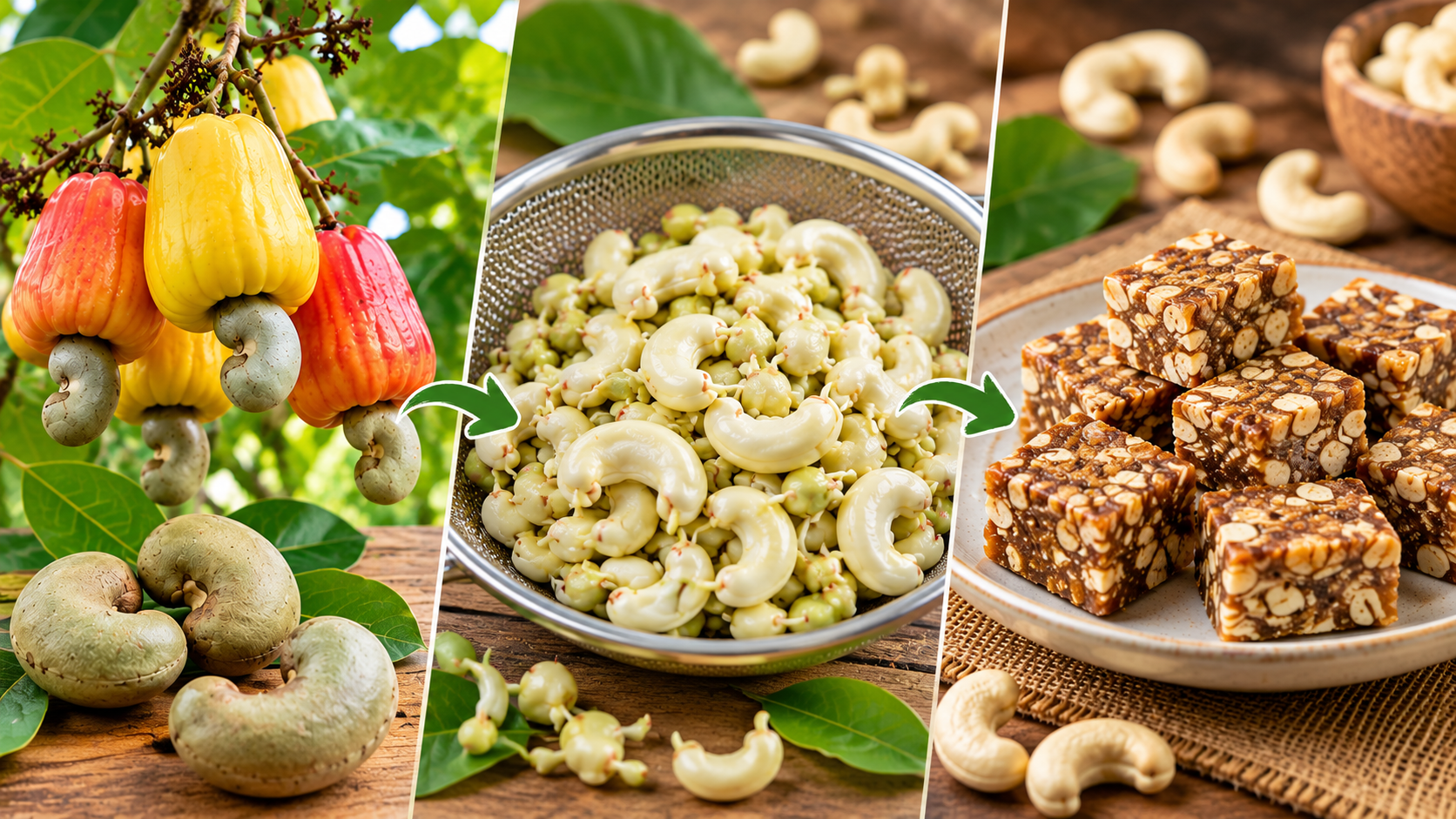
Cashew kernels are widely recognized for their high nutritional value, providing protein, healthy fats, minerals and bioactive compounds. However, like many plant-based foods, they also contain antinutritional factors such as phytic acid, which can bind minerals and reduce their bioavailability. In some individuals, these compounds may also contribute to gastrointestinal discomfort. Sprouting offers a natural processing approach to address these limitations while enhancing the nutritional and functional attributes of cashew kernels. Cashew sprouts are obtained through the controlled hydration and germination of cashew kernels, during which the dormant seed becomes metabolically active. Germination activates endogenous enzymes, particularly hydrolytic enzymes, which initiate the breakdown and transformation of storage components. This biochemical activity can improve protein digestibility and nutrient accessibility, while also contributing to changes in the amino acid profile and the bioaccessibility of essential minerals. Importantly, sprouting promotes the degradation of phytic acid, thereby potentially improving the utilization of minerals such as iron and calcium. The germination process also stimulates the formation and release of several bioactive compounds, particularly phenolic compounds and other antioxidant constituents. Consequently, sprouting can enhance the functional and nutraceutical potential of cashew kernels beyond their conventional nutritional value. This makes cashew sprouts particularly relevant to the growing market for plant-based, nutrient-dense and minimally processed functional foods. To translate the...

काजू में चाय मच्छर कीड़े का प्रबंधन Cashew (Anacardium occidentale L., Family: Anacardiaceae) is one of the important commercial plantation crops in India. Insect pest infestation is a major production constraint in cashew cultivation. Tea mosquito bugs (TMB)– Helopeltis spp (Miridae: Heteroptera), are most serious insect pest of cashew in India and causes more economic loss to the crop. There are four species of TMB viz., Helopeltis antonii, H. bradyi, H. theivora and Pachypeltis maesarum (Hemiptera: Miridae) were found to infest in cashew. The mirid bug H. antonii is the dominant species and has been found infesting in all major cashew growing regions of India followed by H.bradyi and H. theivora. It causes damage to an extent of 30-50% yield loss. Symptoms of damage Both nymphs and adults suck the cell sap from tender shoots, leaves, floral branches, developing nuts, fruit peduncle and apples. Formation of necrotic lesion on green tender stem of young shoots and inflorescence rachis are the characteristic damage symptoms. The lesions on shoots and panicles join together and finally the affected shoot dries up. The immature nuts infested by this pest develop characteristic eruptive spots and finally shrivel and fall off. Under outbreak conditions, heavily infested trees show scorched appearance, leading to the death of shoots and growing tips. Severely affected branches may lead to...

काजू के तने और जड़ छेदक का एकीकृत कीट प्रबंधन Stem and root borers, Neoplocaederus spp, Batocera rufomaculata (Cerambycidae: Coleoptera) are the major insect pests of cashew which is capable of killing the tree outrightly. There are three main species of stem borers were found to infest on cashew.  The species Neoplocaederus ferrugineus, and N. obesus are recorded as primary pests while Batocera rufomaculata recorded as a secondary pest of cashew. In India, the percentage of infestation and extent of damage various across the regions. On an average, these borers kill about 5-10% of cashew yielding trees every year. In association with cashew stem and root borer, other secondary wood borers viz., Coptops aedificator, Aeolesthes holosericea, Glenea multiguttata, Euplatypus parallelus, and Belionota prasina were found aggravate the infestation. Symptoms of damage Presence of small bore holes at the collar region. Extrusion of frass (like coarse dust powder) through the holes at the collar region. Oozing or exudation of gum from the damaged portion at the base of cashew tree trunk. Grubs bore into the living tissue of bark and feed on the sub-epidermal and vascular tissues. Extensive tunneling in the stem and root region and the tissues are tunnelled in irregular fashion. As a result of damage the supply of water and nutrients is arrested by which the leaves turn yellow and...