30 Sep फसल विविधीकरण꞉ संसाधन संरक्षण एिं कृ वि स्थिरता
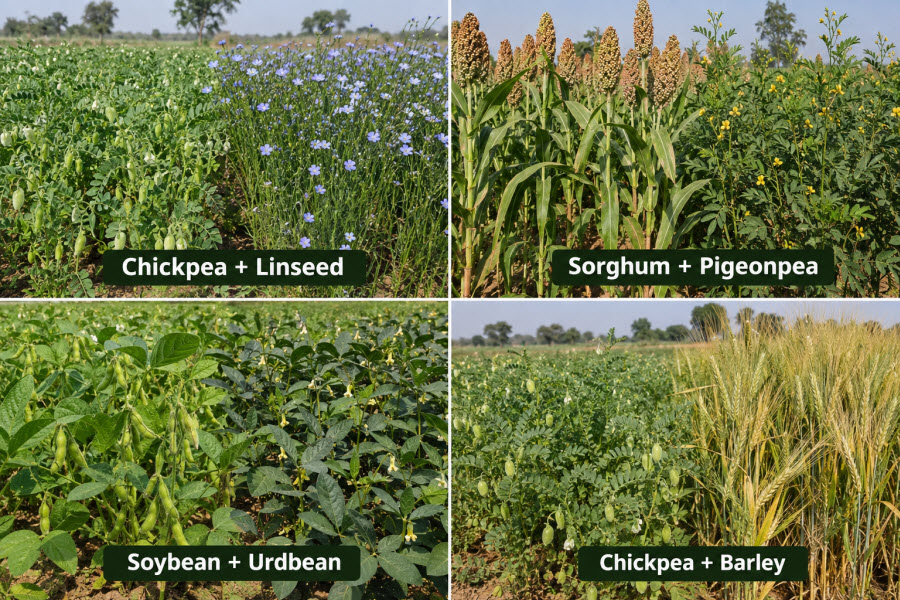
फसल विविधीकरण कृषि को अधिक टिकाऊ और लाभकारी बनाने की महत्वपूर्ण रणनीति है। जानिए इसके लाभ, उपाय, रणनीतियाँ और विभिन्न फसल प्रणालियों की भूमिका।...

फसल विविधीकरण कृषि को अधिक टिकाऊ और लाभकारी बनाने की महत्वपूर्ण रणनीति है। जानिए इसके लाभ, उपाय, रणनीतियाँ और विभिन्न फसल प्रणालियों की भूमिका।...
पोपलर के साथ सहफसली खेती से किसानों को दोगुना मुनाफा By growing trees in agricultural crops, farmers can increase their income as well as improve the fertility of the land and the deteriorating environment. By planting poplar tree saplings, one can earn good profit from them in 6 to 7 years. Due to falling of its leaves in winter, the damage to rabi crops is reduced. The poplar tree grows straight, so its shade rarely harms even the Kharif crops. All rabi or kharif crops can be grown with poplar in the first two years. पोपलर के साथ सहफसली खेती से किसानों को दोगुना मुनाफा भारत एक कृषि प्रधान देश है जहां आज भी किसान खेती-किसानी से जुड़कर अपनी आजीविका (livelihood) चलते हैं, लेकिन पिछले कुछ समय से किसानों की आय को दोगुना करने की मुहिम में काफी तेज हो रही है। इस लक्ष्य को हासिल करने के लिये किसानों को नई तकनीकों, नई फसलों, नवाचार और खेती के साथ-साथ पेड़-पौधे लगाने (Plantation Drive) के लिये प्रोत्साहित किया जा रहा है। जिससे सीमांत एवं छोटे स्तर के किसानों का भी आर्थिक उत्थान हो सके। खेत की बाउंड्री पर पेड़ लगाकर किसानों को ना सिर्फ फसलों का बेहतरीन उत्पादन मिल सकता है बल्कि यह किसानों के लिये फिक्स डिपोजिट की तरह काम करता है, जिसमें...
प्राकृतिक संसाधनों के सिमित उपयोग से फसल नियोजन Crop planning is a type of technique under which, what, when, where, which crops are to be grown and their related location, sunlight, water, maturity, planting season and tolerance etc. requirements have to be decided. In this, the study of the crops grown in different categories through the cropping pattern and after that crops are grown in cycles at continuous intervals to maintain the system through crop rotation. प्राकृतिक संसाधनों के सिमित उपयोग से फसल नियोजन भारतीय कृषि भिन्न प्रकार के प्राकृतिक संसाधनों जैसे की भूमि, पानी, मिट्टी के पोषक तत्वों और जलवायु कारकों पर बहुत अधिक निर्भर करती है। प्राकृतिक संसाधनों की निरंतर कमी कम कृषि विकास और खाद्य सुरक्षा के गंभीर मुद्दों का कारण बन रही है। एक तरफ हमें जबरदस्त बढ़ती आबादी को खिलाने के लिए कृषि खाद्य उत्पादन बढ़ाने की जरूरत है और दूसरी तरफ, हमें औद्योगीकरण के कारण खेती के तहत घटते क्षेत्र के साथ प्राकृतिक संसाधनों को संरक्षित करने की जरूरत है। इसके अलावा, खेती की कम लागत के साथ किसानों की आय में भी सुधार करने की आवश्यकता है। कृषि बाजार की कीमतें खेतों द्वारा उत्पादित फसलों की मात्रा से प्रभावित हो सकती हैं। यदि किसान एक फसल का अधिक मात्रा में उत्पादन करते हैं तो संबंधित फसल का बाजार...
नैपियर बाजरा एवं दलहनी चारा फसलों के अन्तः फसलीकरण से सालभर गुणात्मक हरे चारे का उत्पादन प्राचीनकाल से ही भारत की ख्याति एक कृषि प्रधान देश के रूप में रही है तथा पशुपालन इसकी उन्नति एवं सफलता में एक अभिन्न घटक के रूप में उभर कर सामने आ रहा है। दुग्ध उत्पादन के स्तर में आज हम 180 मिलियन टन के आंकड़े को पार कर चुके है। प्रति पशु दूध उत्पादकता के स्तर में आज भी हमारे देश की गणना बहुत निचे के स्तर पर दर्ज की जाती रही है जो हमारे लिए एक महत्वपूर्ण शोध का विषय है तथा हमें इसमें सुधार करने की आवश्यकता है। इस कम उत्पादकता के लिए विधमान अनेकों महत्वपूर्ण कारणों में से संतुलित एवं गुणवत्ता युक्त पशु आहार का अभाव एक अहम कारण है। विभिन्न आंकड़ों के अनुसार वर्तमान स्थिति में हमारे देश में लगभग 35 प्रतिशत हरा चारा, 10 प्रतिशत सूखा चारा और 44 प्रतिशत दाना राशन की कमी दर्ज की गई है। जो पशुओ की दुग्ध उत्पादकता को सीधा प्रभावित करता है। पशुपालन की कुल लागत का लगभग 65 -70 प्रतिशत खर्च केवल उसके आहार प्रबंधन के कारण आता है। जो इस क्षेत्र की लाभदायक भूमिका बनाये रखने में बहुत जरुरी अंश माना जाता है। पशुओं के पोषण में हरे चारे की भूमिका सबसे अहम मानी...
सतत आय के लिए नारियल की खेती The coconut tree is called as "Kalpavriksha" which essentially means all parts of a coconut tree is useful some way or other. Coconut cultivation is the source of sustainable income especially for small and marginal farmers. Coconut is essentially a tropical plant but has been found to grow under varying agro climatic conditions. The coconut palm can tolerate wide range of soil conditions. Soil with a minimum depth of 1.2m and fairly good water holding capacity is preferred for coconut cultivation. Preparation of land for Coconut farming:- Size of the pit depends on the soil type and water table. In laterite soils large pits of the size 1.2m x 1.2m x 1.2 m may be dug and filled up with loose soil, powdered cow dung and ash upto a depth of 60 cm before planting. In loamy soils, pits of size 1m x 1m x 1m filled with top soil to height of 50 cm is recommended. While filling the pits, two layers of coconut husk can be arranged at the bottom of the pit with concave surface facing upwards for moisture conservation. After arranging each layer, BHC 10% DP should be sprinkled on the husk to prevent termite attack. In laterite soils, common salt @ 2 kg per pit may...
Need and importance of relay crop in India वर्तमान मे देश की बढ़ती जनसंख्या को भोजन उपलब्ध कराने के लिये सघन खेती ही एकमात्र विकल्प बनता जा रहा है, क्योकि बढ़ती जनसंख्या के दबाव के कारण खेती की भूमि अन्य कार्यो के लिये परिवर्तित हो रही है एवं खेती का रकबा बढ़ाना अब संभव प्रतीत नही होता है। देश मे बहुत से क्षेत्र ऐसे है जहां की कृषि पूरी तरह से वर्षा पर आधारित है तथा सिंचार्इ के सीमित साधन के कारण ही रबी मौसम में खेत खाली पड़ी रहती है अत: ऐसे क्षेत्रों के लिए सघन खेती के रूप मे उतेरा खेती एक महत्वपूर्ण विकल्प साबित हो सकती है। उतेरा खेती का मुख्य उद्देश्य खेत में मौजूद नमी का उपयोग अगली फसल के अंकुरण तथा वृद्धि के लिए करना है। इस प्रकार की खेती मे किसी भी प्रकार की कर्षण क्रियाये नही की जाती है। क्या है उतेरा खेती:- यह फसल उगाने की वह पद्धति है जिसमे दूसरी फसल की बुंवार्इ, पहली फसल के कटने के पूर्व ही कर दी जाती है। खेत का चुनाव:- उतेरा खेती के लिए कन्हार या मटियार दोमट जैसी भारी मृदा वाली खेत उपयुक्त रहती है। अत: मध्यम तथा निचली (बहरा) भूमि का चुनाव करना चाहिए। भारी मृदा में जलधारण क्षमता अधिक होती है साथ ही काफी लम्बे समय तक इस मृदा में नमी बनी रहती है।...
हिमाचल प्रदेश में उत्तर-पश्चिमी हिमालय के मध्य पहाड़ी क्षेत्रों में आलू और फ्रैंचबीन की लाभकारी अंत:फसली खेती। Potato crop produces higher dry matter per unit area and time offers excellent opportunity for intercropping. It is also a high value cash crop and thus enhances profitability of the system. Potato crop fits well in different multiple and intercropping systems. However, some minor adjustments are needed in production technology to make potato based cropping system profitable. The advantages of intercropping are well recognized in India where the holdings are very small to medium and the land under cultivation is limited. Intercropping allows complimentary use of available resources like water, space, light and nutrients for conversion to biomass more efficiently as a result of difference in competitive ability of different intercrops for these resources. This efficient utilization of resources leads to yield advantage and gives increased yield stability as compared to sole cropping of the component crops. Studies have shown that, in the hills of Shimla, the growing season can be better utilized by intercropping of potato (Solanumtuberosum L.) and French bean (Phaseolusvulgaris L.), which not only gives yield advantage but also provides insurance against unpredictable weather that sometimes cause heavy loss . This may be due to late blight and other pest and disease...
फल फसलों में अंतःफसले उगाने की विधियॉं। Intercropping, as one of the multiple cropping systems, has been practiced by farmers for many years in various ways and most areas, and has played a very important role in India. There is more cooperation in nature than competition. Cooperation is exemplified by mutually beneficial relationships that occur between species within communities.. When two or more crops are growing together, each should have adequate space to maximize cooperation and reduce competition between them. This is accomplished by the following factors namely: spatial arrangement, plant density, maturity dates of the crops grown, plant architecture. The objectives of Inter-cropping Systems are: Inter-cropping was originally practiced as an insurance against crop failure under rainfall conditions. At present the main objective of intercropping is higher productivity per unit area in addition to stability in production. Intercropping systems utilizes resources sufficiently and their productivity is increased. Main objectives of intercropping are: Insurance against total crop failure under aberrant weather conditions or pest epidemics. Increase in total productivity per unit land area. Judicious utilization of resources such as land labour and inputs. Types of Inter-Cropping: Mixed intercropping: Growing two or more crops simultaneously with no distinct row arrangement. Row intercropping: Growing two or more crops simultaneously where one or more crops are planted in rows. ...