
Agriculture Knowledge for Everyone

NPK Tag

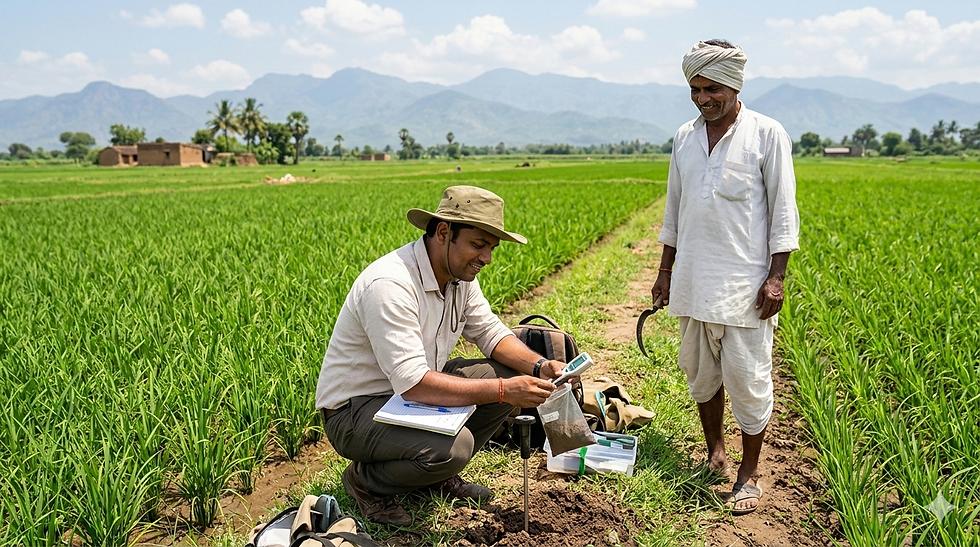
अच्छी फसल के लिए किसान बीज, पानी और खाद पर काफी ध्यान देता है। लेकिन इन सबके साथ एक चीज और उतनी ही जरूरी है—खेत की मिट्टी की स्थिति जानना। मिट्टी में कौन-सा पोषक तत्व कम है, कौन-सा पर्याप्त है और मिट्टी का pH कैसा है, इसकी जानकारी बिना जांच के आसानी से नहीं मिलती।कई बार किसान फसल कमजोर दिखाई देने पर ज्यादा खाद डाल देते हैं। लेकिन हर बार फसल की समस्या खाद की कमी के कारण हो, यह जरूरी नहीं है। समस्या मिट्टी के pH, पानी की निकासी, लवणता या किसी खास पोषक तत्व की कमी के कारण भी हो सकती है।इसीलिए Soil Testing यानी मिट्टी की जांच खेती का एक जरूरी हिस्सा है। मिट्टी की जांच रिपोर्ट के आधार पर किसान अपनी फसल के लिए खाद और पोषक तत्वों का बेहतर तरीके से प्रबंधन कर सकता है। मिट्टी की जांच क्या होती है? मिट्टी की जांच में खेत से मिट्टी का सही नमूना लेकर उसे प्रयोगशाला में जांच के लिए भेजा जाता है। जांच के बाद पता चलता है कि मिट्टी में जरूरी पोषक तत्वों की स्थिति कैसी है और मिट्टी की रासायनिक स्थिति क्या है। Soil Health Card व्यवस्था के तहत मिट्टी की जांच में मुख्य रूप से 12 पैरामीटर देखे जाते हैं। इनमें नाइट्रोजन, फास्फोरस, पोटैशियम, सल्फर, जिंक,...

खेत में fertilizer का सही और संतुलित उपयोग crop growth के लिए महत्वपूर्ण है। खेती में अच्छी फसल के लिए केवल अच्छी quality का seed ही पर्याप्त नहीं होता। पौधों को सही मात्रा में nutrients मिलना भी उतना ही जरूरी है। इसी कारण किसानों के बीच Urea, DAP और NPK fertilizer का इस्तेमाल काफी common है। लेकिन अक्सर किसानों के मन में यह सवाल रहता है कि Urea, DAP और NPK में क्या अंतर है? कौन-सी खाद में कौन-सा nutrient होता है और किस परिस्थिति में कौन-सा fertilizer उपयोगी हो सकता है? इस article में हम आसान भाषा में समझेंगे कि Urea, DAP और NPK fertilizer क्या हैं, इनमें कौन-कौन से nutrients होते हैं, इनके बीच क्या difference है और fertilizer का इस्तेमाल करते समय किन बातों का ध्यान रखना चाहिए। Quick Answer: Urea मुख्य रूप से Nitrogen देता है, DAP में Nitrogen और Phosphorus होता है, जबकि NPK fertilizers में Nitrogen, Phosphorus और Potassium अलग-अलग ratios में उपलब्ध होते हैं। सही fertilizer का चुनाव crop और soil requirement के आधार पर करना चाहिए। Urea, DAP और NPK क्या हैं? पौधों को अच्छी growth के लिए कई essential nutrients की जरूरत होती है। इनमें तीन major nutrients हैं: Nitrogen (N) Phosphorus (P) Potassium (K) इन तीन nutrients को commonly NPK nutrients कहा जाता है। इनके अलावा plants को Sulphur, Zinc, Iron, Boron, Magnesium और अन्य micronutrients की...

भारतीय कृषि में पोषक तत्‍वो का खनन Nutrient mining generally refers to agricultural practices resulting in a negative nutrient balance: export (loss) of a nutrient is greater than import (input). Estimates suggest that the total area under cultivation remained more or less constant (at 140-142 Mha) over the past several decades, and there are indications that the agricultural lands are gradually being diverted to accommodate increased urbanization and industrialization. It is unlikely that sizable additional area will be brought in under cultivation in the foreseeable future. Therefore, there is no other viable option than increasing crop productivity per unit area, to meet the future production goals. Maintenance of native soil fertility in the intensively cultivated regions of the country is one of the preconditions of maintaining and improving the current crop yield levels. Intensive cropping systems remove substantial quantities of plant nutrients from soil during continued agricultural production round the year. The basic principle of maintaining the fertility status of a soil under high intensity crop production systems is to annually replenish those nutrients that are removed from the field. Indeed this becomes more relevant in the absence of the measures for adequate replenishment of the depleted nutrient pools through the removal of crop residues from agricultural fields (Sanyal 2014). The term “Nutrient Mining” is used when the quantity...

Importance of Potash in crop production पोटेश्‍यि‍म स्वतन्त्र रूप से कार्य करने वाला पोषक तत्व है।  पौधे में किसी भी यौगिक के संष्लेशण में यह प्रत्यक्ष क्रियाओं में प्रत्यक्ष या अप्रत्यक्ष रूप से भाग लेकर फसल उत्पादन तथा उत्पाद की गुणवत्ता को प्रभावित करता है।  यही कारण है कि मिट्टी में पोटेषियम की कमी से फसल की उपज, उसकी गुणवत्ता तथा आय में गिरावत आती है। पोटेश्‍यि‍म का फसलउत्‍पादन मे कार्य :- पौधों की वृध्दि से संबंधित प्रक्रियाओं में पोटेश्‍यि‍म की प्रत्यक्ष या अप्रत्यक्ष रूप से भूमिका होती है। पोटेश्‍यि‍म साठ से अधिक उत्प्रेरकों (एन्जाइम) की क्रियासीलता को बढाता है। प्रकाश संष्लेशण के उत्पाद को बीज, जड़, फल तथा कन्द के निर्माण के लिये उपलब्ध कराने में पोटेश्‍यि‍म सहायक है। प्रोटीन की संरचना में सहायक होकर नाइट्रोजन की उपयोग क्षमता को बढ़ाता है। पौधों में सूखा, पाला रोग तथा कीटों के विरूध्द अवरोध क्षमता पैदा करता है। फसल की जल शोषण क्षमता में वृध्दि करके सिंचाई जल की आवष्यकता में कमी करने में सहायक है। जड़-तंत्र के स्वस्थ विकास के लिये आवष्यक है तथा मिट्टी में हवा की कमी या खराब जल निकास की दषाओं को सहन करने की क्षमता उत्पन्न करता है। फसल उत्पाद की गुणवत्त में वृध्दि करता है और उसकी भण्डारण अवधि में वृध्दि लाता है। इस तरह पोटाश का फसल गुणवत्ता में विषेश महत्व है। फलों के आकार,...

नाइट्रोजन उर्वरकों के सुरक्षित और लाभदायक उपयोग के लिए सर्वश्रेष्ठ प्रबंधन पद्धतियां Indian agriculture has witnessed a tremendous fourfold increase in food production over the past three decades. This enhanced food grain production later known as ‘green revolution’ could be mainly attributed to the introduction of high-yielding, input responsive cultivars of wheat and rice in the mid-1960s and to the increased availability and use of chemical fertilisers, especially the nitrogenous (N) fertilizers. Nitrogenous fertilizers supply N which is very essential for plant growth and development and mainly supplied to the crop plants in the form of urea, Diammonium phosphate (DAP) etc. When N fertilizers are used correctly they are very beneficial, but unscientific practices of their usage could lead to large scale pollution and harmful effects on environment. Both surface and groundwater are very vulnerable to No3- contamination by excess use of N fertilizers. Protecting the water bodies in particular and environment in general from No3- contamination is major concern. Therefore here we discuss the best management practices for safe and economic use of Nitrogenous fertilizers. Always apply fertilizers based on soil nutrient status Fertilizers should be applied only based on the soil nutrient status, which can be known by testing the soil at a laboratory. Nowadays all state department of agriculture district headquarters...