
Agriculture Knowledge for Everyone

Nutrition Tag

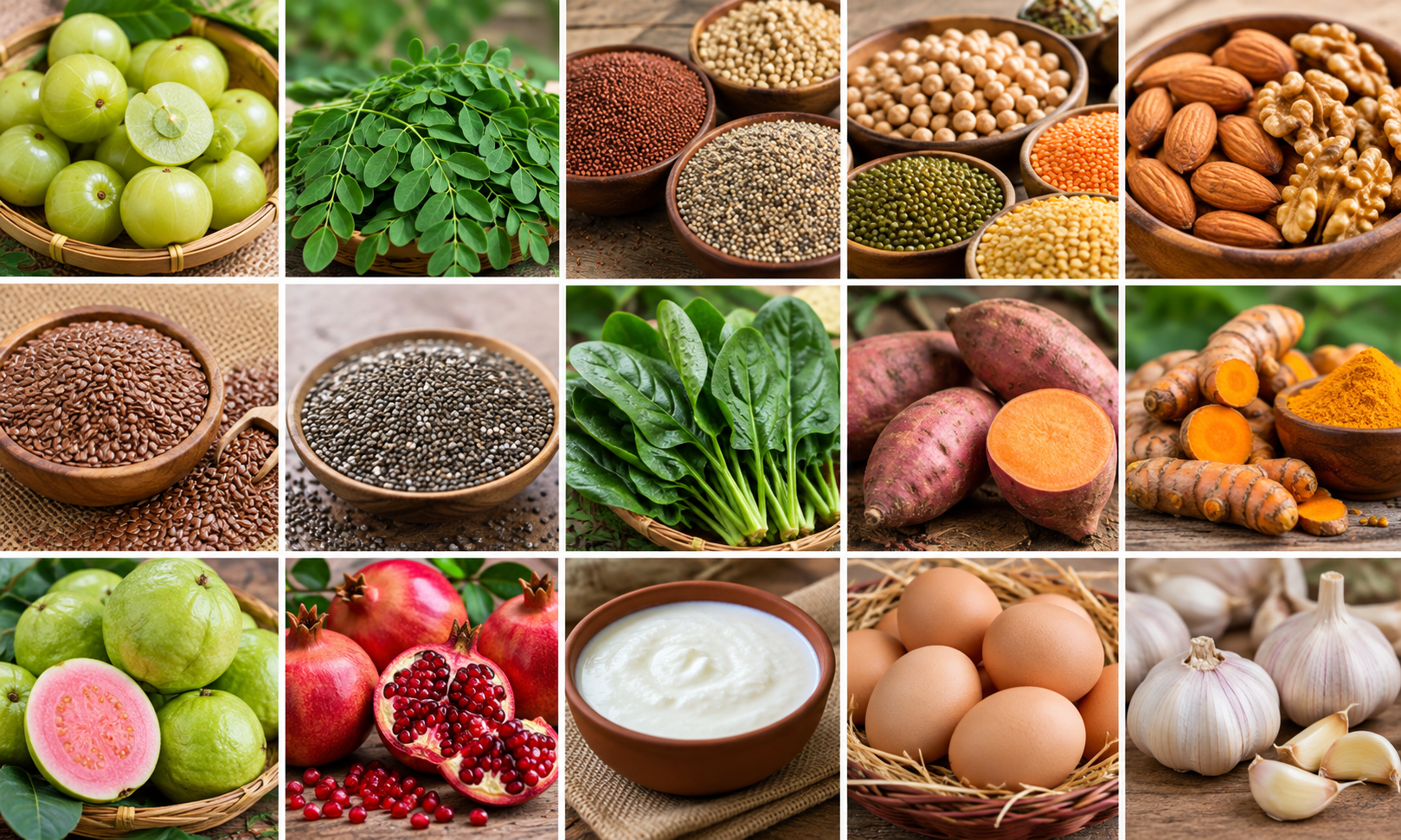
Top 15 Superfoods for a Healthy Diet: Nutritious Foods You Can Eat Every Day अच्छा स्वास्थ्य बनाए रखने के लिए हमेशा महंगे या विदेशी खाद्य पदार्थों की जरूरत नहीं होती। हमारे आसपास और भारतीय रसोई में मिलने वाले कई खाद्य पदार्थ पोषक तत्वों से भरपूर होते हैं। आंवला, सहजन, मोटे अनाज, दालें, मेवे, बीज, हरी सब्जियां और मौसमी फल इसका अच्छा उदाहरण हैं। You do not always need expensive or imported foods to maintain a healthy diet. Many foods that are easily available in Indian kitchens are naturally rich in nutrients. Amla, moringa, millets, pulses, nuts, seeds, green vegetables and seasonal fruits are some good examples. सुपरफूड (Superfood) शब्द आमतौर पर ऐसे खाद्य पदार्थों के लिए इस्तेमाल किया जाता है जिनमें एक या अधिक महत्वपूर्ण पोषक तत्व अच्छी मात्रा में पाए जाते हैं। हालांकि, किसी एक खाद्य पदार्थ को संपूर्ण आहार का विकल्प नहीं माना जा सकता। अलग-अलग प्रकार के पौष्टिक खाद्य पदार्थों को आहार में शामिल करना अधिक महत्वपूर्ण है। The term superfood is commonly used for foods that are particularly rich in one or more nutrients or naturally occurring plant compounds. However, no single food can provide everything the body needs. Eating a varied and balanced diet is more important. 15 प्रमुख सुपरफूड्स की सूची 15 Superfoods You Can Add to Your Diet आंवला...

खाद्य फसलों का जैवप्रबलीकरण या जैवसंवर्धन: कुपोषण दूर करने की प्रभावी रणनीति Nutrition (protein, vitamins and minerals) deficiency is one of the most important public health issue across the globe, particularly in developing and underdeveloped countries. Nutrient deficiency can be overcome by consuming a diverse diet. The other alternatives are supplementation and fortification but these are difficult to sustain on a long-term basis and fortified food is not affordable and available to poor people. Biofortification  is a process to improve the nutritional value of crop plants through plant breeding, agronomic and transgenic approaches. Consumption of bio-fortified staple crops will help in the alleviation of malnutrition thereby it improves the human health condition. Presently, development of nutrient dense staple food crops is one of the prime research areas for the scientific community. Bio-fortification has been recognized as an economical and sustainable strategy that can be useful as a complementary solution to the problem of malnutrition. Basic approaches of Biofortification 1.  Genetic Biofortification Staple crops often exhibits genetic variation in essential nutrient contents, which enable breeders to develop nutrient dense high yielding genotypes through conventional or molecular breeding approaches.  Development of nutrient dense crops through conventional/ molecular breeding approaches is both economical and does not have any effect on consumer acceptance, unlike transgenic approaches. The success of plant breeding through conventional...

स्वास्थ्य वर्धक, पोषण से भरपूर सब्‍जी - ब्रोकली Brassica vegetables (Broccoli, Brussels sprouts, cabbage, cauliflower, collards, kale, mustard, rape, etc.)  have received a great deal of attention in the past 5–10 years as consumers have developed an increases awareness of the nutritional content of foodstuffs in their diet.  Brassicaceae family (Cruciferae) includes vegetables that are commonly grown and include broccoli, Brussels sprouts, cabbage, collards, kale, mustard, rape, etc. Broccoli (Brassica oleracea var. italica) is an important cole crop. The majority of Brassica vegetables are purchased and consumed as fresh vegetables, mostly following cooking. The time and methods of cooking have a considerable influence on nutrient availability and content. Since ancient period the mankind made medicines from the extracts of natural materials and has been used for various purposes. Nutritional value of Broccoli is given in Table1. Table 1:  Nutritional value of Broccoli (Brassica oleracea var. italica), fresh, raw, Nutrition value per 100 g.  Principle Nutrient Value Percentage of RDA Energy 34 Kcal 1.5% Carbohydrates 6.64 g 5% Protein 2.82 g 5% Total Fat 0.37 g 1% Cholesterol 0    mg 0% Dietary Fiber 2.60 g 7% Vitamins     Folates 63 µg 16% Niacin 0.639 mg 4% Pantothenic acid 0.573 mg 12% Pyridoxine 0.175 mg 13% Riboflavin 0.117 mg 9% Thiamin 0.071 mg 6% Vitamin A 623 IU 21% Vitamin C 89.2 mg 149% Vitamin E 0.17 mg 1.5% Vitamin K 101.6 µg 85% Electrolytes     Sodium 33 mg 2% Potassium 316 mg 7% Minerals     Calcium 47 mg 5% Copper 0.049 mg 5.5% Iron 0.73 mg 9% Magnesium 21 mg 5% Manganese 0.210 mg 9% Selenium 2.5 µg 5% Zinc 0.41 mg 4% Phyto-nutrients     Carotene-ß 361 µg -- Crypto-xanthin-ß 1 µg -- Lutein-zeaxanthin 1403 µg -- (Source: USDA National Nutrient data base) Health-promoting compounds of Brassica vegetables Epidemiological studies have shown that increased consumption of vegetables and fruits is associated with a lower risk...