Agriculture Knowledge for Everyone

sustainable agriculture Tag

Agriculture is much more than growing crops. For millions of Indian families, it is a way of life and an important source of income. From rice fields in West Bengal to cotton farms in Maharashtra and apple orchards in Himachal Pradesh, farming looks different in different parts of the country. The crops farmers grow depend on several things, including rainfall, soil, temperature, irrigation facilities and the local market. Some farmers grow crops mainly for their families, while others produce vegetables, fruits, grains or commercial crops for sale. Farming practices are also changing. Many farmers now use improved seeds, drip irrigation, farm machinery and better crop-management techniques. However, not every modern method suits every farm. The right choice depends on the farmer's land, budget, water supply and crop requirements. In this guide, we explain the main types of agriculture in India, commonly used farming methods, their benefits and the challenges farmers need to consider. What Is Agriculture? Agriculture is the process of growing crops and raising animals to produce food, fibre and other useful products. It includes activities such as preparing the land, sowing seeds, watering crops, managing soil fertility, controlling pests and harvesting produce. In India, agriculture also includes activities such as dairy farming, poultry, fisheries, beekeeping, fruit cultivation and vegetable production. These activities can help...
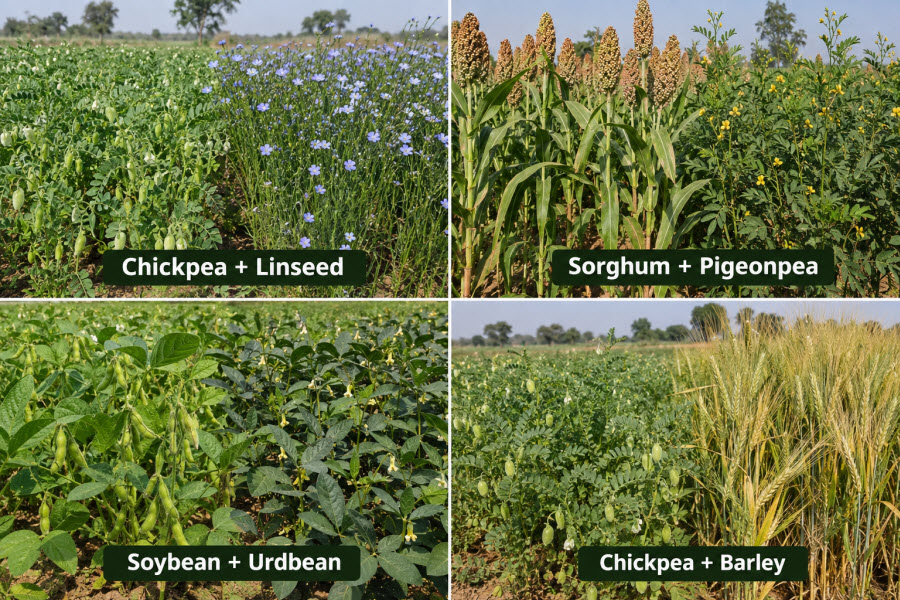
फसल विविधीकरण कृषि को अधिक टिकाऊ और लाभकारी बनाने की महत्वपूर्ण रणनीति है। जानिए इसके लाभ, उपाय, रणनीतियाँ और विभिन्न फसल प्रणालियों की भूमिका।...

1. Introduction Nano-bioformulations are innovative delivery systems that bring together the principles of nanotechnology with biological components to enhance the effectiveness of drugs, biomolecules, and agrochemicals. At the nanoscale (1–100 nm), molecules behave differently compared to their bulk forms, showing enhanced stability, solubility, bioavailability, and targeted delivery. These unique properties make nano-bioformulations a powerful tool in modern science, especially in medicine, agriculture, and biotechnology. The idea of working at the nanoscale was first envisioned by physicist Richard Feynman in 1959, who suggested that manipulating matter at the atomic level could open new scientific possibilities. 2. Types of Nano Bioformulations 2.1 Nanoparticles (NPs): Tiny solid particles (1–100 nm) made of polymers, lipids, or metals that are able to encapsulate drugs or biomolecules, protecting them from degradation and allowing slow, controlled release. Example: PLGA nanoparticles for anticancer drug delivery. 2.2 Nanoemulsions: Stable mixtures of oil and water at the nanoscale, stabilised by surfactants, can improve the solubility of hydrophobic compounds and are widely used in food, agriculture, and cosmetics. Example: Neem oil nanoemulsion for pest control. 2.3 Liposomes: Bilayered phospholipid spherical vesicles can mimic cell membranes and can carry both water-soluble (inside core) and fat-soluble (within bilayer) molecules. Example: Liposomal vitamin C for enhanced absorption. 2.4 Polymeric Nanocarriers: Biodegradable polymers such as chitosan or PLGA can form nanospheres or nanocapsules. They are...

जलवायु परिवर्तन के शमन और अनुकूलन में कृत्रिम बुद्धिमत्ता कंप्यूटर विज्ञान की एक तेजी से विकसित हो रही शाखा है जो बुद्धिमान प्रणालियों के डिजाइन से संबंधित है जो ऐसे कार्यों को करने में सक्षम होती हैं जिनके लिए आमतौर पर मानवीय संज्ञानात्मक क्षमताओं की आवश्यकता होती है, जिनमें सीखना, तर्क करना, समस्या-समाधान और निर्णय लेना शामिल हैं। हाल के वर्षों में, कृत्रिम बुद्धिमत्ता अपने सैद्धांतिक आधार से आगे बढ़कर कृषि, स्वास्थ्य सेवा और पर्यावरण प्रबंधन सहित कई क्षेत्रों में एक परिवर्तनकारी शक्ति के रूप में उभरी है। जलवायु परिवर्तन के क्षेत्र में इसका बढ़ता अनुप्रयोग, जिसे व्यापक रूप से 21वीं सदी की सबसे महत्वपूर्ण वैश्विक चुनौतियों में से एक माना जाता है (Rolnick et al., 2019), विशेष रूप से महत्वपूर्ण है। बड़ी मात्रा में डेटा को संसाधित करके और जटिल पैटर्न की पहचान करके, जो अक्सर विश्लेषण की पारंपरिक विधियों की क्षमता से परे होते हैं, कृत्रिम बुद्धिमत्ता जलवायु परिवर्तन के मूल कारणों को कम करने और इसके तेजी से गंभीर होते प्रभावों के अनुकूलन को सुविधाजनक बनाने के लिए नवीन तरीके प्रदान करती है। 1. Climate Change: A Growing Global Concern जलवायु परिवर्तन: एक बढ़ती हुई वैश्विक चिंता जलवायु परिवर्तन को आम तौर पर तापमान, वर्षा के पैटर्न और चरम मौसम की घटनाओं की आवृत्ति में दीर्घकालिक परिवर्तन के रूप में समझा...

Actinomycetes are widely recognized for significant role in promoting soil health and sustainable agriculture through the production of diverse bioactive compounds and plant growth promoting metabolites. This article highlights the ecological significance and agricultural importance of actinomycetes, with particular emphasis on their ability to produce antibiotics, extracellular enzymes, siderophores, and phytohormones. It also discusses their contributions to nutrient solubilization and mobilization, and enhancement of plant stress tolerance, biocontrol of pathogens and improvement of soil quality through bioremediation. Additionaly, the article explores the application of Actinomycetes as biofertilizers and bioinoculants in organic farming, emphasizing their potential to increase crop productivity while reducing dependence on chemical fertilizers and pesticides. Actinomycetes represent a promising and eco-friendly resource for improving soil fertility plant health, and the long-term sustainability of organic agriculture systems 1. Introduction to Actinomycetes Actinomycetes are Gram-positive, filamentous prokaryotic microorganisms belonging to the phylum Actinomycetota (Actinobacteria). Although they are classified as bacteria, they possess distinctive morphological and physiological characteristics that differentiate them from other bacterial groups. They are ubiquitous in terrestrial and aquatic ecosystems and are particularly abundant in soils with neutral to alkaline pH, high temperatures, or limited moisture availability, where they play a crucial role in maintaining soil health and ecological balance. Morphologically, actinomycetes exhibit a fungus-like growth pattern by producing extensively branched...

भूमिका मृदा स्वास्थ्य कृषि उत्पादन की आधारशिला है। स्वस्थ मिट्टी ही लंबे समय तक टिकाऊ उत्पादन, बेहतर गुणवत्ता और कम लागत वाली खेती सुनिश्चित करती है। आज की कृषि व्यवस्था में केवल अधिक उत्पादन के लक्ष्य के कारण नाइट्रोजन (यूरिया) का अत्यधिक उपयोग हो रहा है, जिससे मिट्टी में पोषक असंतुलन, सूक्ष्म पोषक तत्वों की कमी और जैविक सक्रियता में गिरावट देखी जा रही है। भारत सरकार किसानों को सस्ती दरों पर खाद उपलब्ध कराने के लिए भारी उर्वरक सब्सिडी (Fertilizer Subsidy) प्रदान करती है। हालांकि, उर्वरकों के असंतुलित और अत्यधिक उपयोग के कारण यह सब्सिडी अब सरकार के खजाने पर एक बड़ा बोझ बनती जा रही है। संतुलित पोषक प्रबंधन का उद्देश्य केवल उर्वरक देना नहीं, बल्कि मिट्टी, पौधे और सूक्ष्मजीवों के बीच प्राकृतिक संतुलन बनाए रखना है। इसके लिए रासायनिक, जैविक और प्राकृतिक खेती के तरीकों का समन्वय आवश्यक है। संतुलित उर्वरक प्रबंधन अपनाकर किसान न केवल अपनी भूमि को बचा सकते हैं, बल्कि देश की अर्थव्यवस्था को मजबूत करने में भी अपना योगदान दे सकते हैं। 1. मृदा परीक्षण आधारित उर्वरक प्रबंधन मृदा परीक्षण वैज्ञानिक खेती का सबसे महत्वपूर्ण आधार है। विधि खेत से 8-10 स्थानों से 0-15 सेमी गहराई तक मिट्टी नमूना लें सभी नमूनों को मिलाकर 500 ग्राम से 1 किग्रा प्रतिनिधि नमूना बनाएं कृषि विज्ञान केंद्र (KVK) या मृदा परीक्षण...

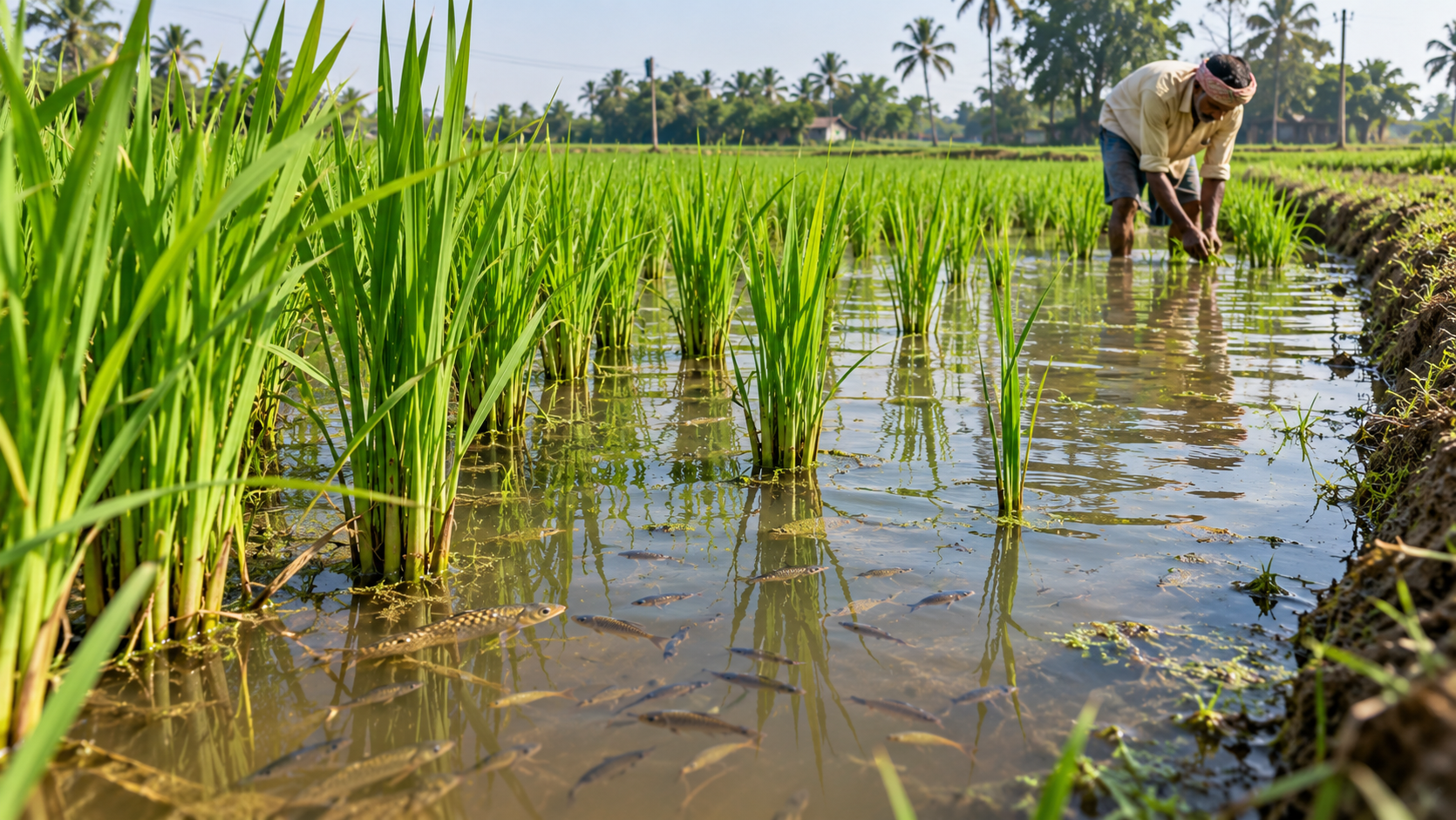
धान के खेत में मछली पालन यानी Rice Fish Farming खेती का ऐसा तरीका है जिसमें किसान धान की फसल के साथ उसी खेत के पानी का इस्तेमाल मछली पालन के लिए भी करता है। सही खेत और सही प्रबंधन हो तो एक ही जमीन से धान के साथ मछली का अतिरिक्त उत्पादन लिया जा सकता है। इसी वजह से पिछले कुछ वर्षों में Rice Fish Farming, Paddy Fish Farming और Integrated Rice-Fish Farming जैसे तरीकों पर किसानों और कृषि संस्थानों का ध्यान बढ़ा है। यह कोई नया विचार भी नहीं है। भारत में paddy-cum-fish culture पर वैज्ञानिक स्तर पर कई दशकों से काम किया जा रहा है। ICAR के दस्तावेजों में paddy-cum-fish culture के package of practices के विकास का उल्लेख 1970 से मिलता है। लेकिन एक बात शुरुआत में साफ समझ लेना जरूरी है। धान के खेत में मछली डालने का मतलब यह नहीं है कि हर किसान की कमाई अपने आप दोगुनी हो जाएगी। फायदा खेत में पानी की उपलब्धता, मछली की प्रजाति, stocking, मछली की survival और growth, चारा, श्रम, धान की खेती की लागत और स्थानीय बाजार भाव पर निर्भर करता है। सीधी बात: Rice-Fish Farming का फायदा यह है कि किसान एक ही खेत और पानी से एक से ज्यादा उत्पादन लेने की कोशिश करता है।...

उत्तर-पश्चिमी हिमालय में सतत बाजरा खेती The pursuit of sustainable agriculture has become increasingly vital in the face of climate change and the growing global population. In the scenic landscapes of the North Western Himalayas, cultivating millets presents a promising solution to promote sustainable farming. Millets, small-seeded grains that have nourished millions of people worldwide for centuries, possess qualities that make them ideal crops for sustainable agriculture. Their resilience, low water and input requirements, high nutritional value, and adaptability to diverse climates position millets as a key component in the journey towards sustainable farming in the region.  Integrating millets into the cropping systems can help farmers mitigate climate-related risks and ensure food security. Furthermore, millet cultivation fosters soil health and biodiversity through mixed cropping and natural pest resistance, reducing the reliance on chemical inputs.  Climate Resilience and Adaptability The North Western Himalayan region, encompassing Himachal Pradesh, Uttarakhand, and parts of Jammu and Kashmir, experiences a wide range of climatic conditions due to its diverse terrain. From the lower Shivalik foothills to the snow-capped peaks, the region encounters varying temperatures, rainfall patterns, and soil types. Such diversity poses unique challenges to traditional agricultural practices. Millets, however, display remarkable resilience and adaptability to these conditions. Their genetic diversity enables successful cultivation across different altitudes in the Himalayas....