
Agriculture Knowledge for Everyone

Postharvest

अंगूर में मूल्य संवर्धन की प्रक्रिया - अंगूर सुखाना Grapes are one of the most popular and palatable fruits in the world. The preservation of grapes by drying is a major industry in many parts of the world where grapes are grown. Drying practices vary with geographical locality and with the variety of grapes. Drying grapes, either by open sun drying, shade drying or mechanical drying, produces raisins. Air-drying of solar energy has been demonstrated to be cost-effective and could be an effective alternative to traditional and mechanical drying systems, especially in locations with good sunshine during the harvest season. The traditional air-drying shelter of grapes has been used for thousands of years in Asia and other places around the world. The drying of grapes under sheds is common practice followed in major raisin making sites of India like Sangli, Solapur and Nashik districts of Maharashtra and Bijapur district of Karnataka. The quality of the dried products implies that several desirable changes (physical, chemical, and biochemical) must occur during the drying process. These changes are influenced by drying conditions and physio-chemical characteristics of the targeted material. Some specific characteristics of grapes (i.e., size of the berries, sugar content, and the presence of an outer waxy cuticle) play a significant role both in the drying...
Post harvest management and storage of wheat विश्‍व में उगाई जाने वाले अनाजों में गेहूँ का स्थान धान एवं मक्का के पश्‍चात तीसरा है और यह सभी प्रमुख सभ्यताओं में स्थायी खाद्य है। 1960 के दौरान हरित क्रांति द्वारा प्रोत्साहित होने के कारण विश्‍व का लगभग 36 प्रतिषत गेहूँ का उत्पादन एशिया में होता है। लगभग एक दशक से भारत का गेहूँ उत्पादन में चीन के बाद दूसरा स्थान है जिसके कारण भारत एक खाद्यान्न आत्म निर्भर देश्‍ा हो गया है। वर्श 2011-12 के दौरान भारत में गेहूँ का उत्पादन 93.96 मिलियन टन था जो कि पूरे विष्व में गेहूँ उत्पादन का लगभग 15 प्रतिशत है। 1950-51 के दौरान 6.45 मिलियन टन की तुलना में वर्श 2012-12 के दौरान लगभग 15 गुणा उत्पादन बढ़ा है। यद्यपि इस गुणात्मक उत्पादन ने राश्टीय खाद्य सुरक्षा को सुदृढ़ता प्रदान की है। किन्तु उचित कटाई, तदुपरांत प्रबंधन एवं भण्डारण को लेकर चिंताएं  भी पैदा की हैं। फसल पकने के साथ ही कृशको की चिंताए समाप्त नहीं होती क्योंकि कटाई के दौरान दानों के झड़नें तथा चिड़ियों, कीटों द्वारा खेत एवं भण्डार में नुकसान की आशंका रहती है। दूसरी तरफ जल्दी कटाई से दानों में नमी अधिक होती है जिसमें कवकों की उत्पत्ति एवं खाद्य गुणवत्ता कम होने की संभावना रहती है। कटाई उपरांत नुकसान को उपलब्ध तकनीकों...

लंबे समय तक भंडारण गेहूं की औद्योगिक गुणवत्ता खराब करता है: इसे नियंत्रित करने के लिए उपाय  With the increasing ever growing global population, maintaining the nutritional quality of wheat is emerging as a crucial step forward. Nutritional deterioration starts right from the field before harvesting the crops to the storage and the final consumption (processing loss). The wheat grain contains 2-3% germ, 13-17% bran and 80-85% mealy endosperm. The wheat bran is mainly rich in fiber (53%), vitamin B complex and minerals which are lost from the starchy endosperm during the first stage of milling. The endosperm mainly contains energy-yielding starch. The germ lies at one end of the grain which is rich in proteins (25%) and lipids (8-13%). The production of wheat varies from year to year therefore the produce should be stored strategically from years of over production for the use in year of under production. The primary factors affecting the grain quality in storage are moisture, temperature and humidity of storage environment. The safe moisture content for storage of wheat is 12-14% at 25°C and 75% relative humidity. Other factors responsible for deterioration are poor containers/warehouses, feeding by rodents, insect pests and microorganisms. Improper post harvest storage of wheat grains can cause losses in both quantity and quality...

अंगूर का रस - स्वास्थ्य के लिए एक घूंट ले India is ranked 12th in the world in terms of grape production. About 78% of production in India is utilized as table purpose, 17-20% for raisin production and remain for juice and wine. Juicing is an excellent way to absorb the maximum nutritional content of fruits and vegetables. All the enzymes, water-soluble vitamins and minerals built-in in these foods are condensed into one glass of juice and, because of the deficiency of fiber; the vastly concentrated nutrients go straight into the bloodstream. Grapes are an excellent source of potassium, which encourages an alkaline blood balance and also stimulates the kidneys and regulates heartbeat. In addition to mineral elements of sodium, potassium calcium, phosphorous, iron, copper and manganese, grapes also contain biotin, niacin, inositol, pantothenic acid, pyridoxine hydrochloride, thiamine, folic acid, ascorbic acid, choline and trace amount of riboflavin and vitamin B12. The restorative power of grapes is phenomenal, cleansing the liver and removing the uric acid from the body. Grapes also contain a phytochemical that appears to protect each cell's DNA from damage. Studies have shown a lower incidence of cancer in the areas of France where this grape fast is practiced yearly. The flavour of grape juice is the result of a...

बेबी कॉर्न : फसलोपरांत प्रबंधन और मूल्य संवर्धन Baby corn is a young finger like un fertilized cobs of maize used as nutritious vegetable, for humans. It is delicious, decorative and rich in vitamins and minerals besides a good source of easily digestible fibrous protein. It is an organic food being protected in the husk and free from pesticides chemical residues. It is used in developing a numbers of value added products. It is a potential crop to generate income and employment for the rural youth, women besides maintaining the soil health. India can be a potential exporter due to its low cost of production. Post harvest management determines quality, safety, competitiveness of the produce in the market and the profits earned by producers. Post harvest technology includes operations viz., harvesting, de-husking, grading, packaging, transportation, processing, storage, quality standards and labeling. Harvesting baby corn: After harvesting, baby corns should be kept in shady places having good ventilation. Also, it should not be piled up and left for days. It should be de-husked immediate after harvesting, if possible. De-husking of baby corn:  De-husking should be done with pointed end of thin knives so as to lightly slit baby corn length wise. Then, use knives to cleave around the bigger end of baby corn, and husk it along slits on ears...

कटाई उपरांत कटफ्लावर का रखरखाव  Floriculture has emerged as a viable diversification option in the agri-business. It is a rapidly expanding industry recording a growth rate of more than 15 per cent per annum in the last two decades.  Rapid urbanization, increased income levels and changes in social values resulted in increase of domestic market both for modern (cut flowers) as well as traditional (loose flowers) flowers significantly. Improvement in the general level of well being in the country and increased affluence particularly among the middle class is also another reason for increase in the volume of local flower market. The quantum of Indian floricultural exports, although, increased manifold since early nineties, still there is huge scope to become a key player in the world flower trade. The floriculture industry in India is characterized by growing traditional flowers (loose flowers) and cut flowers under open field conditions and protected environment conditions respectively. India also has a strong dry flower industry, which contributes a major share to the overall trade. Other segments like fillers, potted plants, seeds and planting material, turf grass industry and value added products also contribute a share in the overall growth of the floriculture sector. At present, the area under flower crops in India is 167000 ha with...

फूल निर्जलीकरण: ग्रामीण लोगों के लिए एक लाभदायक व्यवसाय Floriculture occupation has become a lucrative business in many parts of the world. Cut flower is one of the main components of floriculture trade. Shelf-life of cut flower is restricted for few days. Despite the use of best flower preservatives for improvement of keeping quality and enhancement of vase life, the cut flowers cannot be kept for a long time. Non- availability of flowers during demand is another crisis. Existing floriculture market is dominated by standard well utilized ornamental species/varieties. But in modern floriculture, there will always demand and necessity for new products and flower lovers always seek “something new.” There are wide ranges of wild/ unutilized/ underutilized plant species which have the potential for commercial exploitation in different forms. We use only selected plants for our basic requirements. Thousands of wild plants have great economic and cultural importance and tremendous market potential throughout the world. There is an increasing interest throughout the world, in “neglected and underutilized crop species” (NUS). Neglected and underutilized crop species should be identified for new uses. Rural and hilly areas are covered with different types of colourful flowers and foliage at different seasons round the year and all these are wasted under natural process. The entire...

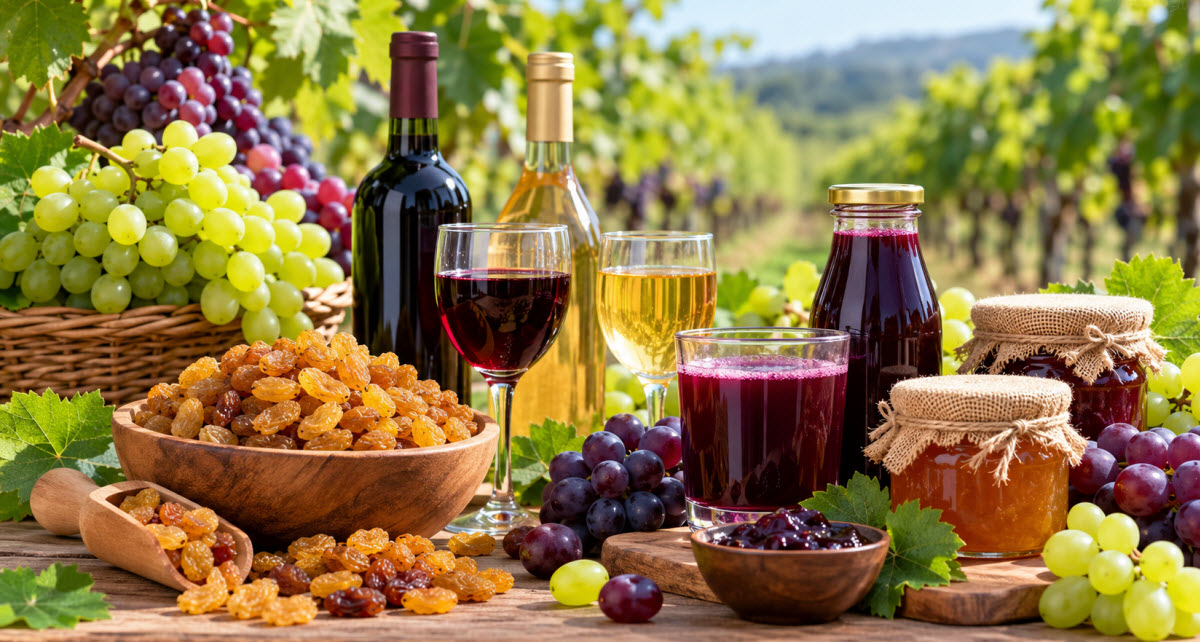
अंगूर में मुल्‍य सवर्धन कैसे करें तथा अगूंर के वि‍भि‍न्‍न उत्‍पाद क्‍या है। India ranks 11th in grape production with production of 1.8 million t grapes from an area of 80,000 ha. The major consumption of grapes in India is as fresh followed by raisins, wine and juice. While at global level 78-80% grapes processed in to wine followed by raisin, fresh grapes and juice. The value addition in grapes and diversification of grape products also provide good returns to growers. The raisin industry is also gaining good results. A quantity of 105000 t raisins was produced during 2009. But, it is not possible without active involvement of food industry in value addition sector. Adding value to grapes may be as simple as creatively packaging the grapes. This might be washing and packaging the fruit for a ready-to-eat snack or placing the fruit in a decorative container either alone or with other fresh fruit as a “farm fresh gift basket.” A. Value added products 1. Raisins The dried grapes are known as raisins. The Thompson Seedless white and thin skinned grape variety has monopoly in the production of best quality raisins. At global level, about 90% of raisins produced by drying of Thompson Seedless and clones. In India, grape drying is performed under raisin...